---
title: "Digital Estate Planning Guide: Secure Your Online Legacy 2026"
description: Discover expert digital estate planning strategies. Secure your online legacy, protect digital assets, and ensure peace of mind for your loved ones.
image: https://www.ironcladfamily.com/hubfs/featured-digital-estate-planning-guide-secure-your-online-l-m8ievx.jpg
---
[Skip to content](https://www.ironcladfamily.com/blog/digital-estate-planning#main-content)
[](https://www.ironcladfamily.com/)
- [WHY DIGITAL VAULTS](https://www.ironcladfamily.com/blog/tag/digital-family-vaults-estate-planning)
- [FINANCIAL PLANNING](https://www.ironcladfamily.com/blog/tag/financial-planning)
- [END OF LIFE PLAN](https://www.ironcladfamily.com/blog/tag/end-of-life-planning)
- [PREPAREDNESS](https://www.ironcladfamily.com/blog/tag/emergency-planning)
- [FOR ADVISORS](https://www.ironcladfamily.com/blog/tag/advisors)

# Digital Estate Planning Guide: Secure Your Online Legacy 2026

[Sahar Lester December 15, 2025](https://www.ironcladfamily.com/blog/author/sahar-lester)
- [Digital Family Vaults & Estate Planning](https://www.ironcladfamily.com/blog/tag/digital-family-vaults-estate-planning)
- [End of Life Planning](https://www.ironcladfamily.com/blog/tag/end-of-life-planning)
- [Emergency Planning](https://www.ironcladfamily.com/blog/tag/emergency-planning)
- [Financial Planning](https://www.ironcladfamily.com/blog/tag/financial-planning)
- 14 mins
Imagine your family struggling to access your treasured photos, emails, or even important financial accounts after you are gone. As our lives become more digital, digital estate planning is now essential for protecting everything from social media to cryptocurrency and business accounts. Without a plan, loved ones may face lost memories, frozen funds, and complex legal hurdles.
Taking time to organize your digital legacy offers peace of mind and ensures your online presence is secure. This guide will help you understand digital assets, navigate legal frameworks, create a step-by-step plan, adopt best practices, and prepare for future trends.
## Understanding Digital Assets and Their Importance
Imagine trying to track down a loved one’s online accounts, photos, or cryptocurrency without any guidance. That’s why understanding digital assets is a critical first step in digital estate planning.

### What Are Digital Assets?
Digital assets are any electronic records that hold personal or financial value. These range from emails, cloud-stored photos, and social media accounts to cryptocurrencies and domain names. RUFADAA, the Revised Uniform Fiduciary Access to Digital Assets Act, defines digital assets as records stored in digital form, including accounts and files.
Examples include:
- Online banking profiles
- Cloud storage (Google Drive, Dropbox)
- Digital currencies and wallets
- Website domains and blogs
- eBooks and streaming subscriptions
It’s important to distinguish digital assets from physical assets that have digital access, such as a traditional bank account versus the credentials used to access it online. Many digital assets are controlled by licensing agreements, not outright ownership. In the United States, over 90 percent of people own digital assets, according to Fidelity. Both individuals and businesses need to include items like blogs, digital intellectual property, and business tools in their digital estate planning. For a deeper dive, see [What Are Your Digital Assets](https://www.ironcladfamily.com/blog/what-are-your-digital-assets).
### Why Digital Estate Planning Matters
The average person manages more than 100 online accounts. Without digital estate planning, families risk losing access to funds, treasured memories, and even crucial business data. Neglecting these assets can lead to identity theft, legal hurdles, and emotional distress for heirs.
Digital assets often aren’t included in traditional wills. For example, a family might find themselves unable to access a deceased relative’s photo library or cryptocurrency wallet. Recent studies show that 70 percent of Americans have not created a digital estate plan. Privacy and data security remain major concerns, making it even more important to organize your digital legacy.
### Types of Digital Assets to Include
When creating a digital estate plan, consider these categories:
- Personal: emails, photos, videos, social media, cloud storage
- Financial: online banking, PayPal, Venmo, crypto, investments
- Business: websites, domains, online stores, digital utilities
- Intellectual property: digital copyrights, NFTs
- Subscriptions/licenses: eBooks, music, streaming accounts (e.g., Amazon Kindle, Spotify, Netflix)
Remember, most digital licenses are non-transferable, so heirs may not inherit items like purchased eBooks or music. Include all relevant accounts, even those rarely used, to ensure nothing is overlooked in your digital estate planning.
### Common Pitfalls and Misconceptions
A common misconception is that digital assets are automatically covered by a will. In reality, most wills do not address these assets, and simply sharing passwords is not a legal solution. This can violate terms of service or even the law.
Ignoring digital assets may result in permanent data loss or family disputes. Inactive or forgotten accounts often go unclaimed, increasing the risk of identity theft. Many people also misunderstand the role of a digital executor, who manages digital assets separately from physical ones. For instance, families have been locked out of a loved one’s email account due to a lack of clear instructions or authority.
## Legal Frameworks and Challenges in Digital Estate Planning
Navigating the legal landscape of digital estate planning requires a clear understanding of evolving statutes, service provider policies, and security protocols. As digital assets become integral to personal and business life, estate planners must overcome unique legal and practical challenges to ensure heirs can access and manage online property responsibly.

### Key Laws Governing Digital Assets
The foundation of digital estate planning in the United States is the Revised Uniform Fiduciary Access to Digital Assets Act (RUFADAA). This law, adopted by most states, outlines how fiduciaries can access digital assets after someone passes away.
RUFADAA distinguishes between account content and metadata, meaning access to emails or files may require explicit permission. State-specific variations exist, so understanding local adoption is crucial. For example, California, Indiana, and Connecticut have implemented RUFADAA provisions.
To learn more about the act and its impact on digital estate planning, see this [Understanding RUFADAA](https://pixelsandprobate.com/what-is-rufadaa/) overview.
A digital executor, named in your estate plan, can be granted authority to manage these assets within the law.
### Service Provider Policies and Licensing
Even with strong digital estate planning, service provider policies can override your wishes. Most online platforms, such as Apple, Google, and Facebook, have terms of service that dictate how accounts are handled after death.
Digital licenses for items like eBooks or music are usually non-transferable, which means heirs may lose access. Some providers offer legacy management tools, such as Google’s Inactive Account Manager or Apple’s Digital Legacy, which allow users to specify who can access their data.
These company policies can complicate digital estate planning, so reviewing each platform’s options is essential.
### Privacy and Security Considerations
Privacy is a top priority in digital estate planning. Sensitive information, such as passwords or PINs, should never be included in wills because wills become public records during probate.
Unauthorized access to accounts, even with good intentions, can violate federal or state laws. Protecting digital assets from identity theft or misuse requires secure storage solutions, like encrypted digital vaults or password managers.
Balancing accessibility for heirs with security for your online legacy is a central challenge in effective digital estate planning.
### Challenges for Executors and Heirs
Many executors struggle with digital estate planning due to a lack of documentation or familiarity with technology. Heirs may find it difficult to recover accounts without clear instructions or may face emotional burdens while managing digital memories.
It is common for multiple executors to be named for physical and digital assets, which can cause confusion. For example, an executor unfamiliar with digital business tools might be unable to access essential accounts, leading to business disruption or lost property.
Organizing and updating your digital asset inventory can help ease these challenges for your loved ones.
### International and Cross-Border Issues
Digital estate planning becomes more complex when assets are stored or managed across borders. Different countries have varying laws regarding data privacy and inheritance.
Cryptocurrency exchanges and cloud storage providers based overseas may not recognize U.S. legal documents or executor authority. This creates jurisdictional hurdles and can delay or prevent asset recovery.
To address these challenges, keep comprehensive documentation and consult professionals who understand international digital estate planning requirements.
## Step-by-Step Digital Estate Planning Process for 2026
Creating a thorough digital estate planning process gives you control over your online legacy. By following these steps, you can secure your digital assets, ease the burden on your loved ones, and protect sensitive information. Let’s explore each step in detail.

### Step 1: Inventory All Digital Assets
Begin your digital estate planning by listing every digital asset you own. This includes email accounts, social media profiles, cloud storage, online banking, and even streaming services.
- Record login URLs, usernames, and account numbers.
- Use a spreadsheet, password manager, or secure digital vault for organization.
- Do not overlook rarely used or inactive accounts.
A comprehensive inventory ensures nothing is forgotten, making it easier for your digital executor to manage your online presence after you are gone.
### Step 2: Document Access Information Securely
Next, record all access credentials, such as passwords, PINs, and security questions, but never include these details in your will. For secure storage, use password managers or encrypted digital vaults.
- Update passwords regularly to maintain security.
- Tools like LastPass, 1Password, or IronClad Family digital vaults are excellent options.
For more on protecting sensitive information, see [Secure Digital Vaults for Estate Planning](https://www.ironcladfamily.com/blog/online-digital-vaults-protecting-your-digital-assets-data-security). Proper documentation is a cornerstone of effective digital estate planning.
### Step 3: Specify Wishes for Each Asset
Decide and document what should happen to each digital asset. Do you want accounts transferred, archived, deleted, or memorialized?
- Assign specific assets to individual heirs if desired.
- Consider the sentimental and privacy value of each asset.
For example, you might leave your photo library to your family, request deactivation of social media, or ensure business accounts are transferred to a partner. Detailed instructions help fulfill your wishes and prevent misunderstandings.
### Step 4: Appoint a Digital Executor
Choose a digital executor who is trustworthy and technologically savvy. This person may differ from your traditional estate executor.
- Clearly outline their authority and responsibilities.
- Inform them of their role and provide necessary documentation.
Selecting the right digital executor is fundamental in digital estate planning, ensuring your instructions are followed accurately.
### Step 5: Integrate Digital Plan with Legal Documents
Reference your digital estate planning documents in your will or trust. Use a codicil to update existing wills if required.
- Consult an estate planning attorney familiar with digital assets.
- Ensure your documents comply with state and federal laws.
This integration ensures your digital executor has the legal authority to act, streamlining the estate settlement process for your digital assets.
### Step 6: Use Service Provider Tools and Settings
Many online platforms offer legacy tools to manage your digital estate planning preferences.
- Set up legacy contacts or inactive account managers for services like Google, Facebook, and Apple.
- Align these settings with your overall plan.
For instance, Google’s Inactive Account Manager can send data to a chosen contact after a period of inactivity. Taking advantage of these tools adds another layer of protection to your digital legacy.
### Step 7: Store and Share the Plan Securely
Keep your digital estate planning documents in a secure, accessible location such as an encrypted digital vault, with your attorney, or in a personal safe.
- Inform your digital executor and key family members about the plan’s location.
- Never email sensitive access information.
A secure sharing process reduces confusion and ensures your wishes are carried out without delay.
### Step 8: Review and Update Regularly
Digital estate planning is not a one-time task. Review your plan annually or after significant life events.
- Update asset inventories, access credentials, and executor assignments.
- Remove obsolete accounts and add new ones as needed.
For example, if you open a new cryptocurrency wallet, add it to your inventory and update your digital plan. Ongoing reviews keep your digital legacy current and secure.
## Secure Storage Solutions for Digital Estate Plans
Organizing your digital estate planning documents is only as strong as the security measures you use to store them. Without secure storage, even the most comprehensive digital estate planning strategy can be compromised or rendered inaccessible. Let’s explore the best solutions to protect your online legacy.
### Secure Digital Vaults and Document Management Tools
When it comes to digital estate planning, encrypted digital vaults provide robust protection for sensitive information. These platforms use zero-knowledge encryption, meaning only you and your authorized users can access your data.
Key features include customizable access levels, automated document delivery to designated heirs, and secure sharing options. Compared to paper records or traditional safes, digital vaults allow for instant updates and remote access.
Popular solutions like IronClad Family, LastPass, and 1Password are leading the way. As security concerns grow, more people are turning to digital vaults for peace of mind in their digital estate planning process.
### [IronClad Family: Secure Digital Vaults for Estate Planning](https://ironcladfamily.com)
IronClad Family offers advanced, cloud-based digital vaults tailored for digital estate planning. Their patented zero-knowledge encryption ensures that only your chosen contacts can access your estate documents, passwords, and critical files.
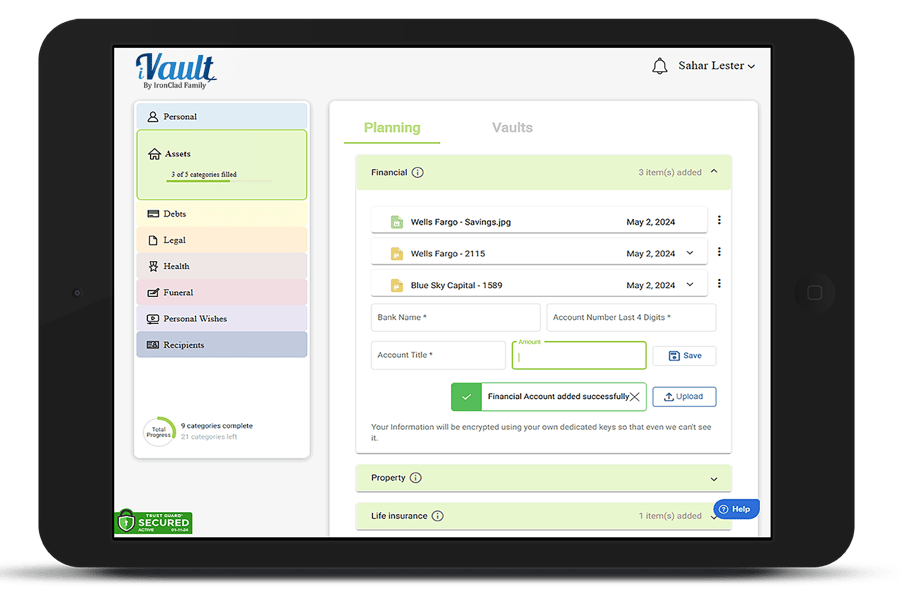
The platform features customizable document delivery, so information is released to beneficiaries under specific conditions. Additional services include legal document creation, family emergency cards, and preparedness tools.
For families, professionals, and businesses seeking privacy and efficiency, [IronClad Family: Secure Digital Vaults for Estate Planning](https://ironcladfamily.com) stands out as a comprehensive digital estate planning solution.
### Physical vs. Digital Storage: Pros and Cons
Choosing the right storage method is crucial in digital estate planning. Physical storage options, such as safes or safety deposit boxes, are secure from hacking but can be difficult to access or update. Digital storage provides convenience and easy updates but requires strong security practices.
| Storage Type | Pros | Cons |
| --- | --- | --- |
| Physical | Highly secure, offline | Hard to update, limited access |
| Digital | Accessible, easy to update | Needs strong cybersecurity |
| Hybrid | Redundant, flexible | More management required |
Many use a hybrid approach in digital estate planning, storing master passwords in a safe and documents in a digital vault.
### Best Practices for Protecting Sensitive Information
Adopting best practices is vital for digital estate planning security. Use strong, unique passwords and enable two-factor authentication for all accounts linked to your digital estate planning.
Regularly audit access permissions and update credentials. Never email sensitive data or store it in unsecured locations. Share access only with trusted individuals and utilize password managers with emergency access features.
These steps help ensure your digital estate planning documents remain secure and accessible to your chosen heirs.
## Assigning Digital Executors and Communicating Your Plan
Selecting the right person to manage your digital estate planning is essential for a seamless transition of your online assets. This section will guide you through the process of appointing a digital executor, securing the necessary legal authority, communicating your intentions, and keeping your plan current.
### Choosing the Right Digital Executor
Your digital executor plays a unique role in digital estate planning. This person should be trustworthy, detail-oriented, and comfortable with technology. Unlike a traditional executor, a digital executor may need to navigate online accounts, manage passwords, and handle sensitive data.
Key qualities to look for include:
- Strong organizational skills
- Familiarity with digital platforms
- Willingness to follow your wishes precisely
For more about the requirements and considerations, read [Appointing a Digital Executor](https://www.ironcladfamily.com/blog/digital-asset-management-requirements). The right choice ensures your digital estate planning goals are fulfilled without unnecessary complications.
### Legal Authority and Documentation
Granting legal authority is critical in digital estate planning. Clearly state your digital executor's role within your estate documents, such as your will or trust. This step is vital because online service providers often require formal authorization before granting access to accounts.
Work with an attorney who understands digital estate planning laws in your state. Specify what your digital executor can and cannot do, and provide written instructions. Proper documentation helps avoid legal obstacles and ensures your wishes are respected during the process.
### Communicating Your Plan to Family and Stakeholders
Transparency is key to successful digital estate planning. Notify family members and stakeholders about the existence and location of your digital estate plan. Explain your reasoning for asset distribution and the appointment of your digital executor.
Consider holding a family meeting or providing clear written instructions. Open communication reduces confusion and minimizes the risk of disputes. Make sure your digital executor understands their responsibilities and is prepared to act when needed.
### Updating Executors and Access Over Time
Digital estate planning is not a one-time task. Review your executor assignments regularly, ideally once a year or after significant life changes. Update contact information, access procedures, and the list of trusted individuals as necessary.
If your chosen digital executor becomes unavailable or circumstances shift, promptly select a replacement. Keeping your plan current ensures that your digital estate planning remains effective and reflects your latest wishes.
## Future Trends and Best Practices in Digital Estate Planning
As our lives become more digital, the landscape of digital estate planning is rapidly evolving. New asset types, shifting legal frameworks, and advanced security tools are reshaping how individuals and families protect their online legacy. Staying informed about these trends is essential to ensure your digital assets remain secure and accessible for the future.
### Evolving Digital Asset Landscape
The digital estate planning field is expanding to include assets that did not exist a decade ago. NFTs, cryptocurrencies, and metaverse properties are now part of many portfolios. Managing these emerging assets requires specialized knowledge and adaptive strategies. People are juggling more accounts and devices than ever, which increases complexity. According to [Trust & Will's 2025 Estate Planning Report](https://trustandwill.com/learn/estate-planning-report-2025), digital assets are taking center stage in estate conversations. As digital footprints grow, proactive digital estate planning is critical to ensure nothing of value is overlooked or lost.
### Advances in Security and Privacy Technology
Security technology for digital estate planning is advancing quickly. Tools now offer end-to-end encryption, biometric authentication, and AI-driven monitoring. These features help protect sensitive information and make it easier to manage access. Automated digital estate management platforms can inventory assets and alert you to changes or risks. According to the [TD Wealth Estate Planning Survey 2022](https://stories.td.com/us/en/article/digital-tools-and-assets-on-the-rise-in-estate-planning-as-nearly-70-of-professionals-are-incorporating-them-into-2022-plans), more professionals are incorporating digital tools to safeguard client legacies. Adopting these technologies helps keep your digital estate planning secure and up to date.
### Legal and Regulatory Developments
Laws governing digital estate planning are changing to reflect new realities. Updates to RUFADAA and similar regulations are being considered in multiple states. There is growing recognition of digital executors and clearer guidelines for cross-border assets. International efforts are underway to harmonize laws for digital asset transfer, especially as global platforms and cryptocurrencies gain traction. Staying current with legal requirements is crucial for effective digital estate planning. Consulting with legal professionals ensures your plan complies with the latest standards and avoids unintended barriers for your heirs.
### Best Practices for 2026 and Beyond
To keep pace with change, digital estate planning should become a regular part of financial and estate reviews. Start early, use secure tools, and coordinate your digital plan with overall estate objectives. Annual updates are recommended to account for new accounts or asset types. Seek expert advice for complex holdings, such as NFTs or business platforms. As highlighted in the [Trust & Will's 2025 Estate Planning Report](https://trustandwill.com/learn/estate-planning-report-2025), a proactive approach empowers you to protect your digital legacy and provide peace of mind for your loved ones.
You’ve seen just how important it is to protect your online legacy and give your loved ones the clarity and access they’ll need in the future. Taking the next step doesn’t have to be complicated or time-consuming. With IronClad Family’s secure digital vault, you can organize your crucial documents, plan for emergencies, and ensure your wishes are honored—all in one safe, private place.
Why not experience the peace of mind that comes with having your digital estate plan fully protected and accessible? You can get started today with a no obligation [Start 14 Day Free Trial](https://www.ironcladfamily.com/digital-vault).

### Sahar Lester
Sahar Lester is the Founder and CEO of IronClad Family, a company dedicated to helping families and businesses safeguard their most valuable assets through secure digital vaults. With a master’s degree in Security Technologies from the University of Minnesota and experience spanning cybersecurity, leadership, and international commerce, Sahar bridges the gap between innovation and protection. She also serves as an adjunct professor at Metropolitan State University, mentoring the next generation of cybersecurity professionals.
[mailto:sahar.lester@ironcladfamily.com](mailto:sahar.lester@ironcladfamily.com)
## Latest posts
- [ALL POSTS](https://www.ironcladfamily.com/blog/all)
[](https://www.ironcladfamily.com/blog/diy-will-guide-protect-your-family-in-2026)
Sep 19, 2026, 6:41:12 AM
### [DIY Will Guide: Protect Your Family in 2026](https://www.ironcladfamily.com/blog/diy-will-guide-protect-your-family-in-2026)
[](https://www.ironcladfamily.com/blog/everplans-vs-digital-vault-with-zero-knowledge-encryption-choosing-your-legacy-strategy-2026)
Sep 19, 2026, 6:23:11 AM
### [Everplans vs Digital Vault with Zero Knowledge Encryption: Choosing Your Legacy Strategy (2026)](https://www.ironcladfamily.com/blog/everplans-vs-digital-vault-with-zero-knowledge-encryption-choosing-your-legacy-strategy-2026)
---
[](https://ironcladfamily.com)
**66 W. Flagler Street, Suite 900**
**Miami, FL 33130**
**United States**
[Tel: 1-786-360-1352](tel:7863601352)
[admin@ironcladfamily.com](mailto:admin@ironcladfamily.com)
#### Products
#### Pages
- [Physical Protection](https://shop.ironcladfamily.com)
- [Digital Protection](https://www.ironcladfamily.com/digital-vault)
- [Advisors](https://www.ironcladfamily.com/advisor)
- [Pricing](https://www.ironcladfamily.com/plans-and-pricing)
- [Security](https://www.ironcladfamily.com/security)
- [Contact](https://www.ironcladfamily.com/contact-us)
#### Learn
- [FAQ](https://www.ironcladfamily.com/faq)
- [Learning Center](https://www.ironcladfamily.com/learning-center)
- [Support](https://support.ironcladfamily.com)
### Get family protection tips and holistic advisor insights!
- [Terms and Services](https://www.ironcladfamily.com/terms-and-conditions)
- [Privacy Policy](https://www.ironcladfamily.com/privacy-policy)
© 2026 IronClad Family. All Rights Reserved. [Follow us on Facebook](https://www.facebook.com/ironcladfamily) [Follow us on LinkedIn](https://www.linkedin.com/company/ironcladfamily) [Follow us on Twitter](https://twitter.com/IronClad_Family) [Follow us on Facebook](https://www.instagram.com/ironcladfamily)

```json
{
"@context" : "https://schema.org",
"@type" : "BlogPosting",
"author" : {
"@type" : "Person",
"name" : "Sahar Lester",
"url" : "https://www.ironcladfamily.com/blog/author/sahar-lester"
},
"dateModified" : "2025-12-15T16:02:34.145Z",
"datePublished" : "2025-12-15T15:47:23.000Z",
"headline" : "Digital Estate Planning Guide: Secure Your Online Legacy 2026",
"image" : [ "https://www.ironcladfamily.com/hubfs/featured-digital-estate-planning-guide-secure-your-online-l-m8ievx.jpg" ],
"mainEntityOfPage" : {
"@id" : "https://www.ironcladfamily.com/blog/digital-estate-planning",
"@type" : "WebPage"
},
"publisher" : {
"@type" : "Organization",
"logo" : {
"@type" : "ImageObject",
"url" : "https://www.ironcladfamily.com/hubfs/Logo%20PNG-1.png"
},
"name" : "IronClad Family"
}
}
```
```json
{
"@context" : "https://schema.org",
"@type" : "Organization",
"address" : {
"@type" : "PostalAddress",
"addressCountry" : "US",
"addressLocality" : "Miami",
"addressRegion" : "FL",
"postalCode" : "33130",
"streetAddress" : "66 W. Flagler St #900"
},
"areaServed" : {
"@type" : "Country",
"name" : "United States"
},
"description" : "Veteran-owned family protection and digital legacy company offering zero-knowledge encrypted digital vaults.",
"email" : "admin@ironcladfamily.com",
"foundingLocation" : {
"@type" : "Place",
"address" : {
"@type" : "PostalAddress",
"addressCountry" : "US",
"addressLocality" : "Miami",
"addressRegion" : "FL"
}
},
"logo" : "https://8926831.fs1.hubspotusercontent-na1.net/hubfs/8926831/Optimization-2022/Logo%20PNG-1.webp",
"name" : "IronClad Family LLC",
"sameAs" : [ "https://www.facebook.com/ironcladfamily", "https://www.linkedin.com/company/ironcladfamily" ],
"telephone" : "+17863601352",
"url" : "https://www.ironcladfamily.com"
}
```
```json
{
"@context" : "https://schema.org",
"@type" : "NewsArticle",
"alternativeHeadline" : "Discover expert digital estate planning strategies. Secure your online legacy, protect digital assets, and ensure peace of mind for your loved ones.",
"author" : {
"@type" : "Person",
"name" : "Michael Lester",
"url" : "https://www.linkedin.com/in/michaellester"
},
"dateModified" : "2025-12-15T16:02:34+0000",
"datePublished" : "2025-12-15T15:47:23+0000",
"description" : "Discover expert digital estate planning strategies. Secure your online legacy, protect digital assets, and ensure peace of mind for your loved ones.",
"headline" : "<span id="hs_cos_wrapper_name" class="hs_cos_wrapper hs_cos_wrapper_meta_field hs_cos_wrapper_type_text" style="" data-hs-cos-general-type="meta_field" data-hs-cos-type="text" >Digital Estate Planning Guide: Secure Your Online Legacy 2026</span>",
"image" : "https://8926831.fs1.hubspotusercontent-na1.net/hubfs/8926831/featured-digital-estate-planning-guide-secure-your-online-l-m8ievx.jpg",
"mainEntityOfPage" : {
"@id" : "https://www.ironcladfamily.com/blog/digital-estate-planning",
"@type" : "WebPage"
},
"publisher" : {
"@type" : "Organization",
"logo" : {
"@type" : "ImageObject",
"height" : 60,
"url" : "https://blog.ironcladfamily.com/path-to-logo.png",
"width" : 600
},
"name" : "IronClad Family"
}
}
```