

- 13 mins
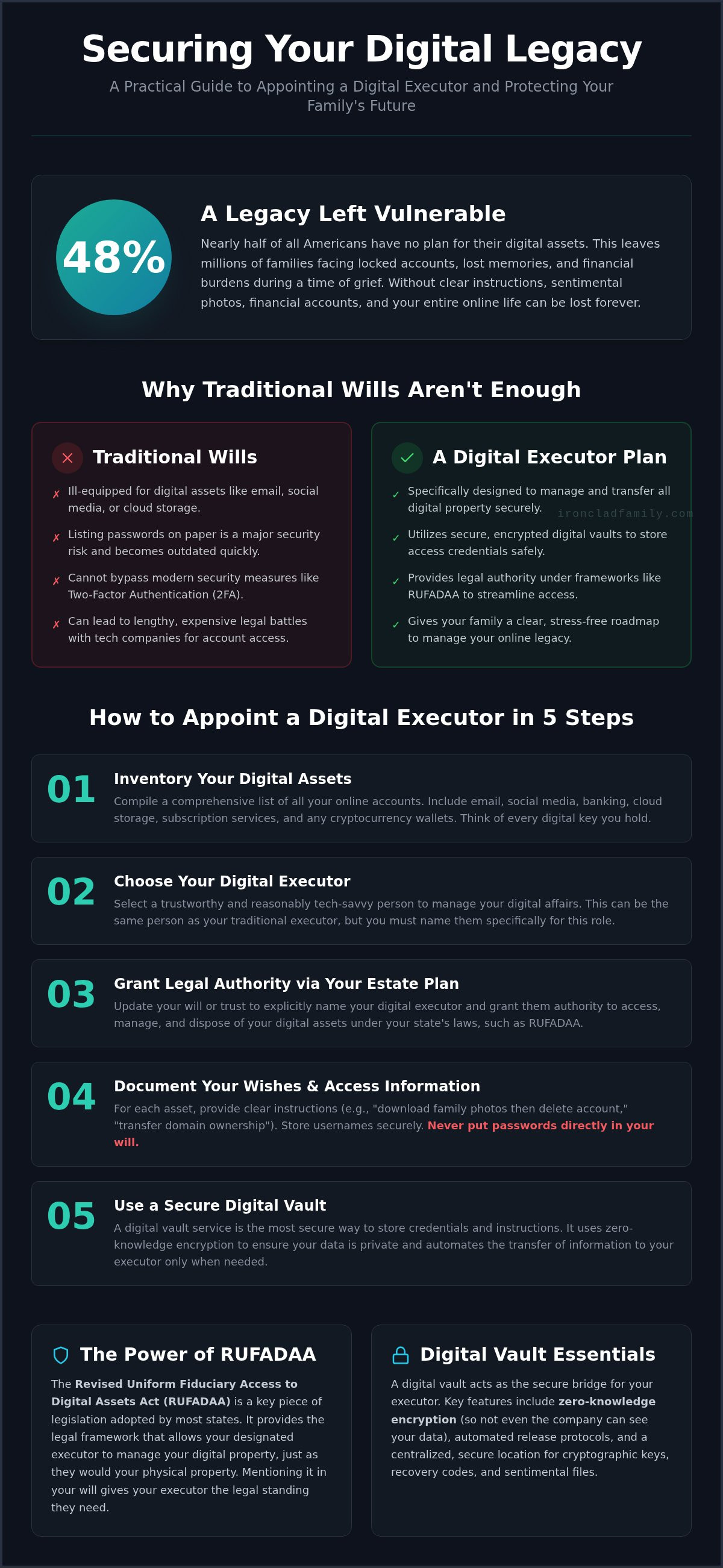
Did you know that 48% of Americans have no instructions for their digital accounts and files after they pass? It's a staggering figure that represents millions of family legacies left vulnerable to the cold, automated logic of tech platforms. You understand that your digital life is more than just data; it's the very essence of your life's work and a living archive of your most precious memories. We're here to help you navigate how to appoint a digital executor so you can secure these assets and ensure your family has seamless access to your online legacy without the stress of locked accounts.
It's natural to feel a sense of anxiety when imagining your loved ones being locked out of sentimental photos or struggling with unmanaged financial accounts. You want to leave behind a gift, not a burden. This guide provides a clear plan for your digital asset transfer, moving you from uncertainty to a state of absolute preparedness. We'll walk through the legal protections of RUFADAA, the importance of state-specific planning, and how to use a digital vault to act as a secure bridge for your loved ones. Peace of mind is within reach.
Key Takeaways
- Understand why your digital footprint is a living legacy that requires more than just a traditional will to protect and pass on.
- Discover the legal framework of RUFADAA and how it empowers your chosen representative to manage your online presence across different states.
- Follow a clear, five-step roadmap on how to appoint a digital executor to ensure your family is never left with the stress of locked accounts.
- Learn how The Vault uses zero-knowledge encryption to automate the secure transfer of critical credentials and legacy messages to your beneficiaries.
- Gain the practical tools needed to inventory your sentimental and financial assets, preventing identity theft while preserving your family history.
The Hidden Burden of Our Digital Lives
Our lives are etched into the cloud. From every photo of a child's first steps to the complex web of our financial identities, our existence is increasingly paperless. This shift creates a beautiful, accessible record of our lives, encompassing everything from financial records to creative digital collections—you can learn more about Donnyfystudios to see examples of premium fantasy artwork that individuals often include in their digital archives. However, this shift also creates a massive vulnerability. When we don't plan for what happens to these assets, we leave behind a chaotic puzzle for our grieving families to solve. Your digital life is a living legacy, yet without proper preparation, it can quickly become an inaccessible burden.
The emotional toll is profound. Imagine a spouse unable to access a decade of family videos because they're locked behind a two-factor authentication code sent to a phone they can't unlock. Beyond the sentimental, the financial risks are real. Unmanaged subscriptions continue to drain estates; abandoned profiles become prime targets for identity thieves. Understanding What is a Digital Will? is the first step in reclaiming control over this modern-day vulnerability and protecting those you love.
To better understand the gravity of this responsibility, watch this helpful video:
Before we dive into the logistics, keep these core principles in mind:
- Digital assets need a specific plan: General instructions in a will are rarely enough to bypass modern technical security.
- Traditional wills are not enough: Physical documents can't keep up with the speed and complexity of the digital world.
- Security matters: Protecting your data today is just as vital as ensuring its safe transfer tomorrow.
What Happens to Your Accounts When You Are Gone?
Big Tech companies prioritize privacy over family access. Even with a death certificate, getting into an email account can take months of legal battles. A phone passcode is a temporary fix; it's not a legacy plan. Without a clear roadmap on how to appoint a digital executor, your loved ones are forced into "digital detective work," scouring drawers for old laptops or guessing security questions during a time of immense grief. It's a heavy weight to place on a family already in mourning.
The Problem with Traditional Wills and Digital Assets
A physical will is a pillar of estate planning, but it's often ill-equipped for the digital age. Listing passwords on paper is a security nightmare, and these documents often become outdated within weeks. Effective generational wealth transfer requires a dynamic solution that bridges the gap between legal authority and technical access. Knowing how to appoint a digital executor ensures that your digital "keys" are handed over securely and legally, protecting your family’s future from the stress of the unknown.
What is a Digital Executor Service?
A digital executor service acts as the high-tech fortress for your life's work. While a traditional executor handles your physical home and bank accounts, a digital executor service provides the specialized tools needed to manage your online inheritance. It's a platform designed to bridge the gap between your digital existence and your family's future access. Think of it as a sacred digital repository that remains locked and silent until the precise moment your loved ones need it most.
There is a critical distinction between the person you choose as your executor and the service they use. You might select a tech-savvy sibling or a trusted spouse to carry out your wishes, but without a dedicated platform, they are essentially locked out. Knowing how to appoint a digital executor involves more than just naming a person in a document; it requires providing them with a secure, automated system to bypass complex encryption and privacy hurdles. This service carries out your final online wishes with the stoic reliability of a technical guardian.
Key Features of a Digital Legacy Platform
Modern legacy platforms offer a robust suite of tools designed for multi-generational continuity. These features move beyond simple password storage to provide a comprehensive safety net for your family. Core capabilities include:
- Secure Storage: A central location for cryptographic keys, recovery codes, and sentimental files that standard cloud storage might delete after inactivity.
- Automated Delivery: Systems that trigger the release of information to designated receivers only after specific conditions are met.
- Identity Verification: Multi-layered checks to ensure that sensitive data is never released to the wrong person, protecting your legacy from unauthorized access.
Securing your legacy shouldn't be left to chance; using a dedicated digital vault ensures your information remains private until it is needed most.
Understanding Zero-Knowledge Encryption
The foundation of a trustworthy digital executor service is zero-knowledge encryption. This technology ensures that not even the service provider can see your private data. Your files are encrypted on your device before they ever reach the server; only you and your designated heirs hold the keys. This cryptographic safety protects your privacy from hackers, government overreach, and even the platform's own employees. It is the digital equivalent of a high-security physical safe where only you possess the combination. By understanding this technology, you can feel absolute preparedness as you learn how to appoint a digital executor, knowing your life’s essence is protected by an unshakeable technical shield.
Why Traditional Planning Often Misses the Digital Mark
A standard last will and testament is a cornerstone of any estate plan, yet it often stops at the physical doorstep. In our modern era, your living legacy exists behind layers of encryption and strict corporate privacy policies. If you haven't specifically addressed how to appoint a digital executor, your family may face a brick wall of legal and technical barriers. Traditional wills frequently lack the specific language required to bypass the Terms of Service agreements that treat your data as a license rather than a personal possession. This legal gap leaves families in a state of uncertainty during an already difficult time.
There is also the ticking clock of inactivity. Major platforms have policies to delete accounts after long periods of dormancy. Without a plan, a lifetime of photos, videos, and correspondence can vanish forever. While many think a password manager is a total solution, it often creates a single point of failure. If your loved ones don't have the master password or access to your two-factor authentication device, the vault remains closed. A password manager is a tool for the living; a digital executor service is a bridge for the future, ensuring your life's work isn't lost to a server purge.
The Legal Reality of RUFADAA
The Revised Uniform Fiduciary Access to Digital Assets Act (RUFADAA) is the primary legal framework that gives executors the authority to manage your digital assets. As of August 2026, 47 states and the District of Columbia have enacted this law. However, if you live in Louisiana, Massachusetts, or Oklahoma, the rules differ significantly. Even in RUFADAA-compliant states, the law follows a three-tiered priority system. Your instructions in a will only take effect if you haven't already used an online tool provided by the platform itself. To ensure your wishes are honored, your estate documents must explicitly grant digital access, providing the legal "keys" your fiduciary needs to act on your behalf. This is a critical step in learning how to appoint a digital executor who can actually perform their duties.
Security vs. Access: The Balancing Act
Sharing your passwords while you're alive might seem helpful, but it can lead to account bans or security flags after you pass. Platforms often interpret log-ins from new locations or devices as suspicious activity, leading to "frozen" assets in online banking or cryptocurrency wallets. This is why a comprehensive family emergency plan checklist is essential. It moves you from a state of vulnerability to one of absolute preparedness. By understanding how to appoint a digital executor through a secure platform, you balance the need for high-trust security today with the necessity of seamless access for your family tomorrow.
How to Appoint a Digital Executor in 5 Simple Steps
Moving from a state of uncertainty to absolute preparedness requires a steady, deliberate approach. You've spent a lifetime building your digital legacy; now it's time to ensure its survival. Following these steps will help you master how to appoint a digital executor while providing your family with a robust, fortress-like solution for the future. This process isn't just about data; it's about the very essence of your life’s work and your family’s future security.
Inventorying Your Digital Life
The first step is a thorough audit of your living archive. You can't protect what you haven't identified. Start by listing your critical financial accounts, social media profiles, and sentimental cloud storage. Don't forget often-overlooked assets like loyalty points, domain names, and subscription services. Categorize these into three tiers: Critical (banking and legal), Sentimental (photos and messages), and Business. This inventory serves as the map for your executor. Learning how to store will online securely ensures that this map is accessible when the physical world fails.
Selecting Your Digital Executor
Choosing your representative is a weightier task than most realize. This person acts as your technical guardian, requiring a unique blend of high-trust integrity and technical literacy. They must be organized enough to navigate complex verification processes and tech-savvy enough to manage cryptographic keys. Once you've identified a candidate, have a candid conversation about your wishes. You can even coordinate these efforts with professionals through an online legal services platform to ensure every detail aligns with your broader estate plan.
Once you've laid the groundwork, complete your plan with these final actions:
- Step 3: Secure credentials in a digital vault. Use a platform like The Vault to store recovery codes and login details. This removes the risk of writing passwords on paper while ensuring automated delivery to your beneficiaries through zero-knowledge encryption.
- Step 4: Add specific legal language. Work with an advisor to include RUFADAA-compliant clauses in your state-specific last will and testament. This provides the legal authority your executor needs to interact with tech giants.
- Step 5: Review and update annually. Your digital footprint expands every day. Set a recurring date to update your inventory and verify that your chosen executor is still willing and able to serve.
Taking these steps today transforms a potential family crisis into a seamless transition of your life's work. You can begin this journey by setting up The Vault for your digital estate and securing your family's future now.
Securing Your Legacy with IronClad Family
You've mapped out the practical steps on how to appoint a digital executor. Now, you need a fortress to house those decisions. IronClad Family provides that sanctuary through The Vault. It's not just a storage space; it's a living archive designed to protect your life's work. By utilizing zero-knowledge encryption, we ensure that your most sensitive credentials remain invisible to everyone, including us, until the precise moment they're needed. This technical shield offers the calm confidence that your legacy is shielded from prying eyes while remaining accessible to those you love.
Our platform completes a modern estate plan for 2026 by bridging the gap between legal intent and technical execution. While a will provides the authority, IronClad Family provides the means. We've replaced the uncertainty of "digital detective work" with a robust, automated system that acts as a technical guardian for your family's future. You can move forward with the peace of mind that comes from absolute preparedness.
The Vault: More Than Just Storage
Most digital tools are built for the user alone. The Vault is built for the family. Our interface is designed with a warm, intuitive clarity that removes the technical anxiety often associated with legacy planning. The heart of this system is the IronClad Receiver. This feature automates the delivery of your emergency access credentials to your chosen loved ones when the time is right. It ensures that your heirs aren't left guessing or struggling with recovery codes during a time of grief. You can explore the full capabilities of our digital vault to see how it fits into your family's security strategy.
A Legacy That Lives On
True preparedness goes beyond passwords. It's about the stories, values, and instructions you leave behind for the next generation. Through Legacy Messages, you can provide the context your family needs to navigate the future with strength. This holistic approach is essential for a successful generational wealth transfer. It ensures that your financial assets and sentimental memories move together, unbroken and protected.
As you finalize your plan, remember that your digital footprint is a sacred repository of your life. Naming a person in a document is the first step, but knowing how to appoint a digital executor within a robust technical framework is the final piece of the puzzle. IronClad Family stands as your partner in this narrative, providing a stoic defense of your information and an empathetic hand for your loved ones. You've built a life worth remembering. We're here to make sure it's never forgotten.
A Living Legacy Built for the Future
Your digital footprint is more than just a collection of files; it's the living archive of your life's work and your family's most cherished memories. We've explored the legal complexities of RUFADAA and the practical roadmap of how to appoint a digital executor to ensure your loved ones aren't left behind a wall of locked accounts. By inventorying your assets and choosing a technical guardian today, you move from a state of uncertainty to one of absolute preparedness.
Don't leave your family's future to the cold, automated policies of tech giants. Secure your family’s digital legacy with The Vault from IronClad Family today. Our platform is specifically designed for 2026 security standards. It features zero-knowledge encryption for total privacy and automated emergency credential delivery to your designated receivers. This ensures your information remains a sacred repository, accessible only when it matters most.
You've worked hard to build a life and a legacy worth remembering. Taking this final step ensures that your story continues and your family remains protected. We're honored to be your partner in securing the future of your next generation. Your peace of mind starts now.
Frequently Asked Questions
What is a digital executor and do I really need one?
A digital executor is a person you designate to manage your online accounts and digital assets after you pass. You need one because standard wills often ignore the technical hurdles of our modern world. Without this role, your family may face years of frustrating digital detective work or the permanent loss of sentimental photos and critical financial data. It's a vital step in protecting your life's work.
Can I just put my passwords in my physical will?
No, listing passwords in a physical will is a significant security risk and highly impractical. Wills often become public records during the probate process, which could expose your sensitive logins to anyone. Furthermore, passwords change frequently. Updating a legal document every time you reset a password is a burden that a secure digital vault resolves with much greater efficiency and safety.
Is a digital executor service safe from hackers?
High-trust digital executor services use zero-knowledge encryption to provide a fortress-like defense against hackers. This technical shield ensures that your data is encrypted on your own device before it ever reaches a server. Since only you and your designated heirs hold the cryptographic keys, even the service provider's employees cannot see your private information. This creates an unshakeable environment for your most sensitive legacy data.
What happens if I forget my master password for a digital vault?
If you forget your master password in a zero-knowledge system, the provider cannot reset it for you because they don't have access to your keys. This is why it is critical to use the provided emergency recovery codes or physical backup keys. You should store these recovery tools in a secure, fireproof location to ensure you never lose access to your living legacy and its contents.
How does a digital executor service handle cryptocurrency?
A digital executor service handles cryptocurrency by securely storing the private keys or seed phrases required to access digital wallets. The service doesn't manage the investment itself but ensures your heirs receive the technical keys needed to claim the assets. This prevents your crypto holdings from becoming permanently frozen or lost on the blockchain due to missing or inaccessible credentials during a transition.
Does a digital executor have the legal right to read my private messages?
Generally, an executor only has the rights you explicitly grant them in your legal documents and platform settings. Under RUFADAA, you can choose to give a fiduciary full access or limit them to just managing the account's closure. Knowing how to appoint a digital executor with specific instructions allows you to maintain your privacy while ensuring your online presence is managed with dignity.
How much does a digital executor service typically cost?
While pricing varies across the industry, most families find these services to be an affordable and essential addition to their estate plan. Some providers offer annual subscriptions while others might provide lifetime access options. It's best to research current market rates for digital legacy platforms to find a solution that fits your specific needs for document protection and family preparedness without compromising on security.
What is the difference between a password manager and a digital vault?
A password manager is a tool for daily convenience, while a digital vault is a comprehensive platform for long-term legacy planning and family protection. A vault provides features that a standard manager lacks, such as automated delivery to beneficiaries and RUFADAA compliance. Understanding these differences is key when deciding how to appoint a digital executor who can successfully navigate the complexities of your online estate.
