---
title: Cryptocurrency and Estate Planning Guide for 2026
description: Secure your digital legacy with cryptocurrency and estate planning guide. Learn legal steps, tax tips, and proven strategies to protect your crypto assets.
image: https://www.ironcladfamily.com/hubfs/featured-cryptocurrency-and-estate-planning-guide-for-2026-rrk3i0.jpg
---
[Skip to content](https://www.ironcladfamily.com/blog/cryptocurrency-and-estate-planning#main-content)
[](https://www.ironcladfamily.com/)
- [WHY DIGITAL VAULTS](https://www.ironcladfamily.com/blog/tag/digital-family-vaults-estate-planning)
- [FINANCIAL PLANNING](https://www.ironcladfamily.com/blog/tag/financial-planning)
- [END OF LIFE PLAN](https://www.ironcladfamily.com/blog/tag/end-of-life-planning)
- [PREPAREDNESS](https://www.ironcladfamily.com/blog/tag/emergency-planning)
- [FOR ADVISORS](https://www.ironcladfamily.com/blog/tag/advisors)

# Cryptocurrency and Estate Planning Guide for 2026

[Sahar Lester December 1, 2025](https://www.ironcladfamily.com/blog/author/sahar-lester)
- [Advisors](https://www.ironcladfamily.com/blog/tag/advisors)
- [Digital Family Vaults & Estate Planning](https://www.ironcladfamily.com/blog/tag/digital-family-vaults-estate-planning)
- [Financial Planning](https://www.ironcladfamily.com/blog/tag/financial-planning)
- 15 mins
As digital assets like cryptocurrency continue to reshape wealth in 2026, estate plans must keep pace with this new financial reality. The surge in crypto ownership brings both opportunity and risk, especially when it comes to legacy planning. This comprehensive guide to cryptocurrency and estate planning will help you protect, manage, and seamlessly transfer your digital assets. We will demystify the legal and tax complexities, outline secure documentation strategies, and provide actionable steps for integrating crypto into your estate plan. Take control now to ensure your digital wealth is preserved for future generations.
## Understanding Cryptocurrency as an Estate Asset
As cryptocurrency and estate planning become increasingly intertwined, understanding digital assets is the first step to safeguarding your wealth. With millions adopting crypto worldwide, these assets now play a central role in estate inventories. Failing to account for them can result in significant, permanent losses for your heirs.

### Defining Cryptocurrency and Digital Assets
Cryptocurrency and estate planning starts with a clear understanding of what digital assets are. Cryptocurrencies such as Bitcoin, Ethereum, stablecoins, and altcoins represent value on decentralized blockchains. Non-fungible tokens (NFTs) and digital collectibles also fall under this category.
To access these assets, owners use digital wallets, each protected by private keys. Hardware wallets offer offline storage, while custodial wallets on exchanges are managed by third parties. The main difference is control—non-custodial wallets give owners full responsibility for security.
Globally, over 420 million people owned cryptocurrency by 2024, making digital assets an essential part of many estates. For a deeper dive, see [What are digital assets](https://www.ironcladfamily.com/blog/what-are-digital-assets) for a comprehensive overview and examples.
### Why Cryptocurrency Requires Special Estate Planning
Irreversible blockchain transactions make cryptocurrency and estate planning uniquely complex. Unlike traditional bank accounts, there is no central authority or customer service to recover lost crypto. The "not your keys, not your coins" principle highlights the importance of private key control.
Real-world cases show millions in Bitcoin are permanently lost due to forgotten passwords or misplaced keys. In contrast, lost access to a bank account can often be resolved with identification and paperwork. This fundamental difference increases the risks for heirs and demands extra caution in planning.
### Common Types of Crypto Assets in Estates
A modern estate plan must address the wide variety of assets covered by cryptocurrency and estate planning. Typical holdings include major coins like BTC and ETH, as well as altcoins, DeFi tokens, and staking rewards. NFTs, stablecoins, and wrapped tokens are also common.
Digital collectibles and metaverse assets are emerging in more portfolios. Security tokens and utility tokens have different legal implications. For example, an estate may contain a mix of cryptocurrency and NFTs, each requiring distinct management and documentation strategies.
| Asset Type | Example | Estate Consideration |
| --- | --- | --- |
| Cryptocurrency | Bitcoin, Ethereum | Wallet and key access |
| NFT | Digital art | Ownership proof |
| DeFi Token | Staked assets | Smart contract management |
| Stablecoin | USDC, DAI | Volatility and liquidity |
| Metaverse Asset | Virtual land | Platform-specific access |
### Challenges in Identifying and Accessing Crypto Assets
Identifying and accessing crypto assets is a major challenge in cryptocurrency and estate planning. Many assets remain hidden in unlisted wallets or under complex multi-signature arrangements. Without proper documentation, heirs may be unaware of digital holdings.
The biggest risk is the loss of private keys, passwords, or recovery phrases. If these are not shared securely, assets can become permanently inaccessible. Studies estimate that about 20 percent of all Bitcoin is already lost or unrecoverable, highlighting the need for meticulous record keeping.
Smart contracts and advanced wallet features add further complexity, making it vital to educate both estate planners and beneficiaries about the risks and solutions involved.
## Legal and Regulatory Landscape for Crypto Estate Planning in 2026
Navigating the legal and regulatory landscape is critical for effective cryptocurrency and estate planning. As digital assets become mainstream, understanding the evolving laws, tax rules, and compliance challenges is essential for protecting your crypto wealth and ensuring a smooth transfer to heirs.

### Current Laws and Regulations Impacting Crypto Inheritance
The regulatory environment for cryptocurrency and estate planning is complex and rapidly changing. In the United States, digital assets are subject to oversight from agencies like the SEC and IRS. The Revised Uniform Fiduciary Access to Digital Assets Act (RUFADAA) has been adopted by 47 states as of 2024, granting executors and fiduciaries specific rights to access digital assets. However, state-level laws can differ, creating inconsistencies in how crypto is handled during probate.
Globally, regulations vary. The EU’s MiCA framework sets standards for crypto markets, while other countries have unique rules regarding inheritance and access. Executors must comply with both federal and state laws, which may require explicit documentation and authorization in estate planning documents.
A key difference from traditional assets is the lack of central authority for cryptocurrencies. There is no customer support to retrieve lost crypto, making clear legal instructions vital. To learn more about legal requirements and best practices for digital asset inheritance, see the [Estate Planning with Cryptocurrency](https://www.americanbar.org/groups/real_property_trust_estate/resources/probate-property/2016-2022/estate-planning-cryptocurrency/) guide from the American Bar Association.
As adoption grows, regulators continue to update guidance, impacting how cryptocurrency and estate planning strategies must evolve.
### Tax Implications of Transferring Crypto at Death
Tax treatment is a core consideration in cryptocurrency and estate planning. The IRS classifies crypto as property, so inherited digital assets may trigger capital gains or estate taxes. When heirs receive crypto, the cost basis is typically set at the market value on the decedent’s date of death, which influences future tax calculations.
Executors must report crypto holdings accurately. There are differences in tax consequences between gifting crypto during life and passing it through a will or trust. IRS rules are evolving, with new updates expected through 2026 that may affect reporting requirements and tax rates.
Failure to account for tax implications can lead to penalties or disputes. It is wise to consult a tax professional familiar with cryptocurrency and estate planning to ensure compliance and minimize liabilities. Proper documentation, including acquisition dates and transaction histories, will support accurate reporting and help heirs avoid surprises.
### International Considerations and Cross-Border Estates
International aspects add another layer of complexity to cryptocurrency and estate planning. Crypto assets are decentralized and borderless, but inheritance laws are not. Jurisdictional conflicts can arise when heirs live in different countries, each with its own regulations and tax rules for digital assets.
For example, an estate holder in the U.S. might have heirs in Europe or Asia, where crypto inheritance laws differ. This can lead to double taxation, reporting obligations in multiple countries, or even potential asset seizure if local laws are not followed.
Tax treaties may help, but estate planners must stay informed about international developments. Clear documentation and legal advice are essential to prevent complications and ensure digital assets are transferred smoothly across borders.
### Legal Pitfalls and Compliance Risks
Legal pitfalls are common in cryptocurrency and estate planning. Failing to disclose crypto assets during probate can result in lost wealth and legal disputes. Privacy and anti-money laundering laws must be respected, especially when handling large or anonymous holdings.
Unclear instructions or missing private keys can spark litigation among heirs. For example, there have been cases where estates faced lengthy legal battles over undisclosed or inaccessible crypto assets.
To reduce compliance risks, estate plans should include explicit digital asset clauses, clear fiduciary authorizations, and regular updates to reflect changing laws. Staying proactive is the best way to safeguard digital wealth and avoid costly mistakes in cryptocurrency and estate planning.
## Secure Documentation and Access Management for Crypto
As cryptocurrency and estate planning become increasingly intertwined, secure documentation and access management are now fundamental. Without a strategic approach, families risk losing valuable digital assets forever. To avoid these pitfalls, let us break down the essential steps for safeguarding your crypto legacy.
### Creating a Comprehensive Crypto Asset Inventory
A cornerstone of effective cryptocurrency and estate planning is a detailed inventory of all digital assets. Start by listing every wallet, exchange account, and type of cryptocurrency you own. Include public wallet addresses, account usernames, and asset types like Bitcoin, Ethereum, or NFTs.
To streamline the process, use inventory templates or digital worksheets designed for crypto. This ensures nothing is overlooked and makes updates simple as your portfolio evolves. Regularly reviewing your inventory helps heirs and executors locate assets efficiently, supporting a seamless estate transition.
- List all wallet types (hardware, software, custodial)
- Document exchange accounts and login info (never store passwords here)
- Include DeFi positions, staking, and NFTs
Accurate records are vital for cryptocurrency and estate planning, reducing the risk of lost or forgotten holdings.
### Protecting Private Keys, Seed Phrases, and Passwords
The security of your digital wealth hinges on protecting private keys, seed phrases, and passwords. For cryptocurrency and estate planning, consider the following storage solutions:
- Hardware wallets: offline, immune to online hacking
- Encrypted USB drives: portable, but vulnerable to physical loss
- Paper wallets: immune to cyberattacks, but can be damaged or misplaced
Each option has pros and cons. Hardware wallets offer strong protection but require safe physical storage. Paper wallets are simple yet fragile. If access credentials are lost or destroyed, assets may become irretrievable.
For more in-depth strategies, see [Protecting digital assets after death](https://www.ironcladfamily.com/blog/how-to-protect-your-digital-assets-after-you-die), which covers best practices for safeguarding your crypto keys. Remember, robust security is key to effective cryptocurrency and estate planning.
### Sharing Access Without Compromising Security
A major challenge in cryptocurrency and estate planning is sharing access with heirs or executors without risking unauthorized use. Multi-signature wallets are a popular solution, requiring approval from multiple parties to move funds. This setup balances security and shared control.
Trusted contacts and emergency access protocols can also help. Use secure, encrypted communication platforms to share instructions and backup credentials. Avoid sending sensitive information through email or unsecured channels.
- Set up multi-signature wallets for joint control
- Designate trusted contacts for emergency scenarios
- Establish clear, secure communication protocols
Thoughtful access planning ensures that your heirs can recover assets when needed, while minimizing security risks related to cryptocurrency and estate planning.
### Role of Digital Vaults and Secure Storage Solutions
Digital vaults have become indispensable tools in modern cryptocurrency and estate planning. These secure platforms allow you to organize and store key documents, wallet details, and access instructions in one place.
Automated document delivery features can trigger the release of information to designated heirs or executors upon your death or incapacity. This reduces the risk of asset loss due to unshared keys or forgotten instructions.
Integration with legal documents and estate plans further streamlines the process. Digital vaults also provide audit trails, so you can monitor who accessed sensitive data and when. These features make digital vaults a central component of secure cryptocurrency and estate planning.
### [IronClad Family Digital Vaults: Protecting Crypto Estate Plans](https://ironcladfamily.com)
IronClad Family offers state-of-the-art, zero-knowledge encrypted digital vaults tailored for cryptocurrency and estate planning. Their platform allows you to store private keys, seed phrases, and estate documents with customizable access controls.
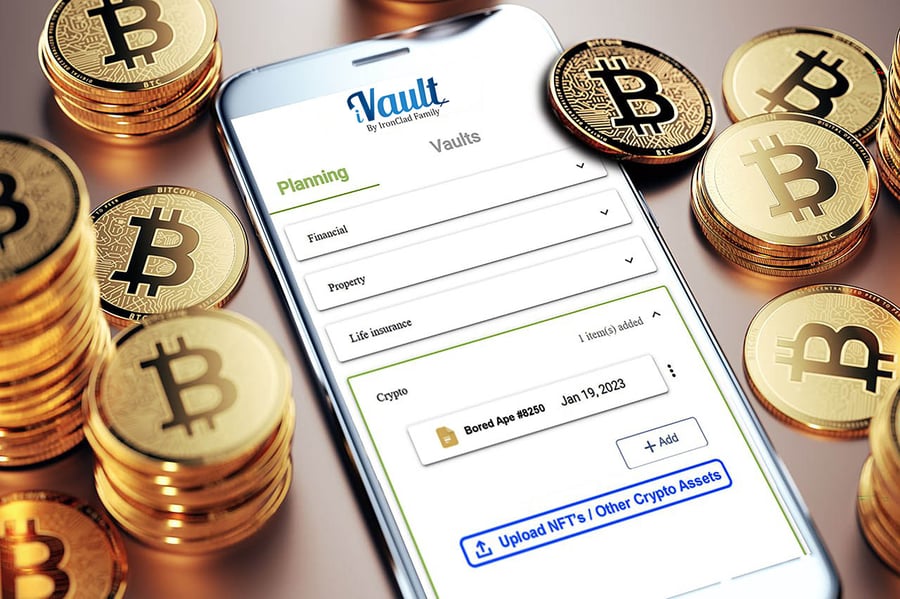
You can set specific triggers, such as death or incapacity, to automate the delivery of critical instructions to your chosen heirs or executors. This proactive approach helps prevent confusion and asset loss that often plagues digital estates.
IronClad Family's solution is ideal for families and professionals managing complex portfolios. With peace of mind, you can be certain that your digital assets will remain secure, accessible, and seamlessly integrated into your cryptocurrency and estate planning.
## Step-by-Step Guide: Integrating Cryptocurrency into Your Estate Plan
Integrating cryptocurrency and estate planning requires a methodical, informed approach. Adopting clear steps will help ensure your digital wealth is protected, managed, and seamlessly transferred to your heirs. Let’s break down the process into actionable phases, each designed to address the unique challenges of digital assets in your estate plan.

### Step 1: Inventory and Valuation of Crypto Holdings
Begin by conducting a thorough inventory of all your digital assets. List every cryptocurrency, NFT, and associated wallet or account, including hardware wallets, exchanges, and DeFi positions. For effective cryptocurrency and estate planning, document both current market values and historical acquisition costs for each asset.
Use a dedicated spreadsheet or digital asset inventory template to organize this information. Regular updates are crucial, given the volatile nature of crypto markets. This ensures your estate plan reflects the true scope and value of your holdings at all times.
### Step 2: Selecting the Right Estate Planning Tools
Choosing appropriate legal tools is essential for cryptocurrency and estate planning. Wills, trusts, and beneficiary designations can all play a role. Consider whether a revocable or irrevocable trust best suits your needs, and explore digital asset-specific trusts for added security.
Legal language should clearly authorize fiduciary access. For a comprehensive overview of integrating crypto into your estate plan, the [Cryptocurrency Inheritance Planning Guide](https://trustandwill.com/learn/cryptocurrency-inheritance-planning) offers practical advice on legal frameworks, security, and beneficiary education.
### Step 3: Drafting Clear Instructions for Executors and Heirs
Effective cryptocurrency and estate planning means providing explicit, step-by-step instructions for accessing each asset. Detail procedures for locating wallets, using private keys or seed phrases, and navigating exchange accounts.
Include legal language referencing relevant digital asset laws, such as RUFADAA, to empower your executor. A sample executor letter or access roadmap can clarify expectations and prevent confusion during the administration process.
### Step 4: Ensuring Legal Compliance and Privacy
Align your estate plan with both state and federal digital asset regulations to avoid legal pitfalls. When documenting cryptocurrency and estate planning strategies, consider privacy—never include sensitive keys in public probate records.
Use secure notarization and encrypted storage for all instructions and documents. This approach protects your digital assets while ensuring compliance with evolving legal standards.
### Step 5: Appointing Knowledgeable Executors or Trustees
Selecting a fiduciary with digital asset expertise is vital in cryptocurrency and estate planning. Choose someone who understands crypto security, wallets, and blockchain technology.
If family members lack this knowledge, consider appointing a professional digital asset custodian. Training your executor or trustee in crypto basics helps prevent delays or mistakes when managing your estate.
### Step 6: Regular Review and Updating of Your Plan
Cryptocurrency and estate planning is not a one-time task. Schedule annual or semi-annual reviews to update your asset inventory, instructions, and legal documents.
Monitor changes in regulations, tax laws, and technology that could affect your plan. Missing an update might lead to inaccessible assets or outdated instructions—regular reviews safeguard your digital wealth.
### Step 7: Communicating Your Plan to Beneficiaries
Open communication is the final cornerstone of cryptocurrency and estate planning. Inform your heirs about the existence and basics of your digital assets without revealing sensitive access details prematurely.
Hold a family meeting or provide written guidance on future asset management. This transparency prevents confusion, ensures a smooth transfer, and fosters trust among beneficiaries.
## Common Mistakes and How to Avoid Them
Estate planning for cryptocurrency is a complex process, and even small missteps can lead to significant losses. To build a robust plan, it is vital to recognize and avoid the most common mistakes that can undermine your cryptocurrency and estate planning efforts.
### Failing to Disclose or Document Crypto Assets
One of the most frequent pitfalls in cryptocurrency and estate planning is neglecting to fully disclose or document digital assets. When crypto holdings are absent from estate inventories, heirs may never know they exist.
- Assets can remain hidden in forgotten wallets.
- Probate courts may be unable to identify or value these holdings.
- Unlisted assets risk becoming permanently lost.
For example, an estate with a missing Bitcoin wallet could result in thousands or even millions of dollars going unclaimed. Always create a comprehensive digital asset inventory to ensure your cryptocurrency and estate planning covers every asset.
### Inadequate Security or Poor Key Management
Security lapses are another leading cause of loss in cryptocurrency and estate planning. Without proper key management, assets can become inaccessible or fall into the wrong hands.
- Storing private keys in unsecured locations increases theft risks.
- Losing a seed phrase can make recovery impossible.
- Weak passwords or unencrypted files invite cyber attacks.
A hacked exchange account or lost hardware wallet can devastate your estate value. To mitigate these risks, follow best practices for [protecting your crypto wallet passphrase](https://www.ironcladfamily.com/blog/protecting-your-crypto-wallet-passphrase), and educate your executor or heirs on secure key storage as part of your cryptocurrency and estate planning.
### Legal Oversights and Outdated Documents
Many plans fall short by omitting digital asset clauses or failing to update documents as laws evolve. Legal oversights in cryptocurrency and estate planning can delay or block asset transfers.
- Wills and trusts may lack language authorizing digital asset access.
- Executors can be denied entry to crypto accounts due to missing permissions.
- Failure to comply with the latest laws can trigger legal disputes.
For example, an executor may be unable to access crypto because the will predates RUFADAA or lacks explicit instructions. Regularly review and update legal documents to keep your cryptocurrency and estate planning compliant and effective.
### Choosing the Wrong Executors or Trustees
Selecting the right fiduciaries is crucial in cryptocurrency and estate planning. Appointing someone unfamiliar with digital assets can hinder the transfer process or even result in lost holdings.
- Executors without crypto knowledge may mishandle wallets.
- Delays in asset liquidation can lead to value loss.
- Complex assets like NFTs can be especially challenging.
Imagine an executor unable to liquidate NFT assets due to lack of expertise. Choose fiduciaries who understand crypto or consider professional digital asset custodians to safeguard your cryptocurrency and estate planning goals.
## Future Trends and Innovations in Crypto Estate Planning
As we look ahead to 2026, the landscape of cryptocurrency and estate planning continues to evolve rapidly. New legal frameworks, cutting-edge security tools, and emerging asset classes all play a role in shaping how digital wealth is managed for future generations.
### Emerging Legal and Regulatory Developments
Laws surrounding cryptocurrency and estate planning are changing quickly, with regulators worldwide responding to the growth of digital assets. In the United States, updates from the SEC and IRS have brought more clarity, while the EU’s MiCA framework sets a new standard for digital asset regulation. Fiduciary access rights are expanding, making it easier for executors to manage crypto holdings under evolving state laws.
Staying updated on these changes is essential for anyone with digital assets. For a deeper dive into regulatory trends and global compliance, see this expert analysis on [estate and tax planning with digital assets](https://chambers.com/articles/planning-for-the-future-estate-and-tax-planning-with-digital-assets-2). As legislation adapts, integrating cryptocurrency and estate planning remains a top priority for protecting your legacy.
### Advancements in Digital Asset Security and Custody
Security innovations are transforming how individuals protect their cryptocurrency and estate planning documents. Institutional-grade custody solutions now offer biometric authentication, multi-signature wallets, and advanced encryption to safeguard assets. Hardware wallets have become more user-friendly, and new technologies provide heirs with easier, more secure access.
Consider the following advancements:
- Biometric-protected wallets for secure access
- Institutional custody platforms with insurance
- Automated key recovery solutions
These tools dramatically reduce the risk of asset loss, ensuring that cryptocurrency and estate planning strategies keep pace with evolving threats.
### Integration of AI and Automation in Estate Management
Artificial intelligence is streamlining cryptocurrency and estate planning by automating compliance, reporting, and asset transfers. AI-driven estate platforms can monitor regulatory changes and update documentation as needed. Smart contracts now allow for automated, conditional transfer of crypto assets to heirs upon specific triggers, such as death or incapacity.
Key benefits include:
- Reduced administrative burden
- Improved accuracy in asset distribution
- Real-time compliance updates
With these advancements, cryptocurrency and estate planning becomes more efficient, transparent, and adaptable to future changes.
### The Role of Professional Advisors and Digital Asset Planners
The complexity of cryptocurrency and estate planning has led to a rise in specialized advisors. These professionals understand both legal frameworks and the technical nuances of digital assets. Collaborations between legal experts and technology firms have resulted in new certifications and best practices for managing crypto estates.
To ensure your plan is robust, consider consulting a qualified advisor. For more on choosing the right fiduciary and legal safeguards, review this detailed guide on [estate planning in the digital age – on cryptocurrency](https://www.bressler.com/publication-estate-planning-in-the-digital-age-on-cryptocurrency). Informed guidance ensures your cryptocurrency and estate planning aligns with current laws and best practices.
### Preparing for the Next Wave of Digital Assets
The future will introduce even more asset classes into the cryptocurrency and estate planning conversation. Tokenized real estate, digital identity, and metaverse holdings are becoming part of modern portfolios. Estate plans must now account for virtual land, digital collectibles, and other emerging digital assets.
To stay ahead, regularly review your plan and update it as new technologies and asset types arise. By anticipating change, you ensure that your cryptocurrency and estate planning remains effective and future-proof for your beneficiaries.
After exploring how vital it is to safeguard your cryptocurrency within a future proof estate plan, you know that secure organization and accessible documentation are key. You do not have to leave your digital legacy to chance—especially when privacy and security matter most for you and your loved ones. With IronClad Family’s digital vault, you can store your crypto keys and estate documents safely, ensuring your instructions reach the right people only when needed.
Take the first step to protect your digital assets for the years ahead—[Start 14 Day Free Trial](https://www.ironcladfamily.com/digital-vault) and experience true peace of mind.

### Sahar Lester
Sahar Lester is the Founder and CEO of IronClad Family, a company dedicated to helping families and businesses safeguard their most valuable assets through secure digital vaults. With a master’s degree in Security Technologies from the University of Minnesota and experience spanning cybersecurity, leadership, and international commerce, Sahar bridges the gap between innovation and protection. She also serves as an adjunct professor at Metropolitan State University, mentoring the next generation of cybersecurity professionals.
[mailto:sahar.lester@ironcladfamily.com](mailto:sahar.lester@ironcladfamily.com)
## Latest posts
- [ALL POSTS](https://www.ironcladfamily.com/blog/all)
[](https://www.ironcladfamily.com/blog/diy-will-guide-protect-your-family-in-2026)
Sep 19, 2026, 6:41:12 AM
### [DIY Will Guide: Protect Your Family in 2026](https://www.ironcladfamily.com/blog/diy-will-guide-protect-your-family-in-2026)
[](https://www.ironcladfamily.com/blog/everplans-vs-digital-vault-with-zero-knowledge-encryption-choosing-your-legacy-strategy-2026)
Sep 19, 2026, 6:23:11 AM
### [Everplans vs Digital Vault with Zero Knowledge Encryption: Choosing Your Legacy Strategy (2026)](https://www.ironcladfamily.com/blog/everplans-vs-digital-vault-with-zero-knowledge-encryption-choosing-your-legacy-strategy-2026)
---
[](https://ironcladfamily.com)
**66 W. Flagler Street, Suite 900**
**Miami, FL 33130**
**United States**
[Tel: 1-786-360-1352](tel:7863601352)
[admin@ironcladfamily.com](mailto:admin@ironcladfamily.com)
#### Products
#### Pages
- [Physical Protection](https://shop.ironcladfamily.com)
- [Digital Protection](https://www.ironcladfamily.com/digital-vault)
- [Advisors](https://www.ironcladfamily.com/advisor)
- [Pricing](https://www.ironcladfamily.com/plans-and-pricing)
- [Security](https://www.ironcladfamily.com/security)
- [Contact](https://www.ironcladfamily.com/contact-us)
#### Learn
- [FAQ](https://www.ironcladfamily.com/faq)
- [Learning Center](https://www.ironcladfamily.com/learning-center)
- [Support](https://support.ironcladfamily.com)
### Get family protection tips and holistic advisor insights!
- [Terms and Services](https://www.ironcladfamily.com/terms-and-conditions)
- [Privacy Policy](https://www.ironcladfamily.com/privacy-policy)
© 2026 IronClad Family. All Rights Reserved. [Follow us on Facebook](https://www.facebook.com/ironcladfamily) [Follow us on LinkedIn](https://www.linkedin.com/company/ironcladfamily) [Follow us on Twitter](https://twitter.com/IronClad_Family) [Follow us on Facebook](https://www.instagram.com/ironcladfamily)

```json
{
"@context" : "https://schema.org",
"@type" : "BlogPosting",
"author" : {
"@type" : "Person",
"name" : "Sahar Lester",
"url" : "https://www.ironcladfamily.com/blog/author/sahar-lester"
},
"dateModified" : "2025-12-01T16:35:26.315Z",
"datePublished" : "2025-12-01T16:35:26.000Z",
"headline" : "Cryptocurrency and Estate Planning Guide for 2026",
"image" : [ "https://www.ironcladfamily.com/hubfs/featured-cryptocurrency-and-estate-planning-guide-for-2026-rrk3i0.jpg" ],
"mainEntityOfPage" : {
"@id" : "https://www.ironcladfamily.com/blog/cryptocurrency-and-estate-planning",
"@type" : "WebPage"
},
"publisher" : {
"@type" : "Organization",
"logo" : {
"@type" : "ImageObject",
"url" : "https://www.ironcladfamily.com/hubfs/Logo%20PNG-1.png"
},
"name" : "IronClad Family"
}
}
```
```json
{
"@context" : "https://schema.org",
"@type" : "Organization",
"address" : {
"@type" : "PostalAddress",
"addressCountry" : "US",
"addressLocality" : "Miami",
"addressRegion" : "FL",
"postalCode" : "33130",
"streetAddress" : "66 W. Flagler St #900"
},
"areaServed" : {
"@type" : "Country",
"name" : "United States"
},
"description" : "Veteran-owned family protection and digital legacy company offering zero-knowledge encrypted digital vaults.",
"email" : "admin@ironcladfamily.com",
"foundingLocation" : {
"@type" : "Place",
"address" : {
"@type" : "PostalAddress",
"addressCountry" : "US",
"addressLocality" : "Miami",
"addressRegion" : "FL"
}
},
"logo" : "https://8926831.fs1.hubspotusercontent-na1.net/hubfs/8926831/Optimization-2022/Logo%20PNG-1.webp",
"name" : "IronClad Family LLC",
"sameAs" : [ "https://www.facebook.com/ironcladfamily", "https://www.linkedin.com/company/ironcladfamily" ],
"telephone" : "+17863601352",
"url" : "https://www.ironcladfamily.com"
}
```
```json
{
"@context" : "https://schema.org",
"@type" : "NewsArticle",
"alternativeHeadline" : "Secure your digital legacy with cryptocurrency and estate planning guide. Learn legal steps, tax tips, and proven strategies to protect your crypto assets.",
"author" : {
"@type" : "Person",
"name" : "Michael Lester",
"url" : "https://www.linkedin.com/in/michaellester"
},
"dateModified" : "2025-12-01T16:35:26+0000",
"datePublished" : "2025-12-01T16:35:26+0000",
"description" : "Secure your digital legacy with cryptocurrency and estate planning guide. Learn legal steps, tax tips, and proven strategies to protect your crypto assets.",
"headline" : "<span id="hs_cos_wrapper_name" class="hs_cos_wrapper hs_cos_wrapper_meta_field hs_cos_wrapper_type_text" style="" data-hs-cos-general-type="meta_field" data-hs-cos-type="text" >Cryptocurrency and Estate Planning Guide for 2026</span>",
"image" : "https://8926831.fs1.hubspotusercontent-na1.net/hubfs/8926831/featured-cryptocurrency-and-estate-planning-guide-for-2026-rrk3i0.jpg",
"mainEntityOfPage" : {
"@id" : "https://www.ironcladfamily.com/blog/cryptocurrency-and-estate-planning",
"@type" : "WebPage"
},
"publisher" : {
"@type" : "Organization",
"logo" : {
"@type" : "ImageObject",
"height" : 60,
"url" : "https://blog.ironcladfamily.com/path-to-logo.png",
"width" : 600
},
"name" : "IronClad Family"
}
}
```