---
title: Guide to the Durable Power of Attorney Document in 2026
description: Discover how the durable power of attorney document protects your finances and legal affairs in 2026. Learn to create, use, and secure your DPOA today.
image: https://www.ironcladfamily.com/hubfs/featured-guide-to-the-durable-power-of-attorney-document-in-tm2uan.jpg
---
[Skip to content](https://www.ironcladfamily.com/blog/durable-power-of-attorney-document#main-content)
[](https://www.ironcladfamily.com/)
- [WHY DIGITAL VAULTS](https://www.ironcladfamily.com/blog/tag/digital-family-vaults-estate-planning)
- [FINANCIAL PLANNING](https://www.ironcladfamily.com/blog/tag/financial-planning)
- [END OF LIFE PLAN](https://www.ironcladfamily.com/blog/tag/end-of-life-planning)
- [PREPAREDNESS](https://www.ironcladfamily.com/blog/tag/emergency-planning)
- [FOR ADVISORS](https://www.ironcladfamily.com/blog/tag/advisors)
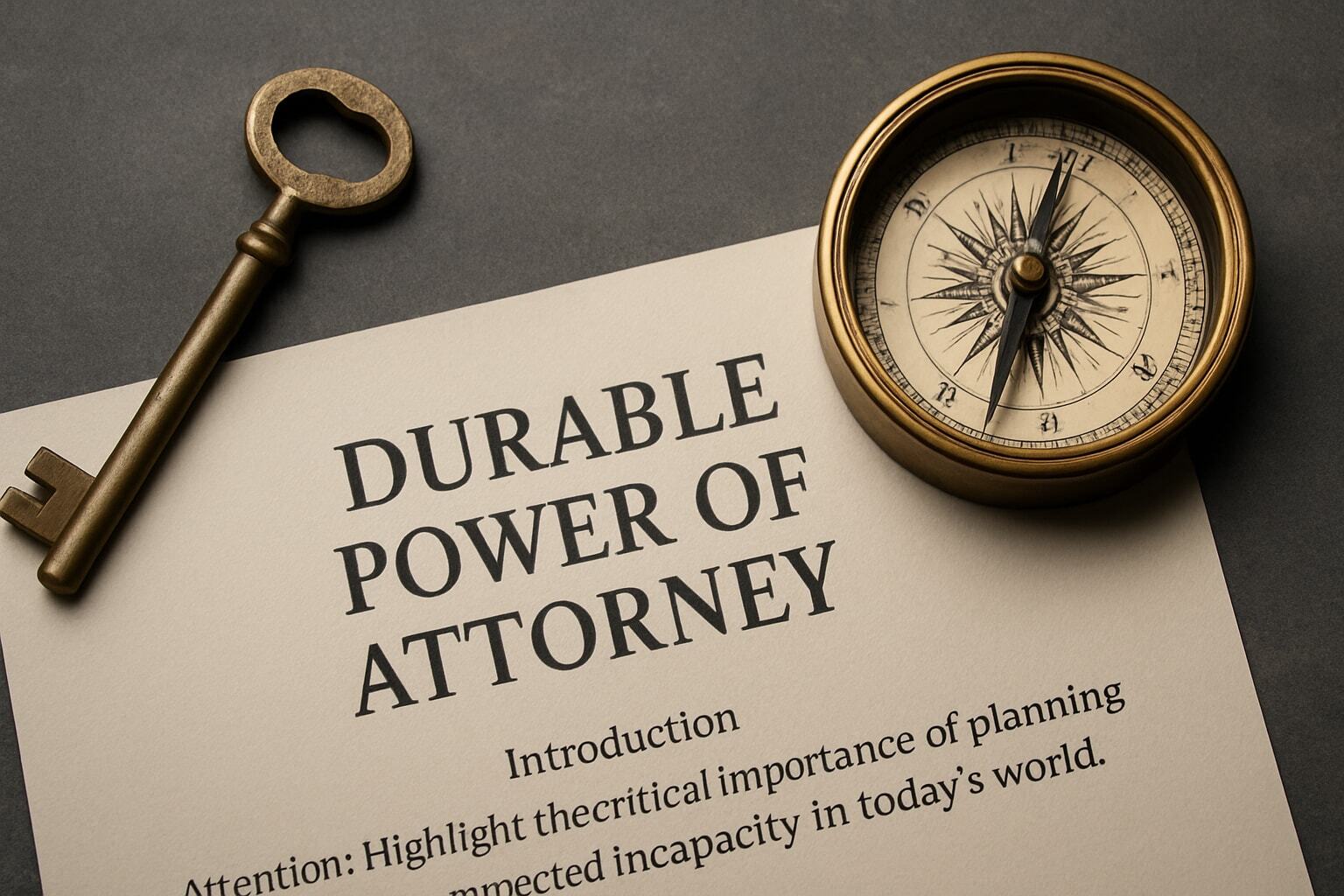
# Guide to the Durable Power of Attorney Document in 2026

[Sahar Lester December 9, 2025](https://www.ironcladfamily.com/blog/author/sahar-lester)
- [Digital Family Vaults & Estate Planning](https://www.ironcladfamily.com/blog/tag/digital-family-vaults-estate-planning)
- [End of Life Planning](https://www.ironcladfamily.com/blog/tag/end-of-life-planning)
- [Financial Planning](https://www.ironcladfamily.com/blog/tag/financial-planning)
- 15 mins
In today's unpredictable world, preparing for unexpected incapacity is more important than ever. Imagine if you were suddenly unable to manage your finances or make legal decisions. A durable power of attorney document ensures your affairs are handled smoothly by someone you trust, even if you cannot act for yourself.
This powerful legal tool offers peace of mind, protects your interests, and secures your family's future. With the right durable power of attorney document, you gain legal protection and confidence that your wishes will be respected.
Ready to take control of your future? This guide will explain everything you need to know about the durable power of attorney document in 2026. Discover its purpose, key legal updates, step-by-step creation, agent responsibilities, revocation rules, and smart storage solutions.
## Understanding the Durable Power of Attorney Document
Planning ahead with a durable power of attorney document is vital for protecting your financial and legal interests. This document gives someone you trust the authority to act on your behalf if you become unable to manage important matters yourself. Understanding how a durable power of attorney document works can help you make informed decisions for your future and your family's security.

### Definition and Key Features
A durable power of attorney document is a legal instrument that allows you (the principal) to appoint someone (the agent or attorney-in-fact) to manage your financial, legal, and property affairs. What sets it apart is its "durability"—this means the authority remains valid even if you become mentally incapacitated. Unlike standard POAs that may end if you are no longer competent, a durable power of attorney document continues to protect your interests.
The main powers typically granted in a durable power of attorney document include:
- Managing bank accounts and investments
- Handling real estate transactions
- Paying bills and taxes
- Accessing safe deposit boxes
- Overseeing business interests
This document is especially essential in situations like sudden illness, prolonged travel, or the natural effects of aging. For example, when a family member suffered a stroke, their agent used the durable power of attorney document to pay bills and prevent foreclosure—a real-life solution that avoided financial hardship.
Legally, a durable power of attorney document is recognized across most states, though local requirements may differ. In fact, over 1.4 million durable power of attorney documents have been customized online, showing the growing demand for this crucial planning tool.
### Durable Power of Attorney vs. Other POA Types
It is important to distinguish a durable power of attorney document from other POA forms. A General POA grants broad authority but typically ends if you become incapacitated. A Limited POA gives power for specific tasks or a set period, while a Medical POA (or healthcare proxy) covers medical decisions.
Here is a quick comparison:
| POA Type | Remains After Incapacity | Scope | Common Use |
| --- | --- | --- | --- |
| Durable | Yes | Broad | Ongoing management |
| General | No | Broad | Temporary delegation |
| Limited | No | Specific tasks | Single transaction |
| Medical | Yes (if specified) | Health care | Medical decisions |
A durable power of attorney document does not cover health care decisions unless explicitly stated. For more details on these distinctions, see [Medical and financial power of attorney differences](https://www.ironcladfamily.com/blog/medical-and-financial-power-of-attorney).
For example, if you want someone to handle your finances while traveling abroad, a limited POA may suffice. But if you need ongoing management after a health crisis, only a durable power of attorney document ensures continuity.
### Who Needs a Durable Power of Attorney?
The durable power of attorney document is not just for seniors. Anyone who wants to protect their assets and ensure smooth management during unexpected events can benefit. This includes:
- Older adults planning for future incapacity
- Frequent travelers or expatriates
- Business owners needing continuity
- Caregivers supporting loved ones
One common misconception is that a durable power of attorney document is only for the elderly. In reality, incapacity can occur at any age due to accident or illness. Studies reveal that nearly 1 in 4 Americans will face a period of incapacity during their lives, making early planning with a durable power of attorney document critical for everyone.
By putting a durable power of attorney document in place, you provide legal clarity, reduce stress on your family, and safeguard your financial future. It is a proactive step that brings peace of mind regardless of your age or health status.
## Legal Requirements and Updates for 2026
Navigating the legal landscape for a durable power of attorney document in 2026 requires careful attention to detail. Understanding the core requirements, new legal developments, and common pitfalls will help ensure your document is valid and enforceable when it matters most.

### Core Legal Elements of a Valid DPOA
To be legally valid, a durable power of attorney document must include specific elements. These are:
- Identification of the principal (the person granting authority)
- Appointment of the agent (the person receiving authority)
- Clear scope of authority granted to the agent
- Signatures of the principal and, in many states, the agent
- Witness signatures as required by state law
- Notarization for added protection and acceptance
States often have additional requirements, such as prescribed language or special acknowledgment forms. Federal law may also influence the acceptance of a durable power of attorney document, especially for financial institutions and tax matters.
Key legal updates for 2026 include expanded acceptance of digital signatures and remote notarization. Many states are adopting uniform standards, making it easier to create and use a durable power of attorney document across state lines. For example, some states now allow fully electronic execution, which streamlines the process for those unable to appear in person. To stay current on these changes, review [Estate planning and legal document updates](https://www.ironcladfamily.com/blog/estate-planning-what-the-montana-supreme-court-ruling-means-for-you) for a summary of recent rulings and their impact.
If the durable power of attorney document is missing any required element, it may be rejected by banks, courts, or other third parties. Always check your state's specific rules before finalizing your document.
### Common Mistakes and How to Avoid Them
Even with the right intentions, mistakes in a durable power of attorney document can create serious problems. Common errors include:
- Incomplete or outdated forms
- Missing or incorrect witness signatures
- Lack of notarization where required
- Ambiguous or overly broad language
- Failing to specify start date or durability
To avoid these pitfalls, use clear language, follow state guidelines, and review the latest legal requirements for 2026. Working with an attorney or reputable online service can help ensure your durable power of attorney document is compliant.
Data from recent surveys indicate that the most frequent reasons for document rejection are missing notarization and unclear authority granted to the agent. To minimize the risk of disputes, provide detailed instructions and communicate your wishes with your agent and family.
Here are some tips for compliance:
- Always use the current state-approved form if available
- Double-check signature and witness requirements
- Clearly define the agent's powers and any limitations
- Store your durable power of attorney document securely and share copies with relevant parties
By following these steps, you reduce the chance of legal challenges and ensure your durable power of attorney document is honored when needed.
### Revocation and Expiration Rules
A durable power of attorney document remains effective until it is revoked or terminated by law. The principal can revoke the document at any time, provided they are mentally competent. Revocation should always be done in writing, with copies delivered to the agent and any institutions relying on the document.
Certain events automatically terminate a durable power of attorney document, such as the principal's death or, in some states, divorce if the agent is a former spouse. Expiration clauses can also be included, setting a specific end date or triggering event.
To properly revoke a durable power of attorney document, follow these steps:
1. Draft a written notice of revocation.
2. Sign and date the notice.
3. Deliver copies to your agent, financial institutions, and any other relevant parties.
4. Request return of all copies from your agent.
By understanding and following these rules, you maintain control over your durable power of attorney document and protect your interests throughout 2026.
## Step-by-Step Guide to Creating a Durable Power of Attorney in 2026
Creating a durable power of attorney document in 2026 requires careful planning and attention to legal details. By following a structured process, you can ensure your financial and legal affairs remain protected if you become unable to manage them yourself.
This guide breaks down each step to help you confidently establish a durable power of attorney document that meets your needs and complies with current laws.
### Step 1: Assess Your Needs and Choose Your Agent
The first step in creating a durable power of attorney document is to evaluate your unique circumstances and select the right agent.
Consider the following factors:
- Trustworthiness: Choose someone who is honest and reliable.
- Competence: Your agent should understand financial and legal matters.
- Willingness: Confirm that your agent is comfortable accepting the responsibility.
You may name co-agents or successor agents to provide backup if your primary agent is unavailable. For instance, some people select a family member for personal familiarity, while others prefer a professional fiduciary for expertise and impartiality.
Selecting the wrong person can result in mismanagement or even financial abuse. Taking time to assess your needs ensures that your durable power of attorney document will protect your interests effectively.
### Step 2: Define the Scope of Powers
Next, clearly outline the authority you wish to grant in your durable power of attorney document. The scope can be broad or limited, depending on your preferences and needs.
Typical powers include:
- Managing bank and investment accounts
- Handling real estate transactions
- Filing taxes and dealing with the IRS
- Overseeing business operations
- Accessing and managing digital assets
You may also include specific instructions or place limits on certain powers. For example, you could restrict your agent’s authority to only manage particular accounts or prohibit large gifts.
A well-defined durable power of attorney document minimizes confusion, reduces the risk of abuse, and helps your agent act confidently on your behalf.
### Step 3: Drafting the Document
There are multiple ways to draft a durable power of attorney document in 2026. You can use:
- DIY templates from reputable sources
- Assistance from an experienced attorney
- Online legal platforms that offer customizable forms
Be sure to include clear language about the agent’s powers, durability (remaining valid after incapacity), and any special instructions. Key clauses should specify when the document takes effect, how your agent is expected to act, and any compensation arrangements.
Data shows that over 1.4 million durable power of attorney documents have been customized online, reflecting the growing trend toward digital legal services. Regardless of your drafting method, accuracy and completeness are essential for a legally enforceable document.
### Step 4: Execution—Signing, Witnessing, and Notarization
To ensure your durable power of attorney document is legally valid, you must follow your state’s specific requirements for execution. Common requirements include:
- Your signature as the principal
- One or more witnesses present during signing
- Notarization of the document
Many states now accept remote or electronic notarization, allowing you to complete this step from home. For example, in 2026, you may use secure video conferencing to notarize your document and have digital witnesses sign electronically.
Double-check your state’s laws to avoid mistakes that could invalidate your durable power of attorney document. Proper execution is critical for your agent’s authority to be recognized by banks, hospitals, and other institutions.
### Step 5: Storing and Sharing the Document
Once your durable power of attorney document is signed and notarized, proper storage and sharing are crucial. Keep the original in a secure but accessible place, such as a locked file cabinet or a secure digital vault.
Provide copies to your agent, successor agents, and key family members. Financial institutions, attorneys, and healthcare providers should also receive copies as needed. Always keep a list of who has access.
For more tips on protecting your legal paperwork, review these [best practices for storing estate planning documents](https://www.ironcladfamily.com/blog/safely-store-your-estate-planning-documents). Secure storage prevents loss, unauthorized access, and delays during emergencies.
### [Secure Digital Storage Solutions for DPOA Documents](https://ironcladfamily.com)
Digital family vaults are transforming how people safeguard their durable power of attorney document and other essential legal papers.
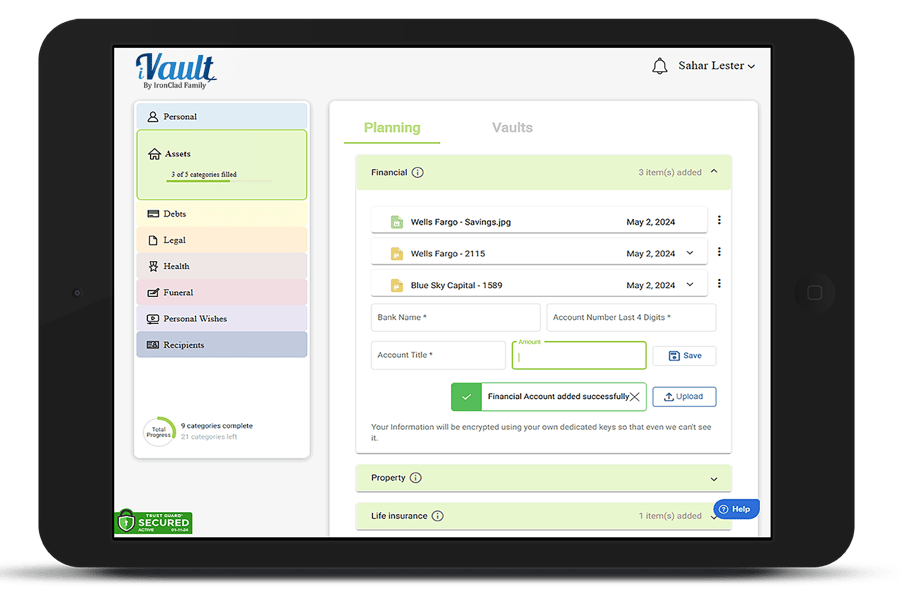
Platforms like IronClad Family offer zero-knowledge encryption, customizable access rules, and secure emergency delivery options. This means only authorized individuals can view your documents, and your privacy is always protected.
Digital storage makes it easy to update, share, and retrieve your durable power of attorney document at any time. In 2026, using a secure online vault supports your estate planning goals and ensures your family is prepared for the unexpected.
## Roles, Responsibilities, and Limitations of the Agent
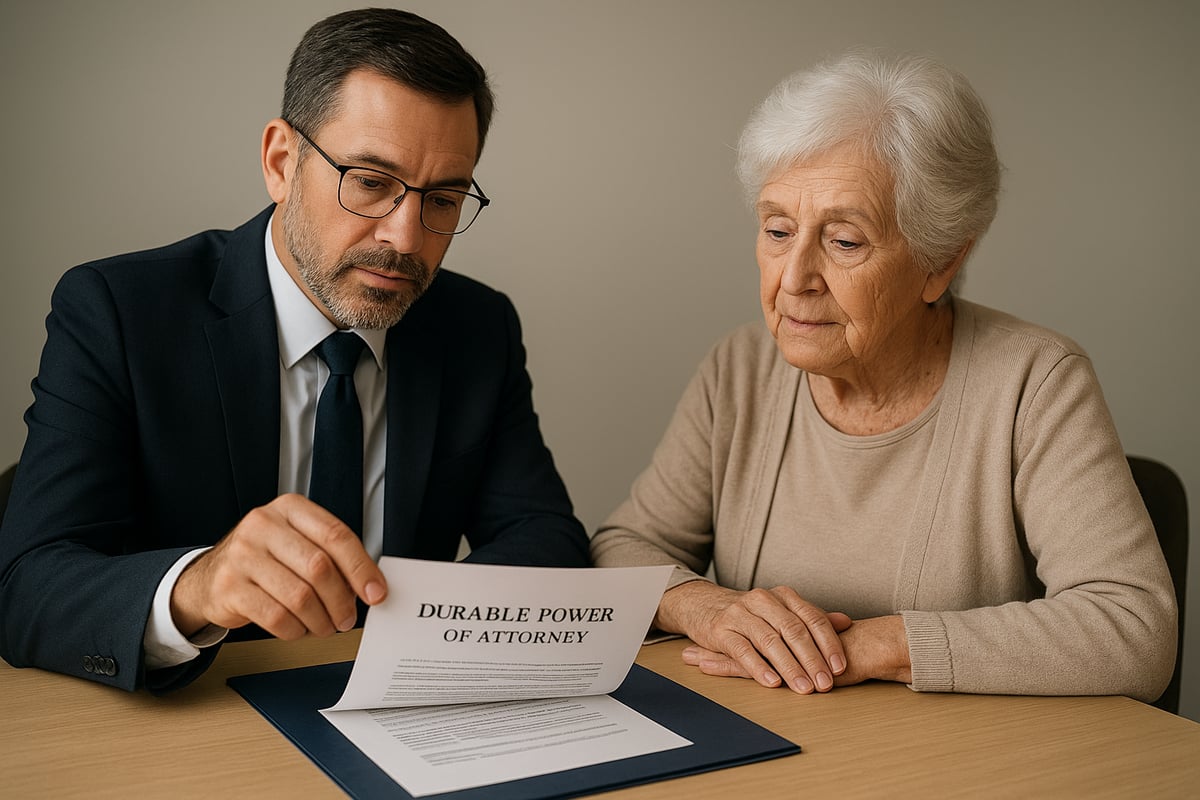
Navigating the responsibilities of an agent under a durable power of attorney document requires a clear understanding of both legal obligations and practical limitations. The agent’s role is central to protecting the principal’s interests, especially when the principal cannot act on their own behalf. This section explores the key duties, compensation rules, oversight mechanisms, and how disputes are managed within the framework of a durable power of attorney document.
### Agent’s Duties and Legal Obligations
The agent appointed in a durable power of attorney document acts as a fiduciary. This means they are legally required to act in the best interest of the principal at all times. The agent must manage finances, property, and legal affairs with diligence and honesty.
Good record-keeping is essential. Agents should keep receipts, account statements, and detailed logs of all actions taken on behalf of the principal. Some states require periodic reporting, and third parties may request documentation before recognizing the agent’s authority.
Prohibited actions include self-dealing, commingling funds, and making unauthorized gifts. The agent must avoid conflicts of interest and may face removal by a court if duties are violated. For tax matters, agents should be familiar with [IRS guidelines on durable power of attorney](https://www.irs.gov/pub/opr-taxpros/508-2025-5-not-all-powers-are-the-same-using-a-durable-poa.pdf) to ensure compliance.
### Compensation and Reimbursement
A durable power of attorney document typically allows the agent to receive reasonable compensation for their services. This can include hourly fees or a flat rate, depending on the principal’s instructions and state law.
Reimbursement for legitimate expenses, such as postage, travel, or legal fees, is also permitted. Clear documentation helps prevent misunderstandings. Some principals specify compensation limits in the document, while others rely on statutory standards.
State laws vary, so agents should review local requirements before accepting payment. If the durable power of attorney document is silent on compensation, agents should consult an attorney or the relevant state statute for guidance.
### Limitations and Oversight
While the durable power of attorney document provides broad authority, there are important checks in place. Agents cannot change beneficiaries on insurance or retirement accounts unless specifically allowed. Large gifts, self-dealing, or transactions that benefit the agent personally are usually restricted.
Oversight mechanisms include co-agents, third-party reviews, and court supervision. If concerns arise, interested parties may petition a court for an accounting or seek agent removal. The [Uniform Power of Attorney Act overview](https://en.wikipedia.org/wiki/Uniform_Power_of_Attorney_Act) explains how many states have standardized these protections.
| Limitation | Description |
| --- | --- |
| No unauthorized gifting | Gifts must follow principal’s instructions |
| No self-dealing | Agent cannot profit from principal’s assets |
| No beneficiary changes | Unless explicitly allowed in the document |
| Required record-keeping | Maintain detailed financial documentation |
### Handling Disputes and Third-Party Challenges
Disputes may arise between the agent, the principal, or family members over the actions taken under a durable power of attorney document. Common issues include disagreements about spending, investment decisions, or allegations of misuse.
To resolve disputes, parties can request mediation or court intervention. Financial institutions may challenge the document’s validity, especially if it is outdated or lacks proper signatures. Providing clear, up-to-date paperwork and following legal formalities helps agents avoid delays.
If a third party refuses to honor a durable power of attorney document, agents may need to provide additional proof or seek legal assistance. Most challenges are resolved once proper documentation and compliance with state law are demonstrated.
## Common Uses and Practical Scenarios for Durable Power of Attorney
Planning for the unexpected is more important than ever. The durable power of attorney document stands as a crucial tool for protecting your finances, property, and personal affairs. Understanding its everyday applications helps ensure you and your loved ones are prepared for life's uncertainties.
### Financial, Legal, and Personal Applications
The durable power of attorney document is widely used to manage financial and legal matters when someone cannot act for themselves. Agents often handle daily banking, pay bills, or access investment accounts to keep everything running smoothly. They may also sign legal documents, manage property sales, or renew insurance policies on behalf of the principal.
Common scenarios include:
- Overseeing mortgage or rent payments during hospitalization
- Selling or maintaining real estate when the owner is abroad
- Handling tax filings and communicating with the IRS
- Gaining access to digital assets, such as online banking or cloud storage
For example, if someone is recovering from surgery, their agent can use the durable power of attorney document to keep essential accounts current and prevent late fees or service interruptions. This flexibility is vital for those who travel often or face sudden health issues.
### Estate and Long-Term Care Planning
A durable power of attorney document plays a key role in estate and long-term care planning. It allows a designated agent to coordinate with attorneys, financial advisors, and healthcare providers, ensuring the principal's wishes are followed even if they cannot communicate them directly.
Agents may:
- Work alongside wills and trusts to manage asset transfers
- Apply for Medicaid or long-term care benefits
- Arrange admission to nursing facilities or manage home care services
For instance, if a parent needs to move into assisted living, the agent can quickly access funds, complete paperwork, and coordinate with medical staff. This proactive use of a durable power of attorney document often prevents delays or financial hardship during critical transitions. It also supports the broader estate plan, helping families avoid costly probate proceedings.
### Special Considerations for Families and Caregivers
Families with complex needs find the durable power of attorney document especially valuable. Blended families, those with minor children, military personnel, and business owners all benefit from tailored DPOA solutions. Out-of-state agents or frequent travelers rely on clear documentation to act efficiently across jurisdictions.
Key considerations include:
- Specifying powers for agents managing business interests
- Addressing digital access for online accounts and virtual assets
- Ensuring minor children's needs are met if a parent becomes incapacitated
Recent data shows more families are integrating DPOA documents into emergency plans. To ensure these documents are available when it matters most, practical guidance on [how to ensure family access to legal documents in emergencies](https://www.ironcladfamily.com/blog/how-to-ensure-family-access-to-legal-documents-in-emergencies) is essential. Secure storage and clear communication give everyone peace of mind, making the durable power of attorney document a cornerstone of modern preparedness.
As you’ve seen, having a Durable Power of Attorney in place is one of the most effective ways to protect your financial and legal interests—especially as laws and digital tools evolve in 2026. By keeping your important documents secure and accessible, you can give yourself and your loved ones true peace of mind, no matter what the future holds.
If you’re ready to take the next step and safeguard your DPOA and other essential records with confidence, you can [Start 14 Day Free Trial](https://www.ironcladfamily.com/digital-vault) of IronClad Family’s secure digital vault today.

### Sahar Lester
Sahar Lester is the Founder and CEO of IronClad Family, a company dedicated to helping families and businesses safeguard their most valuable assets through secure digital vaults. With a master’s degree in Security Technologies from the University of Minnesota and experience spanning cybersecurity, leadership, and international commerce, Sahar bridges the gap between innovation and protection. She also serves as an adjunct professor at Metropolitan State University, mentoring the next generation of cybersecurity professionals.
[mailto:sahar.lester@ironcladfamily.com](mailto:sahar.lester@ironcladfamily.com)
## Latest posts
- [ALL POSTS](https://www.ironcladfamily.com/blog/all)
[](https://www.ironcladfamily.com/blog/diy-will-guide-protect-your-family-in-2026)
Sep 19, 2026, 6:41:12 AM
### [DIY Will Guide: Protect Your Family in 2026](https://www.ironcladfamily.com/blog/diy-will-guide-protect-your-family-in-2026)
[](https://www.ironcladfamily.com/blog/everplans-vs-digital-vault-with-zero-knowledge-encryption-choosing-your-legacy-strategy-2026)
Sep 19, 2026, 6:23:11 AM
### [Everplans vs Digital Vault with Zero Knowledge Encryption: Choosing Your Legacy Strategy (2026)](https://www.ironcladfamily.com/blog/everplans-vs-digital-vault-with-zero-knowledge-encryption-choosing-your-legacy-strategy-2026)
---
[](https://ironcladfamily.com)
**66 W. Flagler Street, Suite 900**
**Miami, FL 33130**
**United States**
[Tel: 1-786-360-1352](tel:7863601352)
[admin@ironcladfamily.com](mailto:admin@ironcladfamily.com)
#### Products
#### Pages
- [Physical Protection](https://shop.ironcladfamily.com)
- [Digital Protection](https://www.ironcladfamily.com/digital-vault)
- [Advisors](https://www.ironcladfamily.com/advisor)
- [Pricing](https://www.ironcladfamily.com/plans-and-pricing)
- [Security](https://www.ironcladfamily.com/security)
- [Contact](https://www.ironcladfamily.com/contact-us)
#### Learn
- [FAQ](https://www.ironcladfamily.com/faq)
- [Learning Center](https://www.ironcladfamily.com/learning-center)
- [Support](https://support.ironcladfamily.com)
### Get family protection tips and holistic advisor insights!
- [Terms and Services](https://www.ironcladfamily.com/terms-and-conditions)
- [Privacy Policy](https://www.ironcladfamily.com/privacy-policy)
© 2026 IronClad Family. All Rights Reserved. [Follow us on Facebook](https://www.facebook.com/ironcladfamily) [Follow us on LinkedIn](https://www.linkedin.com/company/ironcladfamily) [Follow us on Twitter](https://twitter.com/IronClad_Family) [Follow us on Facebook](https://www.instagram.com/ironcladfamily)

```json
{
"@context" : "https://schema.org",
"@type" : "BlogPosting",
"author" : {
"@type" : "Person",
"name" : "Sahar Lester",
"url" : "https://www.ironcladfamily.com/blog/author/sahar-lester"
},
"dateModified" : "2025-12-09T19:37:02.417Z",
"datePublished" : "2025-12-09T19:29:36.000Z",
"headline" : "Guide to the Durable Power of Attorney Document in 2026",
"image" : [ "https://www.ironcladfamily.com/hubfs/featured-guide-to-the-durable-power-of-attorney-document-in-tm2uan.jpg" ],
"mainEntityOfPage" : {
"@id" : "https://www.ironcladfamily.com/blog/durable-power-of-attorney-document",
"@type" : "WebPage"
},
"publisher" : {
"@type" : "Organization",
"logo" : {
"@type" : "ImageObject",
"url" : "https://www.ironcladfamily.com/hubfs/Logo%20PNG-1.png"
},
"name" : "IronClad Family"
}
}
```
```json
{
"@context" : "https://schema.org",
"@type" : "Organization",
"address" : {
"@type" : "PostalAddress",
"addressCountry" : "US",
"addressLocality" : "Miami",
"addressRegion" : "FL",
"postalCode" : "33130",
"streetAddress" : "66 W. Flagler St #900"
},
"areaServed" : {
"@type" : "Country",
"name" : "United States"
},
"description" : "Veteran-owned family protection and digital legacy company offering zero-knowledge encrypted digital vaults.",
"email" : "admin@ironcladfamily.com",
"foundingLocation" : {
"@type" : "Place",
"address" : {
"@type" : "PostalAddress",
"addressCountry" : "US",
"addressLocality" : "Miami",
"addressRegion" : "FL"
}
},
"logo" : "https://8926831.fs1.hubspotusercontent-na1.net/hubfs/8926831/Optimization-2022/Logo%20PNG-1.webp",
"name" : "IronClad Family LLC",
"sameAs" : [ "https://www.facebook.com/ironcladfamily", "https://www.linkedin.com/company/ironcladfamily" ],
"telephone" : "+17863601352",
"url" : "https://www.ironcladfamily.com"
}
```
```json
{
"@context" : "https://schema.org",
"@type" : "NewsArticle",
"alternativeHeadline" : "Discover how the durable power of attorney document protects your finances and legal affairs in 2026. Learn to create, use, and secure your DPOA today.",
"author" : {
"@type" : "Person",
"name" : "Michael Lester",
"url" : "https://www.linkedin.com/in/michaellester"
},
"dateModified" : "2025-12-09T19:37:02+0000",
"datePublished" : "2025-12-09T19:29:36+0000",
"description" : "Discover how the durable power of attorney document protects your finances and legal affairs in 2026. Learn to create, use, and secure your DPOA today.",
"headline" : "<span id="hs_cos_wrapper_name" class="hs_cos_wrapper hs_cos_wrapper_meta_field hs_cos_wrapper_type_text" style="" data-hs-cos-general-type="meta_field" data-hs-cos-type="text" >Guide to the Durable Power of Attorney Document in 2026</span>",
"image" : "https://8926831.fs1.hubspotusercontent-na1.net/hubfs/8926831/featured-guide-to-the-durable-power-of-attorney-document-in-tm2uan.jpg",
"mainEntityOfPage" : {
"@id" : "https://www.ironcladfamily.com/blog/durable-power-of-attorney-document",
"@type" : "WebPage"
},
"publisher" : {
"@type" : "Organization",
"logo" : {
"@type" : "ImageObject",
"height" : 60,
"url" : "https://blog.ironcladfamily.com/path-to-logo.png",
"width" : 600
},
"name" : "IronClad Family"
}
}
```