

- 14 mins
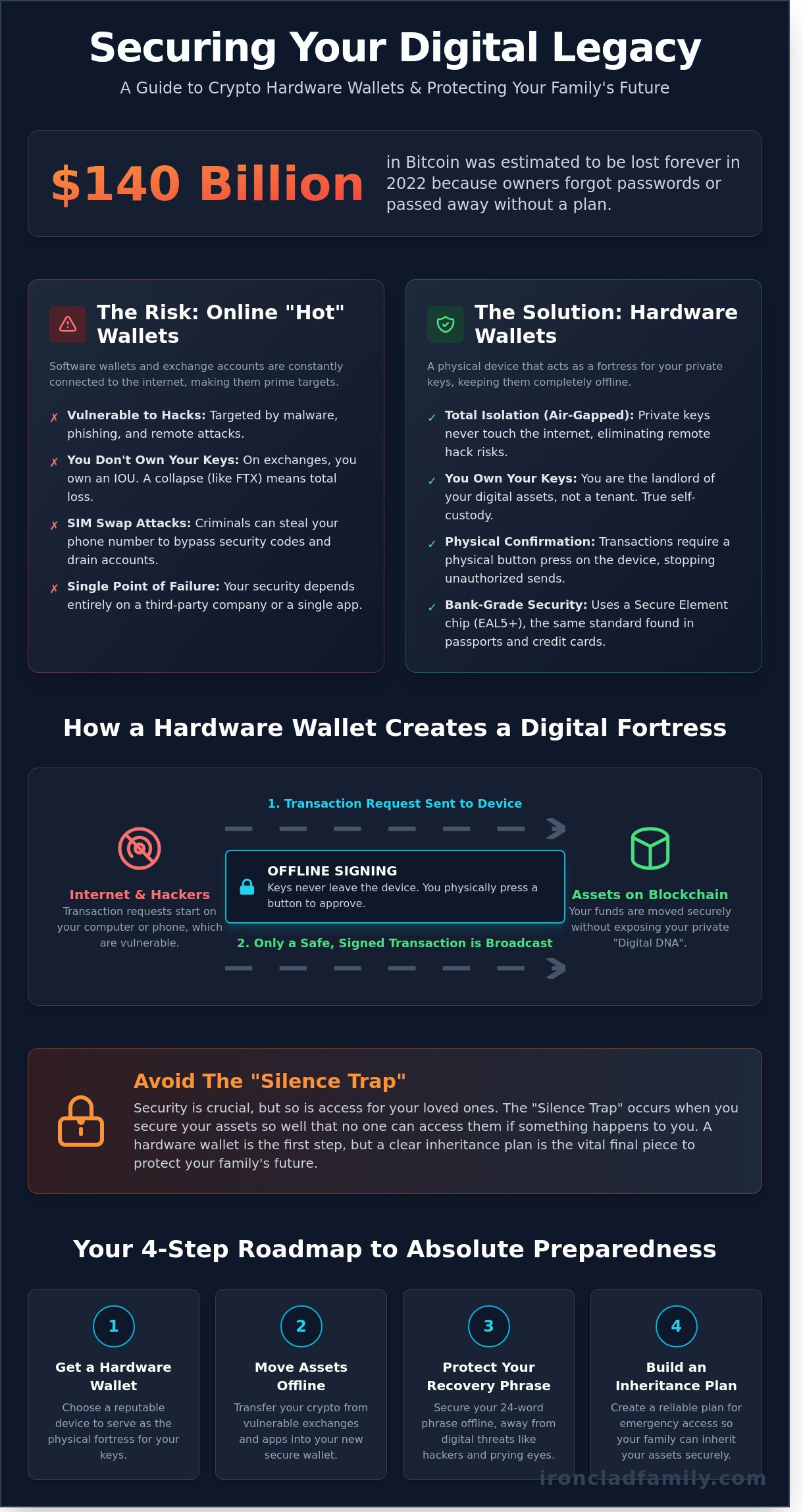
In 2022, an estimated $140 billion in Bitcoin was lost forever because owners forgot their passwords or passed away without leaving clear instructions. Imagine your family facing that same brick wall, knowing the wealth you built is sitting just out of reach. Using a crypto hardware wallet is the first step to preventing this tragedy, yet many people feel overwhelmed by the technical setup. You likely worry about exchange hacks or losing your private keys, and you aren't alone in that anxiety. It's natural to feel protective over the digital heritage you've worked hard to create.
We believe you deserve absolute peace of mind regarding your assets. This guide shows you how to secure your wealth and how to ensure your family can access it when it matters most. You'll learn the simple steps to move your coins into a physical fortress and how to build a clear plan for your digital inheritance. We're going to break down the jargon and provide a straightforward roadmap to protect your family's future. It's time to move from a state of uncertainty to a feeling of absolute preparedness.
Key Takeaways
- Learn why a crypto hardware wallet is essential for moving your digital assets from vulnerable apps into a secure, offline environment.
- Discover the "silence trap" and how to avoid the common mistakes that lead to the permanent loss of your digital inheritance.
- Master the physical steps to set up your device and protect your 24-word recovery phrase away from hackers and digital prying eyes.
- Understand the difference between holding coins and holding keys to ensure your family’s financial future remains under your control.
- Build a reliable plan for emergency access so your loved ones can inherit your digital DNA without compromising your security today.
What is a Crypto Hardware Wallet and Why Your Assets Need One
Imagine your life's work sitting in a digital account that someone else controls. A crypto hardware wallet is a small, physical device that acts as a fortress for your digital wealth. Unlike apps on your phone or computer, this device keeps your private keys entirely offline. According to the foundational definition of a hardware wallet, these tools ensure your sensitive data never touches the internet. This creates a vital "air gap" between your assets and the hackers who want them. It's the most reliable way to secure what we call your digital DNA.
To help you visualize how this protection works, watch this clear breakdown of self-custody:
Key Takeaways for Your Security
- Highest Level of Protection: Hardware devices keep your private keys away from internet-connected threats.
- Asset Size Matters: These devices are essential for anyone holding more than a few hundred dollars in cryptocurrency.
- Removing Failures: Security is about removing the single point of failure; you no longer have to trust a middleman or a bank.
The Risk of Online Vulnerability
Software wallets are often called "hot" wallets because they stay connected to the web. This makes them constant targets for malware and phishing. A hacker can drain a phone app in seconds without you ever knowing. A crypto hardware wallet changes the game by requiring a physical button press on the device to approve any transaction. This simple act stops remote attacks in their tracks. It also protects you from SIM swapping, where a criminal steals your phone number to bypass security codes.
Data from Chainalysis shows that crypto thieves stole $3.3 billion through various exploits in 2022 alone. Most of these victims relied on exchange accounts or software apps. By moving your assets to cold storage, you're not just buying a gadget; you're securing your family's future. You're ensuring that your digital legacy remains under your control, ready to be passed down to the next generation when the time is right. Protecting your wealth requires the same care you'd give to a physical family heirloom.
How Hardware Wallets Protect Your Digital DNA
A crypto hardware wallet acts as a physical guardian for your digital wealth. Many people mistakenly believe these devices store actual digital coins inside them. This isn't how the technology works. Your assets live on the blockchain, which is a global ledger that tracks every transaction. Think of the blockchain as a high-security bank that everyone can see but no one can touch. Your wallet is not the vault itself; it is the unique, unbreakable signature required to move your funds from that vault.
The primary strength of this device is its total isolation from the internet. It keeps your secrets offline, far away from hackers and malware. When you want to send a transaction, the device signs the request internally. It only sends the finished signature back to your computer or phone. This process ensures your sensitive data never touches a connected network. Inside the device sits a Secure Element. This is a specialized chip with an Evaluation Assurance Level (EAL) rating, typically EAL5+ or EAL6+. These are the same security standards used in government passports and credit cards to resist physical tampering.
The Role of the Private Key
Your private key is your Digital DNA. It's a complex string of data that serves as your master signature. If someone steals this key, they own your assets. A hardware wallet manages this key behind a wall of encryption so you don't have to handle the raw code yourself. It uses the key to authorize transactions without ever revealing the key to the outside world. If you lose the physical device, your legacy remains intact. You can use a recovery phrase to restore your keys onto a new device. This ensures your family's heritage stays protected even if the hardware is damaged or lost.
Hardware vs. Software: A Practical Comparison
Software wallets are applications that run on your phone or laptop. They are convenient for daily trading or holding small amounts of currency. However, because these devices are always online, they are constantly exposed to risks. Hardware wallets are designed for your life savings and long-term inheritance. Most security experts recommend keeping at least 90 percent of your digital assets in a hardware device to minimize risk. It's a best practice to use both types of wallets as part of a larger plan. For example, you can store your long-term assets on hardware and keep your recovery instructions in a secure digital vault for families. This creates a layered defense that protects your loved ones from losing access to the family estate.
Common Risks and the Danger of the Silence Trap
Owning a crypto hardware wallet is the first step toward security, but even the strongest vault fails if the door is left unlocked. One of the most dangerous mistakes is buying a device from a third-party seller. Scammers often purchase these units, record the recovery phrase, and then repackage them to look brand new. When you set it up, you aren't the only one with the keys. You must buy directly from the official manufacturer to ensure your digital DNA remains private and untouched.
Phishing remains a constant threat. In 2024, phishing attacks in the crypto space resulted in over 300 million dollars in losses. You must remember a simple rule: no support team or company will ever ask for your recovery phrase. If a website asks you to type your words into a search bar, it's a trap. Your keys should never touch a keyboard connected to the internet. This is the only way to keep your family's future safe from invisible thieves.
The Silence Trap is perhaps the most heartbreaking risk of all. It occurs when a person builds a significant inheritance but never tells their family it exists. Without a clear map, your wealth becomes a ghost in the machine. Roughly 20% of all Bitcoin is currently considered lost forever, often because owners died without sharing access instructions with their loved ones.
The Danger of Digital Backups
Typing your recovery phrase into a computer or taking a photo of it is a recipe for total loss. Cloud storage is a primary target for hackers; if they gain access to your photo library, they own your assets. To be truly secure, your backup must stay offline. A paper backup is a start, but it can be destroyed by fire or water. We recommend using a high-grade steel plate for your backup phrase. These plates can withstand temperatures over 2,000 degrees Fahrenheit, ensuring your legacy survives even the worst household disasters.
The Legacy Risk of Secret Assets
Keeping your crypto hardware wallet a secret might feel like the ultimate security, but it creates a massive barrier for your heirs. The emotional toll on a family is heavy when they know wealth exists but cannot reach it. This frustration often turns a time of grieving into a time of technical stress. This is exactly how generational wealth transfer fails. Without a structured plan that includes your family in the process, your life's work could disappear into the void of the blockchain forever. True protection means being the wise protector who prepares their family for the day they are no longer there to guide them.
Setting Up Your Crypto Hardware Wallet for Long-Term Security
Setting up your device correctly is the most important step in protecting your family's wealth. This process creates the foundation for your digital legacy. It's not just about technology; it's about building a shield around your life's work. Follow these five steps to ensure your assets remain safe for decades to come.
- Initialize the device: When you first turn on your crypto hardware wallet, it will generate a unique 24-word recovery phrase. This is a random sequence created by the device's internal computer. Never use a device that comes with a pre-written list of words.
- Write it down physically: Use the recovery sheets provided in the box. Use a permanent pen. Never take a photo of these words or type them into a computer. Digital copies are vulnerable to hackers, but paper is invisible to the internet.
- Set a strong PIN: Choose a code that is at least six to eight digits long. Avoid obvious patterns like "123456" or your birth year. This PIN protects the physical device if it's ever lost or stolen.
- Perform a test recovery: Before you send any large amounts of money to the wallet, wipe the device and try to restore it using your 24 words. This simple test proves your backup works perfectly. It takes fifteen minutes but prevents a lifetime of regret.
- Secure the phrase separately: Store your recovery sheet in a different building than the device itself. If a fire or flood happens at home, you don't want to lose both the wallet and the backup at the same time.
Understanding the Recovery Phrase
Your 24-word phrase is the actual wallet. The physical crypto hardware wallet is simply a high-tech key that lets you interact with your funds. If your device breaks or disappears, your money isn't gone. You can simply buy a new device and enter your words to regain access. These words are the "Digital DNA" of your estate. Treat them with the same gravity you would the original deed to your home or a master key to a bank vault.
Where to Store Your Backups
Security experts recommend the "Two-Location Rule." Your device stays with you for daily use, while your phrase stays in a secure, remote location. Many people use safe deposit boxes, but these can be difficult for family members to access during a weekend emergency or after a death. Professionals often use a client document vault to ensure their legacy instructions are organized and available to the right people at the right time. This adds a layer of professional oversight to your family's protection plan.
Ready to ensure your family is prepared for any situation? Learn how a professional vault strengthens your family's security.
The Final Piece: Passing Your Crypto Hardware Wallet to Your Family
A crypto hardware wallet is the best way to keep your assets safe from hackers. However, it can become a major problem if your family cannot find it after you are gone. Research from Chainalysis in 2022 showed that about 20 percent of all Bitcoin is currently lost because people cannot access their keys. Your family cannot call a customer service line to recover these funds. If you haven't left a clear path to your device, your hard-earned wealth could stay locked away forever.
You need to make sure your digital assets are part of your complete estate plan. Understanding how to make a will is a great starting point for any parent or professional. But you shouldn't put your private keys or recovery phrases directly in a paper will. These documents often become public record. Instead, your will should let your family know that instructions for your digital legacy exist in a secure, private location.
Creating a Digital Inheritance Plan
A solid plan tells your loved ones where to look and what to do. You should record the physical location of your device. Is it in a home safe, a bank box, or a specific hidden drawer? Write out simple, clear steps on how to use the recovery phrase. Don't use technical talk that might confuse someone who isn't familiar with blockchain. Explain that the list of words is the only key to the vault. Keep the location details in your legal papers, but keep the actual "how-to" guide in a separate, protected space.
Using a Secure Digital Vault for Your Legacy
IronClad Family helps you bridge the gap between high-tech security and family access. A digital vault lets you store the map to your assets without putting the assets themselves at risk. You can set up a system where these instructions are sent to your beneficiaries only when they are needed. This prevents your spouse or children from having to guess during a difficult time. It gives you the peace of mind that your digital DNA is protected and ready for the next generation.
Your crypto hardware wallet is the lock on your digital wealth. IronClad Family is the way you pass the key to the people you love. By planning today, you ensure your digital legacy remains a blessing rather than a mystery for your family.
Securing Your Family’s Digital Heritage
Owning your private keys is the only way to truly control your wealth. By moving your assets to a crypto hardware wallet, you remove the risk of exchange hacks and digital theft. However, true security isn't just about blocking hackers. It's about making sure your family isn't locked out. Chainalysis estimates that 3.7 million Bitcoin are already lost forever because of forgotten keys or lost access. You don't want your life's work to become a statistic.
A complete plan requires both physical security and a clear path for your loved ones. Once your hardware is set up, you must solve the silence trap by organizing your access instructions. This ensures your digital DNA stays within your family for generations. You can take the pressure off your shoulders today by using a system with zero-knowledge encryption for total privacy and state-specific estate planning tools. These platforms offer automated emergency credential delivery so your heritage is never lost.
Learn how to protect your family’s digital legacy with a secure vault
You've done the hard work of building your portfolio. Now, you can rest easy knowing your family is protected and your future is secure.
Frequently Asked Questions
What happens if I lose my crypto hardware wallet?
You can recover your entire digital legacy using your secret recovery phrase on a new device. The physical wallet is simply a key, while your actual assets remain safely on the blockchain. If your device is lost or stolen, you just need to enter your 12 or 24-word phrase into a replacement crypto hardware wallet to restore your access instantly.
Your funds stay safe even if someone finds your lost device. Most wallets wipe all data after 3 incorrect PIN attempts. This protective feature ensures that your family's wealth remains out of reach for anyone who doesn't have your specific authorization.
Can a hardware wallet be hacked?
It is nearly impossible to hack a hardware wallet remotely because the private keys never touch the internet. Since the device stays offline, a hacker cannot access your "digital DNA" through your computer or phone. There are 0 documented cases of a genuine, updated hardware wallet being drained through a remote software attack.
Physical attacks are also extremely difficult. Most reputable devices use a Secure Element chip, which is the same type of technology used in credit cards and passports. This chip is designed to resist sophisticated tampering and hardware snooping, providing a stoic defense for your heritage.
Is a hardware wallet better than a password manager for crypto?
Yes, a hardware wallet is much safer because it signs transactions in an isolated environment. A password manager stores your keys as digital text, which can be stolen if your computer has a virus or malware. A crypto hardware wallet keeps your keys entirely separate from your operating system, ensuring they are never exposed to digital threats.
Think of a password manager as a locked drawer and a hardware wallet as a military-grade vault. While a drawer is better than nothing, only a vault provides the high-trust security required for long-term legacy planning. It moves you from a state of uncertainty to a feeling of absolute preparedness.
Do I need a separate hardware wallet for every type of coin?
No, a single device can typically hold thousands of different types of digital assets at once. Most modern wallets support over 5,500 different coins and tokens, including Bitcoin, Ethereum, and various stablecoins. You can manage your entire portfolio from one interface, making it easier to organize your life's work for the next generation.
You only need to install the specific app for each coin on your device. Even if you delete an app to save space, your coins remain safe on the blockchain. This allows you to maintain a diverse heritage without managing dozens of physical devices.
How do I pass my hardware wallet to my children?
You must ensure your heirs have access to the physical device, the PIN, and the recovery seed phrase. Without these three components, your digital inheritance could be lost forever. It is vital to include these details in your estate plan so your children aren't left guessing during a difficult time.
The most reliable method is to store this sensitive information in a secure digital vault. This ensures that your loved ones can find the "keys to your life" when they need them most. It turns a complex technical hurdle into a simple, guided process for your family.
Can I use a hardware wallet with my phone?
Yes, about 70% of new hardware wallets released since 2023 are fully compatible with mobile devices. You can connect them using Bluetooth or a USB-C cable to manage your assets on the go. This gives you the convenience of a mobile app with the unshakeable security of offline storage.
Using a wallet with your phone doesn't lower your security. The phone app only acts as a screen to view your balance and prepare transactions. Every transfer still requires a physical button press on the hardware device itself to confirm the action.
What is a seed phrase and why is it so important?
A seed phrase is a list of 12 to 24 random words that acts as the master key to your entire digital fortune. If your hardware device is destroyed or the manufacturer goes out of business, these words are the only way to get your money back. It is the most critical piece of information in your digital estate plan.
You should never type these words into a computer or take a photo of them. If a hacker gets your seed phrase, they can steal your assets without needing your physical wallet. Writing them on paper or etching them into metal and storing them in a safe location is the best way to protect your family's future security.

