

- 12 mins
digital-family-vaults-estate-planning advisors
What if the very tools you use to protect your legacy actually left a backdoor open for others to see your private life? Whether you are a parent organizing your home or a professional helping clients, you want to ensure vital records aren't left to chance. However, when comparing Everplans vs digital vault with zero knowledge encryption, the most important factor isn't the user interface. It is about who actually holds the keys to that digital legacy and whether a provider can access sensitive documents without your permission.
You deserve to know if a platform can see your data or if they have built a fortress that only you and your chosen heirs can enter. Most people assume that "secure" means the same thing across every service, but the technical reality is quite different. This uncertainty often leads to anxiety about family members or clients being locked out of accounts after a death or a crisis.
In this guide, we clear up the confusion between custodial and non-custodial storage to help you find absolute peace of mind. We will explore why zero-knowledge privacy is the gold standard for your life's work in 2026. You will learn how to avoid common document mistakes and discover a clear path to ensuring your family’s digital legacy remains both private and accessible.
Key Takeaways
- Understand why standard cloud storage may leave your documents vulnerable to providers who hold the master keys to your data.
- Learn the critical differences between Everplans vs digital vault with zero knowledge encryption to decide which level of privacy your family needs.
- Discover how to prevent your vital records from becoming "digital ghosts" that your family cannot access during an emergency.
- Identify common estate planning errors, such as confusing a simple password manager with a complete, long-term legacy strategy.
- Get a practical checklist to audit your digital readiness and ensure your life's work remains a secure, living legacy for the next generation.
The Risk of Inaccessible Records in Estate Planning
Many families spend years building a life, only to leave their most important documents in a state of digital chaos. You might have your will in a desk drawer, your life insurance in a filing cabinet, and your bank passwords in your head. When a crisis strikes, these scattered pieces of information often become "digital ghosts." They exist, but they're unreachable by the people who need them most.
Standard cloud storage providers often hold the master keys to your data. This means that if you lose access or pass away, your family has to jump through legal hoops just to prove they have the right to see your documents. This process is slow, expensive, and emotionally draining. When evaluating Everplans vs digital vault with zero knowledge encryption, you have to consider whether you want a platform that simply organizes your information or one that protects it with a technical fortress.
When Digital Assets Become Digital Ghosts
Locked phones and encrypted accounts can become permanent barriers for your heirs. If there's no clear recovery path, your digital legacy essentially disappears. Convenience often comes at the cost of permanence. While it's easy to save a file to a basic cloud drive, that drive isn't designed for generational handoffs. Heirs often face a heavy emotional toll when they can't find essential instructions or sentimental photos because they're locked behind a screen they can't open.
The Legal Cost of Disorganization
Missing documents lead to "stranded wealth." This happens when bank accounts, crypto wallets, or insurance policies are forgotten because nobody knew they existed. Without a clear record, your family might end up in a long probate battle. A paper-only strategy often fails because so much of our lives is now digital-only. Common consequences of disorganization include:
- Extended Probate: Legal battles that drain the estate's value and take months to resolve.
- Decision Delays: Missing medical directives that prevent doctors from acting on your wishes.
- Lost Assets: Life insurance policies or retirement funds that go unclaimed forever.
You can avoid these pitfalls by making sure you protect important documents before a crisis occurs. True security requires a balance. Your data must be private enough that hackers can't reach it, but accessible enough that your spouse or children can. This is where zero-knowledge encryption becomes vital. It ensures that not even the storage provider can see your files. When choosing between Everplans vs digital vault with zero knowledge encryption, remember that privacy is the foundation of a legacy that lasts.
Everplans vs Digital Vault with Zero Knowledge Encryption: A Security Breakdown
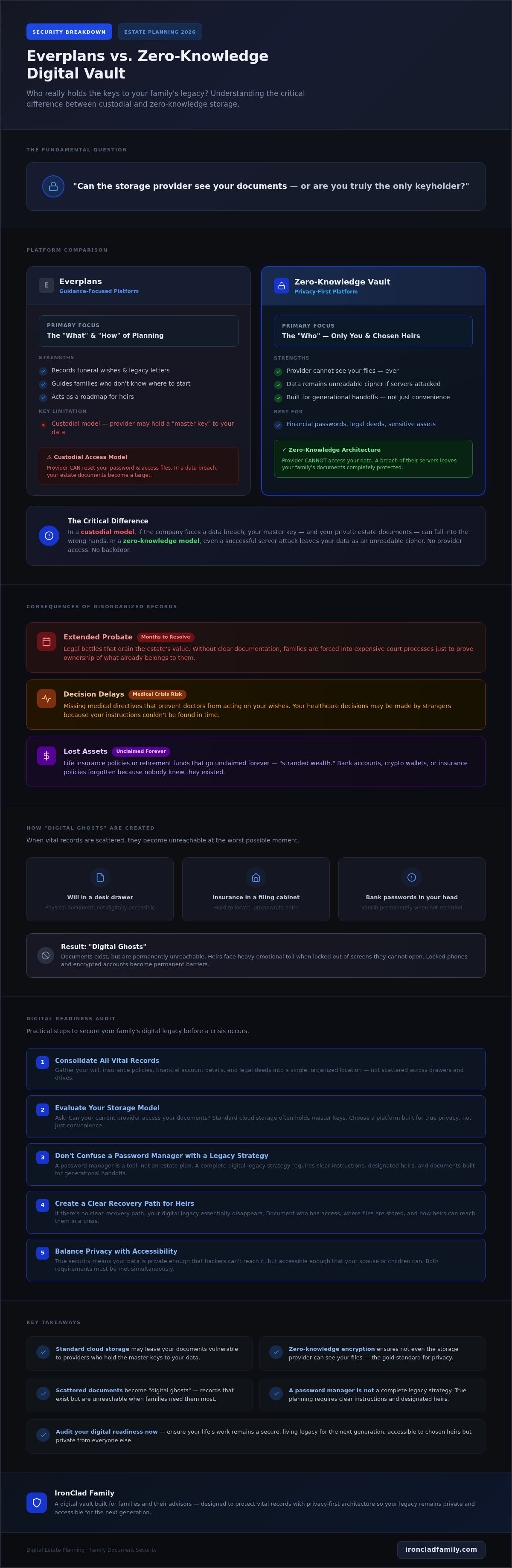
Choosing between Everplans vs digital vault with zero knowledge encryption is not just about picking an app. It's about deciding who you trust with the keys to your life's work. Everplans is a leader in guidance. It walks you through the "what" and "how" of planning. It helps you record funeral wishes or write a letter to your children. This is the "soft" side of a legacy. It's very helpful for families who don't know where to start. It acts as a map for your heirs.
However, a zero-knowledge vault focuses on the "who." Specifically, it ensures that only you and your chosen heirs can ever see your data. This is the "hard" side of legacy planning. It protects your most sensitive assets, like financial passwords and legal deeds. When comparing Everplans vs digital vault with zero knowledge encryption, the difference lies in whether the company itself can access your information.
Privacy Models: Custodial vs. Zero-Knowledge
The biggest technical difference is custodial access. In a custodial model, the company can often reset your password or help you recover your account. This sounds like a convenience, but it means the provider holds a "master key" to your vault. If the company faces a data breach, that key could fall into the wrong hands. Your private estate documents become a target for hackers because the provider has a way in.
Zero-knowledge encryption means the provider has no way to see your files. If their servers are ever attacked, your data remains an unreadable cipher. It's a digital fortress. This security doesn't have to be hard to use. It simply means you are the only owner of your information. You don't have to worry about a third party looking at your private records.
Feature Comparison: Planning vs. Secure Execution
Everplans is excellent for organizing "soft" legacy items. It's a planning tool that helps you think through end-of-life decisions. A zero-knowledge vault is built for "hard" assets. These include crypto keys, private legal documents, and master passwords. When you are deciding how long to keep important financial records, you need a place where those records stay private for decades.
Most families actually need both a plan and a fortress. You want the guidance of a plan, but you need the unshakeable defense of a vault. You can store family records safely using a system that combines these two worlds without compromising your privacy. This approach ensures your legacy is both well-organized and completely secure.
Common Mistakes in Digital Document Organization
Organizing your records is a noble goal, but using the wrong tools can create a false sense of security. Many families believe that having a password manager is enough to handle their digital inheritance. While these tools are great for daily use, they aren't built to manage a complex legacy. They often lack the specific legal triggers needed when you're gone. When comparing Everplans vs digital vault with zero knowledge encryption, it's clear that your choice must account for more than just storage; it must account for human error.
A common mistake is writing master passwords on a piece of paper. You might think it's safer than the cloud, but paper can be lost, stolen, or destroyed in a house fire. Similarly, failing to update emergency contacts on your social media or financial accounts can leave your heirs locked out for months. Shared folders in standard apps are another trap. If your account is closed or the link expires, your family loses everything. Legacy planning requires a more permanent solution.
The "Standard Cloud" Security Trap
Services like Google Drive or Dropbox are convenient, but they aren't designed for multi-generational protection. These platforms follow standard data security best practices for active users, but they often deactivate accounts after long periods of inactivity. If you haven't logged in for two years, your legacy folder might simply be deleted. Basic storage also lacks automated delivery. There's no system to recognize a crisis and release files to your loved ones.
Relying on a Single Point of Failure
If only one person in the family holds the keys to every account, the entire family is at risk. If that person becomes incapacitated, the fortress becomes a prison. Procrastination is the biggest enemy here. Many people say they'll organize things tomorrow, but tomorrow isn't guaranteed. Setting up a secure system removes this single point of failure. It ensures that your chosen receivers get access exactly when they need it. This balance of privacy and accessibility is why the debate of Everplans vs digital vault with zero knowledge encryption matters so much for your family's future.
Practical Steps to Secure Your Family Legacy
Moving from a state of uncertainty to a feeling of absolute preparedness requires a clear plan of action. While the debate between Everplans vs digital vault with zero knowledge encryption often focuses on technical specs, the real work happens when you audit your life's work. You can't protect what you haven't identified. Start by creating a comprehensive list of everything your family would need if you weren't there to guide them. This process moves your legacy from a collection of files to a structured inheritance.
Security is the foundation of this process. Choosing a vault that supports zero-knowledge encryption ensures that your private data remains unreadable to everyone except you and your heirs. Once you've selected a secure platform, you can begin assigning "Receivers." These are the specific people who will receive access to certain folders or credentials during an emergency. By setting specific access levels, you ensure that sensitive information only goes to the right hands at the right time.
How to Conduct a Family Readiness Audit
A thorough audit goes beyond bank accounts and insurance policies. It should cover four main categories: financial records, legal documents, digital assets, and sentimental items. You might find it helpful to use a family readiness assessment to ensure nothing slips through the cracks. Don't forget about hidden assets. Loyalty points, website domain names, and digital photo archives often represent significant financial and emotional value. Identifying these items now prevents them from becoming lost history later.
Setting Up Automated Delivery Triggers
A secure vault is only useful if your heirs can actually get into it when the time comes. This is where automated delivery triggers, sometimes called a "Dead Man's Switch," play a vital role. These systems monitor your activity through an inactivity timer. If you don't check in for a set period, the vault begins a verification process. It's important to set these timers carefully to avoid false alarms. Once the system confirms a crisis, it automatically releases instructions to your beneficiaries. This ensures your spouse or children get exactly what they need without having to fight a tech company for access.
Enforceable wishes require more than just a digital note. Your vault should store state-specific legal documents that carry the weight of the law. When you evaluate Everplans vs digital vault with zero knowledge encryption, look for a solution that treats these files as a sacred repository. You can start building your technical fortress by exploring a secure digital vault for families to ensure your legacy remains private and accessible.
Protecting Your History with IronClad Family
Positioning yourself as a technical guardian for your life's work requires a platform that understands both security and sentiment. When you evaluate Everplans vs digital vault with zero knowledge encryption, you're choosing between a helpful guide and a secure fortress. This platform provides the unshakeable defense needed for a multi-generational legacy. It moves beyond simple organization by providing state-specific legal tools and remote online notary services. These features ensure that your documents are not just stored, but are legally ready for your heirs to use. It is the definitive way to move from a state of uncertainty to a feeling of absolute preparedness.
The Vault Advantage for Families
The core of this strategy is a zero-knowledge architecture. This technical structure ensures that not even the service providers can see your files, passwords, or private messages. You remain the sole owner of your information at all times. To prevent your records from becoming "digital ghosts," the system uses a specialized receiver framework. You designate specific people to receive certain folders or credentials. This transfer happens seamlessly during a crisis, guided by the inactivity triggers you have set. You can also include encrypted Legacy Messages to preserve your voice and values for the next generation.
A Solution for Financial Advisors
Professionals can use a digital vault platform for advisors to deepen client relationships and build lasting trust. When clients ask about the security of Everplans vs digital vault with zero knowledge encryption, you can offer a solution that prioritizes absolute privacy. Managing a client's legacy requires a secure way to handle their digital inheritance while maintaining RUFADAA compliance. This legal standard is the foundation for how executors access digital accounts. Advisors can also provide white-glove services to help high-net-worth clients organize complex estates. This holistic approach identifies forgotten assets and ensures every piece of a family's history is protected.
Securing Your Family’s Digital Future
Your digital legacy is the essence of your life’s work. It deserves more than a standard cloud folder or a custodial planning tool where a company holds the master keys. By understanding the differences between Everplans vs digital vault with zero knowledge encryption, you can choose a path that prioritizes absolute privacy. A secure strategy combines high-tech safety with human warmth. It ensures that your most sensitive records, from financial passwords to state-specific legal tools, remain unreadable to everyone except your chosen heirs.
True preparedness means your family won't have to struggle with locked accounts or missing instructions during a crisis. With automated emergency delivery, you can rest easy knowing your legacy will be passed on exactly as you intended. You have the power to move from uncertainty to absolute peace of mind. Your family's future security starts with a single, thoughtful decision.
Learn how to protect your family’s most important documents with a secure digital vault.
Frequently Asked Questions
What is the main difference between Everplans and a zero-knowledge vault?
Everplans is a custodial planning tool that helps you organize end-of-life wishes and documents. A zero-knowledge vault is a technical fortress where only you hold the decryption keys. In the debate of Everplans vs digital vault with zero knowledge encryption, the key difference is privacy. Everplans can potentially access your data to help you recover it, while a zero-knowledge provider like IronClad Family has no way to see your files.
Can IronClad Family see the documents I store in my vault?
No, IronClad Family cannot see any of your stored documents. The platform uses zero-knowledge encryption, which means your data is scrambled before it ever leaves your device. Only you have the master key to unlock it. This architecture ensures that even if the servers were compromised, your private information remains an unreadable cipher. Your documents stay private because the company doesn't have a way to look inside your vault.
What happens to my digital vault if I am incapacitated but not deceased?
Your vault is designed to handle emergencies, not just end-of-life scenarios. You can set up automated delivery triggers that release specific credentials or documents to your receivers if you are incapacitated. The system monitors your activity via an inactivity timer. If you don't check in and the system verifies a crisis, your family gets the access they need to manage your affairs and make medical decisions on your behalf.
Is zero-knowledge encryption safe for someone who is not tech-savvy?
Yes, it's very safe and simple to use. While the technical side of the security is complex, the user experience is straightforward. You just create a strong master password and use the vault like any other digital folder. You don't need to understand cryptography to benefit from it. The platform handles the technical protection in the background, giving you a secure way to pass on your legacy without any technical stress.
How does automated delivery work for my family members?
Automated delivery uses a secure inactivity timer to release information to your heirs. You choose which family members get access to specific folders or files. If you stop checking in with the vault for a set period, the system sends a notification to verify your status. Once the crisis is confirmed, the system automatically sends the necessary access credentials to your loved ones so they aren't locked out of important accounts.
Do I still need a physical will if I have a digital vault?
A digital vault stores your documents, but you still need a legally valid will. IronClad Family offers state-specific wills and remote online notary services to help you create these documents. You can store the digital version in your vault for easy access, but some courts still require physical copies. The vault ensures your family can find the document instantly, which is often the biggest hurdle in estate planning.
Can I share specific documents without giving away my master password?
Yes, you can share specific files or folders with others without giving away your master password. The system allows you to assign different access levels to your beneficiaries. You might give your spouse access to everything, while your adult children only see specific financial records or sentimental messages. This granular control keeps your most sensitive information private while still ensuring your family is prepared for the future.
Why is RUFADAA compliance important for my digital estate?
RUFADAA is a set of laws that gives your executors the legal right to access your digital accounts. When comparing Everplans vs digital vault with zero knowledge encryption, choosing a RUFADAA-compliant platform like IronClad Family is vital. It ensures your digital legacy is legally protected and follows national standards. This compliance makes it much easier for your family to manage your digital assets without facing long legal battles with tech companies.
