

- 13 mins
What if your family's entire history was locked behind a screen they could never open? According to a 2024 study by the AARP, nearly 70% of adults haven't made a plan for their online assets. This gap leaves families vulnerable to identity theft and the permanent loss of precious memories. You've worked hard to build your life; it's only natural to worry about who will hold the keys to your digital DNA when you're gone. Utilizing professional digital executor services is the most reliable way to bridge this gap between high-tech security and family heritage.
You'll learn the practical steps to protect your legacy and ensure your loved ones have the access they need. We'll provide a clear roadmap for selecting a guardian for your accounts and setting up a secure inheritance plan. We'll explore how to organize your passwords, protect your encrypted files, and give your family peace of mind. This guide moves you from a state of uncertainty to a feeling of absolute preparedness for the future.
Key Takeaways
- Understand why traditional wills often fail to provide access to your online life and how a digital guardian protects your family heritage.
- Learn how to categorize your digital DNA, from financial accounts and crypto to the priceless memories stored in your social media profiles.
- Follow five practical steps to choose and manage digital executor services to ensure your loved ones are never locked out of your important accounts.
- Discover the critical differences between a traditional executor and a digital one, and why your estate plan needs both to be complete.
- See how a secure digital vault acts as a bridge, automatically releasing the keys to your life to your family only when they need them most.
What Are Digital Executor Services and Why Do They Matter?
Your legacy is no longer just stored in boxes in the attic. It lives on servers, in the cloud, and behind encrypted passwords. A digital executor is the person or professional service you choose to manage your online accounts and data after you pass away. Using digital executor services ensures that your digital DNA, which includes your photos, messages, and memories, reaches the people you love. Most traditional wills fail to provide access to these assets because they don't include the specific legal permissions or technical keys needed to bypass modern security.
To get a better sense of why this is so important, it's helpful to look at how a digital will functions. Understanding What Are Digital Executor Services and how they protect your privacy is the first step toward true family preparedness. Without a clear plan, your family may find themselves locked out of your life's work forever. This "Digital Lock-out" happens when encryption prevents even the closest relatives from seeing a single file.
To better understand this concept, watch this helpful video:
The Real-World Consequences of Being Unprepared
Leaving your digital life to chance has heavy costs. "Ghost" accounts that stay active are magnets for identity thieves. In 2023, the FTC reported that identity theft continues to rise, and deceased individuals are prime targets because their accounts go unmonitored. Financial loss is another risk. Recurring subscriptions for streaming services or software can drain an estate's funds for months if no one has the power to cancel them. Beyond the money, the emotional toll is high. Families often spend years fighting tech giants in court just to see a single photo gallery.
Moving from Uncertainty to Absolute Preparedness
Choosing a digital executor turns you into a wise protector of your heritage. It replaces the stress of the unknown with a clear, secure path forward. By 2026, every state in the U.S. has adopted some form of RUFADAA, the Revised Uniform Fiduciary Access to Digital Assets Act. This law gives your chosen representative the legal right to manage your digital assets. Formalizing your plan with digital executor services now means your family won't be left in the dark. It provides the peace of mind that your story will be told and your assets will be protected.
Understanding the Digital Assets Your Executor Will Manage
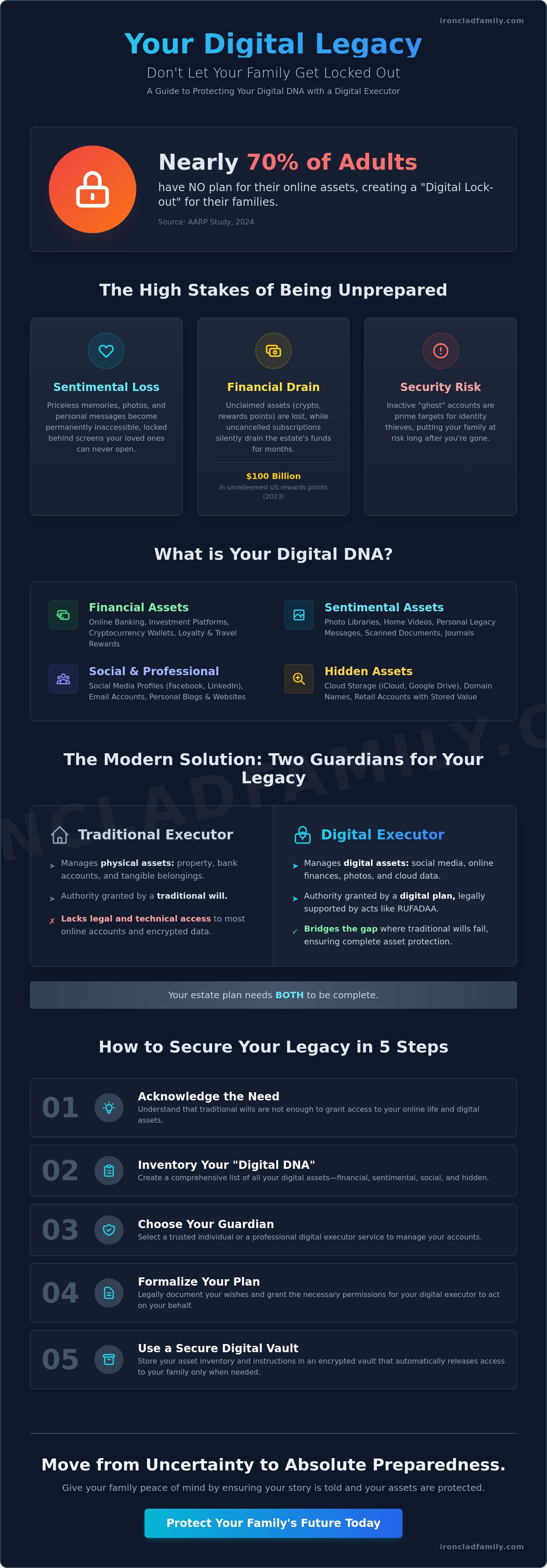
Your digital life is more than just a collection of files. It's your digital DNA. When you use digital executor services, you're handing over the keys to your life’s work. To protect your family, you must first understand what you're leaving behind. Most digital assets fall into three categories: financial, sentimental, and social.
Financial assets are often the most urgent for a family to access. This includes online banking, investment platforms, and cryptocurrency wallets. Don't forget about loyalty points and travel rewards. In 2023, Americans held an estimated $100 billion in unredeemed rewards points. These are real assets with cash value that can be passed down to your heirs.
Sentimental assets represent the heart of your heritage. These are your photo libraries, home videos, and personal legacy messages. Without a plan, these memories can be locked away forever on a single encrypted device. Social and professional assets like Facebook or LinkedIn also require specific care. You need to decide if these profiles should be memorialized or closed completely. Understanding How to Appoint a Digital Executor helps ensure these pieces of your identity don't simply vanish into the ether.
The Hidden Assets You Might Forget
Many people overlook assets that aren't tied to a traditional bank. Domain names, blogs, and websites can hold high financial value or generate monthly income. Cloud storage accounts like iCloud, Google Drive, and Dropbox contain the blueprints of your daily life. Retail accounts are also a major risk. They often store credit card information or hold gift card balances that your family could lose if the account is locked due to inactivity.
Creating a Digital Inventory
A comprehensive list is the first step toward peace of mind. You don't need to share every password right now. Instead, focus on listing where your accounts live. Group your accounts by priority. High-priority items include financial tools and primary email addresses. Lower-priority items might include streaming services or shopping accounts. This organization is a vital part of generational wealth transfer because it prevents your heirs from being locked out of their inheritance.
Your family deserves a clear path forward. Using digital executor services ensures your loved ones aren't left guessing. A secure digital vault can store this inventory safely, ensuring your digital guardian has exactly what they need when the time comes.
Digital Executor vs. Traditional Executor: Knowing the Difference
A traditional executor focuses on your physical world. They handle the house, the car, and the heirlooms you leave behind. A digital executor manages your intangible legacy. This includes your social media accounts, cloud storage, and your "digital DNA." While one person can technically fill both roles, the tasks require very different tools. Your physical executor might be great at selling a property, but they may struggle to manage a password manager or a crypto wallet.
Legal authority doesn't always equal technical access. A court order tells a company that your executor has the right to see your data. However, that order won't bypass encryption or a locked smartphone. If your executor doesn't have the right keys or technical knowledge, your family could spend years fighting tech companies for access. Using specialized digital executor services helps bridge this gap. These services provide the technical roadmap that legal documents often lack, ensuring your family isn't locked out of precious memories.
Skills to Look for in a Digital Executor
Technical literacy is the most important trait for this role. Your chosen person must understand how to navigate two-factor authentication (2FA) and cloud storage folders. They don't need to be a computer programmer, but they should feel comfortable managing digital accounts. If they struggle to reset their own passwords, they might not be the right fit for this task.
Trustworthiness is equally vital. This person will have access to your most private communications and sensitive records. You need someone who will respect your privacy while carrying out your wishes. Finally, they must be highly organized. Managing a digital estate requires following a strict checklist during a time of high emotional stress. They must be able to track down every account and follow your instructions to the letter.
Working with Professional Advisors
Many families find that their financial advisor is their strongest ally in this process. Professional advisors now use a digital vault for financial advisors to help families organize these assets long before they are needed. These branded portals allow for secure document management that keeps your heritage safe. It's a way to ensure that your financial and digital lives are linked together correctly.
Professional systems like iVaultX provide military-grade security for your files. When your advisor uses these tools, they create a protected environment for your digital inheritance. This setup removes the guesswork for your family. Instead of searching through old laptops, your executor can find everything they need in one secure location. This partnership between your family and your advisor creates a fortress around your legacy, giving everyone involved total peace of mind.
How to Appoint a Digital Executor in 5 Practical Steps
Choosing a person to manage your digital inheritance is a vital act of protection for your family. This person ensures your photos, messages, and financial accounts don't vanish into the void. To set up your digital executor services correctly, follow these five practical steps.
- Step 1: Choose your digital guardian. Select someone who is both trustworthy and comfortable with technology. They don't need to be a computer expert, but they should know how to navigate two-factor authentication and cloud storage.
- Step 2: Create a detailed inventory. You can't protect what you haven't listed. Build a list of every digital asset you own. This includes social media profiles, email accounts, crypto wallets, and cloud photo libraries.
- Step 3: Formalize the appointment. A verbal agreement won't hold up in court. You must name your digital executor in your state-specific will or trust to give them the legal authority to act.
- Step 4: Provide specific instructions. Don't leave your heirs guessing. Write down exactly what should happen to each account. Decide which should be memorialized, which should be transferred, and which should be permanently deleted.
- Step 5: Use a secure delivery system. Never put your actual passwords in a will, as these documents often become public record. Use a system that releases your credentials to your guardian only when they are needed.
Writing Clear Instructions for Your Heirs
Vague language creates confusion and stress during a time of grief. Instead of saying "handle my social media," tell your executor to "download all photos from my Facebook profile and then delete the account." It's also helpful to include Legacy Messages. These notes provide the emotional context for your data, explaining why certain files or memories are important to the family heritage. You should review and update these instructions at least once a year as your digital life grows and new accounts are created.
The Role of State-Specific Legal Documents
Your will needs specific language to comply with the Revised Uniform Fiduciary Access to Digital Assets Act (RUFADAA). As of 2024, 46 states have adopted this law to clarify how executors can access digital data. Without the right legal wording, service providers might block your family from accessing your accounts. A secure digital vault for estate planning supports this compliance by keeping your legal documents organized and accessible. Many families now use remote online notary services to sign these documents, making it easier than ever to finalize your plan from the comfort of home.
Ensure your family has the keys to your life when it matters most. Build your secure digital vault today.
Using a Digital Vault to Empower Your Digital Executor
A paper list of passwords is a liability, not a plan. By 2026, the average person will manage over 100 digital accounts. Expecting a family member to find a hidden notebook or guess a PIN during a crisis is unrealistic. IronClad Family acts as the bridge between your intentions and the final execution of your estate. It stores your digital DNA in a fortress that only opens when the time is right. By using a vault to organize your digital executor services, you ensure that your legacy is handled with precision and care.
The system relies on automated delivery. This means your information stays private while you're healthy and active. Credentials and documents are released only after a verified event, such as the presentation of a legal death certificate. This process removes the guesswork for your family. It also protects you from the risk of someone accessing your accounts prematurely. Your data stays locked away until the exact moment it's needed.
Privacy is maintained through zero-knowledge encryption. This is a high-level security standard where the platform itself cannot see your stored data. Only you and your chosen receivers hold the keys to unlock the information. It's the modern safe deposit box for the 21st century. Unlike a physical box at a bank, this vault is accessible from anywhere but remains impenetrable to hackers and unauthorized users.
How the IronClad Vault Works for Families
Organization is the greatest gift you can leave behind. Instead of leaving your executor to search through piles of paper, you can group your assets into specific folders. You then designate IronClad Receivers for these folders. For example, your spouse might receive financial credentials, while a child receives family photos and sentimental messages. This white-glove approach reduces the emotional burden on your loved ones. They won't have to make difficult decisions or hunt for information while they're grieving. Everything they need is organized and ready for them.
Summary: Taking Control of Your Digital Legacy
Protecting your heritage requires more than just a traditional will. It requires a secure way to pass on the keys to your life. Choosing professional digital executor services ensures that your digital DNA isn't lost to the void of forgotten passwords and locked devices. Start the process today to give your family the peace of mind they deserve. You've worked a lifetime to build your legacy; don't let a single locked screen take it away. Secure your future by setting up an IronClad Vault today.
Take Control of Your Digital Inheritance Today
Your digital life represents the keys to your life's work. It's not just about files; it's about the heritage you leave behind. Choosing the right digital executor services ensures your family won't be locked out of precious memories or financial accounts during a difficult time. You've seen that a traditional will often fails to address modern passwords and encrypted data. By appointing a digital guardian and organizing your assets now, you remove a massive burden from your loved ones. A 2023 report from the Society of Trust and Estate Practitioners found that 57 percent of professionals saw families struggle to access digital assets after a death. You don't have to be part of that statistic.
IronClad Family acts as your digital guardian. Our zero-knowledge encryption ensures only you and your heirs see your data. We also provide automated emergency credential delivery and state-specific legal document generation. This gives your family the roadmap they need to navigate your estate with confidence and peace of mind.
Secure your digital legacy with the IronClad Vault today.
You've worked hard to build your life. Now, you can rest easy knowing it's protected for the people who matter most.
Frequently Asked Questions
What is a digital executor and do I really need one?
A digital executor is a person you name to manage your online presence and electronic assets after you pass away. You need one because standard wills often fail to cover your digital DNA, such as photos, emails, and social media. In 2024, the average person manages over 100 sets of login credentials. Without a designated guardian, your family could lose access to precious memories or leave your accounts open to identity theft.
Can my regular executor also be my digital executor?
Yes, your traditional executor can handle your digital estate, but they must have the technical skills to navigate encrypted platforms. Many families choose to separate these roles to ensure efficiency. While a regular executor handles physical assets like your home, a specialist focuses on digital executor services to manage vaults and online legacies. This prevents one person from being overwhelmed by both legal paperwork and technical account recovery.
How do I give my digital executor my passwords securely?
You shouldn't write passwords in a physical will because these documents become public records during probate. Instead, use a secure digital vault or a password manager with an emergency access feature. These tools allow you to name a beneficiary who gains access only after a verified life event. This method ensures your private keys remain protected by military grade encryption until they're needed by your loved ones.
Is a digital executor legally recognized in all states?
Digital executors are recognized through state laws based on RUFADAA. As of 2024, 48 states plus the District of Columbia have passed this act. Only Louisiana and Oklahoma haven't adopted this specific uniform law, though they've their own rules for digital assets. You must specifically mention digital assets in your legal documents to ensure your protector has the clear authority to act on your behalf.
What happens to my social media accounts if I don't have a digital executor?
Your accounts often enter a state of digital limbo or are deleted according to platform terms of service. For example, Meta platforms like Facebook allow you to set a legacy contact, but if you don't, the account may stay active and vulnerable to hackers. Without a designated protector, your family might spend months fighting for the right to download your photos or memorialize your page to protect your heritage.
Can a digital executor access my bank accounts?
A digital executor manages the login credentials, but the legal right to move money still belongs to your traditional estate executor. These roles overlap when it involves the keys to your life. While the digital guardian can stop automated subscriptions or find electronic statements, they can't transfer funds unless they're also the court appointed representative for your financial estate. This separation provides an extra layer of security for your family.
How much do digital executor services typically cost?
Costs for professional digital executor services vary based on the level of security and storage you require. Basic password management tools for families often cost between $35 and $60 per year. Full service estate planning platforms that include digital vaults and legacy transfers can range from $100 to $500 annually. These prices are based on 2024 industry standards for secure data storage and the protection of your digital inheritance.
What is RUFADAA and how does it affect my digital estate?
RUFADAA stands for the Revised Uniform Fiduciary Access to Digital Assets Act. It's a vital law that gives your executors legal permission to manage your digital property. Before this act was widely adopted in 2015, tech companies often blocked family members from accessing accounts due to privacy laws. Now, this law ensures your chosen representative can legally step in to protect your digital assets without facing unnecessary legal hurdles.

