

- 14 mins
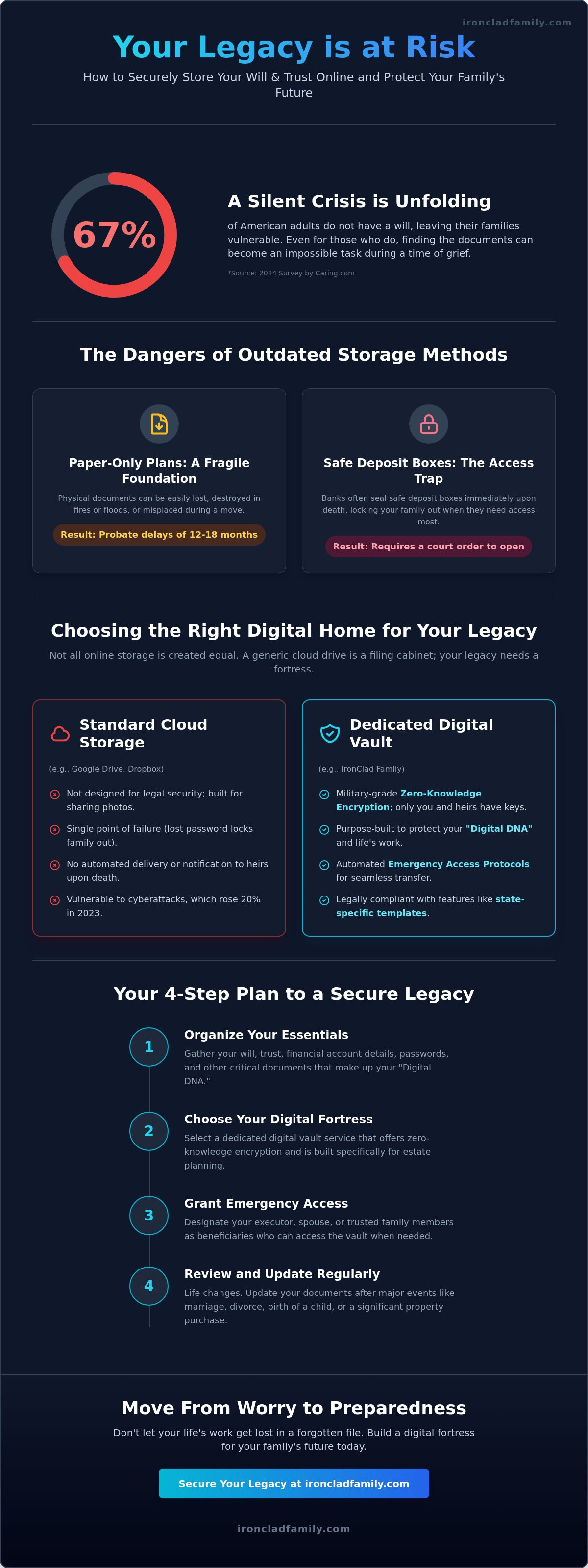
What if the keys to your life's work are lost simply because your family can't find a single password or a hidden paper file? According to a 2024 survey by Caring.com, 67% of American adults don't have a will, and many who do struggle to store will and trust online in a way that is actually secure. It's natural to feel anxious about hackers or confusing state laws. You want to know that your heritage is safe and that your heirs won't face a legal nightmare when you aren't there to guide them.
We understand that protecting your family is your top priority. This guide will show you exactly how to protect your legal documents and ensure your family can access them when it matters most. We'll walk through the steps to secure your digital DNA using military-grade protection, avoid common storage mistakes, and set up a digital vault that acts as a true guardian for your family's future security.
Key Takeaways
- Discover why traditional paper files are often lost and how a secure digital home protects your family’s future.
- Learn how to store will and trust online using advanced encryption that keeps your sensitive documents safe from unauthorized access.
- Find out how to avoid common mistakes, such as keeping your digital vault a secret or failing to update your records after major life events.
- Understand the difference between standard cloud storage and a dedicated digital vault built to meet strict legal and security standards.
- Get a simple, step-by-step plan to organize your essential documents and ensure they are automatically shared with your loved ones in an emergency.
Why Storing Your Will and Trust Online is Essential for Modern Families
When you choose to store will and trust online, you aren't just saving a file. You're building a secure digital repository for your family's most important legal documents. A 2021 survey from Caring.com found that while 68% of people believe having a will is important, only 33% actually have one. Even for those who do, a new problem has emerged: the "Lost Document Crisis." This happens when heirs know a plan exists but can't find it during a time of grief. Without the original documents, families often face long legal battles and expensive court fees.
To better understand how this process works, watch this helpful video showing the journey of creating and managing digital documents:
Your estate plan is the blueprint for your "Digital DNA." This is the sum of your life's work, including your financial accounts, legal wishes, and family heritage. It needs a fortress to protect it. Relying on a single piece of paper in a desk drawer is a risk that modern families can't afford to take. A digital vault ensures that your instructions are available the moment they're needed.
The Problem with Paper-Only Estate Plans
Physical documents are fragile. A house fire, a burst pipe, or even a simple move can destroy or lose your original will. If a will is missing, the court may treat your estate as if you never wrote one. This leads to probate delays that can last 12 to 18 months. Many people think a bank safe deposit box is the answer, but it often creates a trap. In many states, banks seal these boxes immediately after a death. Your family might need a court order just to get the documents required to settle your estate.
How Online Storage Bridges the Gap
Digital storage ensures that distance doesn't stop your family from acting. If your executor lives in another state, they can access the vault instantly without waiting for a key in the mail. This setup is a vital part of digital inheritance, which covers how your online assets are passed down. When you store will and trust online, you can update your plan as your life changes. Whether you buy a new home or welcome a grandchild, your plan stays current. Successful generational wealth transfer depends on these documents being ready and reachable. It's about moving from a state of worry to a state of absolute preparedness.
Comparing Online Will and Trust Storage Options
Many families assume that a folder in Google Drive or a saved PDF in Dropbox is enough to store will and trust online safely. It isn't. These tools were built for sharing photos and spreadsheets; they weren't designed to guard your life’s legacy. If you rely on a basic cloud drive, you create a single point of failure. If you lose your password or don't share the right link, your family is locked out. They can't access the keys to your life when they need them most.
Standard Cloud Storage vs. Digital Vaults
Generic cloud services lack automated delivery. If something happens to you, a standard email provider won't notify your heirs. A digital vault acts as a sentinel for your digital DNA. It uses zero-knowledge encryption. This means only you and your chosen beneficiaries hold the keys. Even the service provider can't see your documents. This is the gold standard for protecting your legacy. In 2023, cyberattacks on personal cloud accounts rose by 20 percent. This makes generic folders a risky bet for your most sensitive legal papers.
What to Look for in a Digital Repository
When you choose a platform, you must distinguish between creation and protection. Some sites help you draft a document but leave the storage up to you. A true protection platform ensures your documents stay valid and accessible. You need features like state-specific templates and notary services. Laws vary by state; a will valid in Texas might face hurdles in New York if the platform doesn't account for local rules. Using a secure digital vault for estate planning helps bridge these gaps.
Look for emergency access protocols. This ensures your family doesn't have to hunt for assets during a crisis. While free services are tempting, they often sell your data or lack high-level protection. Your family deserves a fortress, not a simple filing cabinet. Choosing to store will and trust online through a dedicated vault means your heritage is preserved. It moves you from a state of uncertainty to absolute peace of mind. To ensure your legacy is guarded by a digital protector, you can start building your secure digital vault to protect your family's future.
Common Mistakes People Make When They Store Will and Trust Online
Creating a plan for your family is an act of love, but it is not a one-time task. Many people believe that once they upload their documents to a cloud, their work is finished. This assumption is dangerous. When you store will and trust online, you must treat those files as living parts of your legacy. Errors in how you manage these digital assets can lead to legal battles, lost memories, and unnecessary stress for your loved ones during their hardest moments.
The "Set It and Forget It" Trap
An outdated will can be just as problematic as having no will at all. Life changes quickly, and your digital vault should reflect your current reality. If you wrote your will in 2019 and had a child in 2022, your documents are already dangerously behind. Using a document that does not account for new family members or ended marriages can lead to probate court delays that last for years. You should refresh your documents whenever a major life event occurs. These events include marriage, the birth of a child, divorce, or the purchase of a new home. To stay prepared, set a "legacy check-up" reminder on your calendar for the first Monday of every October. This ensures your digital DNA stays accurate and protective.
Security Oversights that Risk Your Privacy
Security is the foundation of any digital heritage. A common mistake is sharing vault passwords over unencrypted text messages or standard emails. These channels are easy targets for hackers. If your login details are stolen, your most private family information is exposed. High-quality systems solve this by using automated emergency access. This feature ensures your heirs get the keys to your life only when they truly need them, without you having to risk your privacy today. You should also look for providers that use zero-knowledge encryption. Zero-knowledge encryption is a security architecture where the service provider has no way to view your files, keeping your information private from everyone except you and your heirs.
- Mistake: Not naming your "IronClad Receivers." Even the strongest vault is useless if your family does not know it exists. You must designate specific people to receive access and tell them where the vault is located.
- Mistake: Weak passwords. Avoid using birthdays or common words. Use a unique phrase and ensure you have a secure backup for your credentials.
- Mistake: Ignoring notarization. Do not assume a simple PDF scan is always enough. While you store will and trust online for easy access, many jurisdictions in 2026 still require specific digital notarization or "wet-ink" originals to be valid in court.
Your goal is to move from uncertainty to absolute peace of mind. By avoiding these common traps, you act as the digital guardian your family deserves. You are not just saving files; you are protecting the essence of your life's work.
A Step-by-Step Guide to Securely Storing Your Legacy Documents
You've decided to protect your family's future. Now you need a clear path to get there. To securely store will and trust online, you must follow a deliberate process. This isn't just about scanning papers; it's about building a digital fortress for your family's history. By following these steps, you can move from a state of uncertainty to absolute peace of mind.
- Step 1: Gather your essential documents. Start by collecting your digital DNA. This includes your Last Will and Testament, Revocable Living Trusts, Power of Attorney (POA), and Medical Directives. Don't leave these vital pieces scattered in desk drawers or email folders.
- Step 2: Choose a secure platform. Look for a service that offers zero-knowledge encryption. This ensures that only you and your chosen heirs hold the keys to your vault. Verify that the platform complies with RUFADAA. This law, adopted by 46 states by 2021, gives your executors the legal right to manage your digital assets.
- Step 3: Upload and categorize your files. A messy vault causes stress during a crisis. Organize your documents into clear categories. This makes navigation simple for your heirs when they're under emotional pressure.
- Step 4: Designate and notify your contacts. You are the Digital Guardian of your family. Choose your beneficiaries or emergency contacts wisely. Use the platform to send them a secure notification so they know where the keys to your life are kept.
- Step 5: Legally execute your documents. If you haven't signed your papers yet, use Remote Online Notarization (RON). Since 2020, over 40 states have passed laws allowing you to notarize documents via secure video call. This makes your digital files legally binding without a trip to a physical office.
Organizing Your Digital Heritage
Divide your life into three clear buckets for your heirs. First, prioritize emergency info like hospital preferences and immediate care instructions. Second, list your financial assets and insurance policies. Third, include your sentimental legacy. You can use this family emergency plan checklist to ensure you haven't missed a single detail. We also suggest adding "Legacy Messages." These are short notes or videos that provide emotional context to your assets. They tell your story in your own voice.
Ensuring Legal Validity Online
Making your documents "IronClad" requires more than just a cloud upload. RON services allow you to sign your documents in a way that is tamper-evident and legally recognized. Always check your state's specific requirements for witnesses. Some regions still require two physical witnesses to be present during a digital signing. Finally, verify that your chosen platform allows for easy document printing. If your family needs a physical copy for a local probate court, they shouldn't have to struggle with the software to get it.
How IronClad Family Protects Your Digital DNA and Legal Heritage
IronClad iVaultX is not just a cloud drive. It is a Digital Guardian designed to protect what we call your Digital DNA. When you decide to store will and trust online, you are doing more than saving a file. You are securing the keys to your life's work and your family's future. Our platform acts as a sacred repository for your most sensitive legal documents and personal memories.
We provide peace of mind through military-grade encryption and strict privacy protocols. Your data is scrambled into a code that only you and your designated heirs can unlock. We don't keep a master key to your vault. This ensures your private information stays private. Our system is built to move you from a state of uncertainty to a feeling of absolute preparedness.
- Security: We use the same encryption standards trusted by global banks and military organizations.
- Privacy: Your "keys to life" are never accessible to our staff or outside parties.
- Reliability: Our infrastructure is designed to keep your legacy safe for decades, not just months.
The iVaultX Difference: More Than Just Storage
Most storage services are passive. They wait for you to log in. iVaultX is different because it includes automated emergency delivery. Our "Emergency Access Credentials" feature is a vital tool. It releases your specific information to your loved ones only when it's needed most. This prevents the common tragedy of assets being lost because a family didn't have the right passwords.
We also support financial advisors who want to offer their clients a higher level of protection. By working with professionals, we ensure that every part of an estate plan is organized and accessible. For families who feel overwhelmed by the digital world, we offer a white-glove service. Our team provides professional help to organize your documents so your heritage is preserved perfectly.
Your Legacy, IronClad
Our founder created this company to solve a real-world vulnerability. He saw how easily a family's history and financial security could vanish after a sudden loss. We are committed to making sure your loved ones never have to hunt for paper files or guess at your wishes. Your life's work deserves a fortress, not a filing cabinet.
It is time to take the first step. Securing your family's future is a gift that lasts for generations. It's the most reliable way to store will and trust online while maintaining total control over your digital inheritance. Don't leave your legacy to chance. Explore our Digital Vault features today and start building your IronClad plan.
Take Control of Your Digital Inheritance Today
Protecting your digital DNA requires more than just a strong password. You've learned that a disorganized estate plan can leave families waiting months for court approvals. By 2026, legal experts agree that RUFADAA compliance, the law governing digital asset access, is the only way to guarantee your executors have legal authority over your accounts. Choosing to store will and trust online is a vital step toward total preparedness for your family's future.
The IronClad iVaultX provides the military-grade protection your heritage deserves. It uses zero-knowledge encryption, which means only you and your designated heirs hold the keys to your life. Our automated emergency delivery system ensures your loved ones receive exactly what they need at the right time. You don't have to worry about your legacy getting lost in the shuffle of old hard drives or forgotten cloud folders. You're building a bridge between your life's work and their future security.
Secure your family’s legacy today with the IronClad iVaultX
You are giving your family the greatest gift possible; a clear path forward and the security they deserve.
Frequently Asked Questions
Is it legal to store a will and trust online in 2026?
Yes, it's legal to store digital copies of your estate documents in all 50 states. Since the Uniform Electronic Wills Act was introduced in 2019, at least 15 states have passed laws allowing for fully digital wills. Even in states without these specific laws, storing a digital version of your signed paper document is a standard way to ensure your family finds your plan quickly. To store will and trust online safely, you must use a platform that meets strict security standards.
What happens to my online documents if I lose my password?
If you lose your password in a high security system, you might lose access to your files forever. Most secure vaults use zero-knowledge encryption, which means the company doesn't have a master key to reset your account. You'll need to use a recovery phrase or set up a trusted contact who can help you regain entry. It's vital to keep your recovery keys in a physical safe or with a trusted advisor to protect your digital DNA.
Can my family access my digital vault immediately in an emergency?
Your family can only access your vault if you've designated them as emergency contacts or beneficiaries ahead of time. Most professional systems allow you to set a specific waiting period, like 24 or 48 hours, before access is granted to your loved ones. This delay protects your privacy while ensuring your family gets the keys to your life when they need them most. Without this setup, your digital inheritance could remain locked behind encryption indefinitely.
Do I still need a physical copy of my will if I store it online?
Yes, you should keep the original paper document with your "wet-ink" signature in a secure location. While you store will and trust online for easy sharing and organization, many probate courts still require the physical original to settle an estate. Think of your digital vault as the GPS that leads your family to the physical documents. In 2026, having both a digital version and a paper original is the gold standard for absolute preparedness.
How does zero-knowledge encryption protect my estate plan?
Zero-knowledge encryption ensures that you're the only person who can see your documents. The service provider stores your files as scrambled code and doesn't have the password to unlock them. This military-grade protection means that even if the company's servers are hacked, your private family heritage remains unreadable to outsiders. It's the most secure method available to protect your sensitive documents from data breaches and identity theft.
Is an online will valid in all 50 states?
The validity of a "digital-only" will depends on where you live. As of early 2026, about 15 states have officially adopted the Electronic Wills Act, which allows you to sign and witness a will entirely online. In the other 35 states, you still need a physical document with traditional signatures. However, every state allows you to store a digital scan of your physical will to help your executor start the process faster after you pass away.
How often should I update the documents in my digital vault?
You should review your vault at least once every 12 months or after a major life event like a birth or marriage. Industry data from 2024 shows that 30% of estate plans become outdated because people forget to add new assets or change beneficiaries. Regular updates ensure your IronClad Family vault stays accurate. A quick annual checkup prevents your loved ones from following an old plan that no longer reflects your current wishes or financial situation.
What is the difference between a digital vault and a cloud drive?
A digital vault is a specialized fortress for your legacy, while a cloud drive is just a general storage box. Standard cloud drives lack the emergency access features and zero-knowledge encryption required for sensitive estate plans. An IronClad Family vault is built to survive for generations and includes tools to organize your digital inheritance logically. Unlike a messy folder of files, a vault provides a clear roadmap for your family to follow during a crisis.

