---
title: "Online Family Document Organizer: 5 Dangerous Myths About Your Legacy"
description: Is your fireproof safe a risk? Discover 5 myths about legacy planning and why an online family document organizer is the only way to truly protect your family.
image: https://getautoseo.com/storage/hero_images/article_1270489_1776533690.jpg
---
[Skip to content](https://www.ironcladfamily.com/blog/online-family-document-organizer-5-dangerous-myths-about-your-legacy#main-content)
[](https://www.ironcladfamily.com/)
- [WHY DIGITAL VAULTS](https://www.ironcladfamily.com/blog/tag/digital-family-vaults-estate-planning)
- [FINANCIAL PLANNING](https://www.ironcladfamily.com/blog/tag/financial-planning)
- [END OF LIFE PLAN](https://www.ironcladfamily.com/blog/tag/end-of-life-planning)
- [PREPAREDNESS](https://www.ironcladfamily.com/blog/tag/emergency-planning)
- [FOR ADVISORS](https://www.ironcladfamily.com/blog/tag/advisors)
# Online Family Document Organizer: 5 Dangerous Myths About Your Legacy

[Sahar Lester April 20, 2026](https://www.ironcladfamily.com/blog/author/sahar-lester)
- [Digital Family Vaults & Estate Planning](https://www.ironcladfamily.com/blog/tag/digital-family-vaults-estate-planning)
- 10 mins
Family Protection · 8 min read
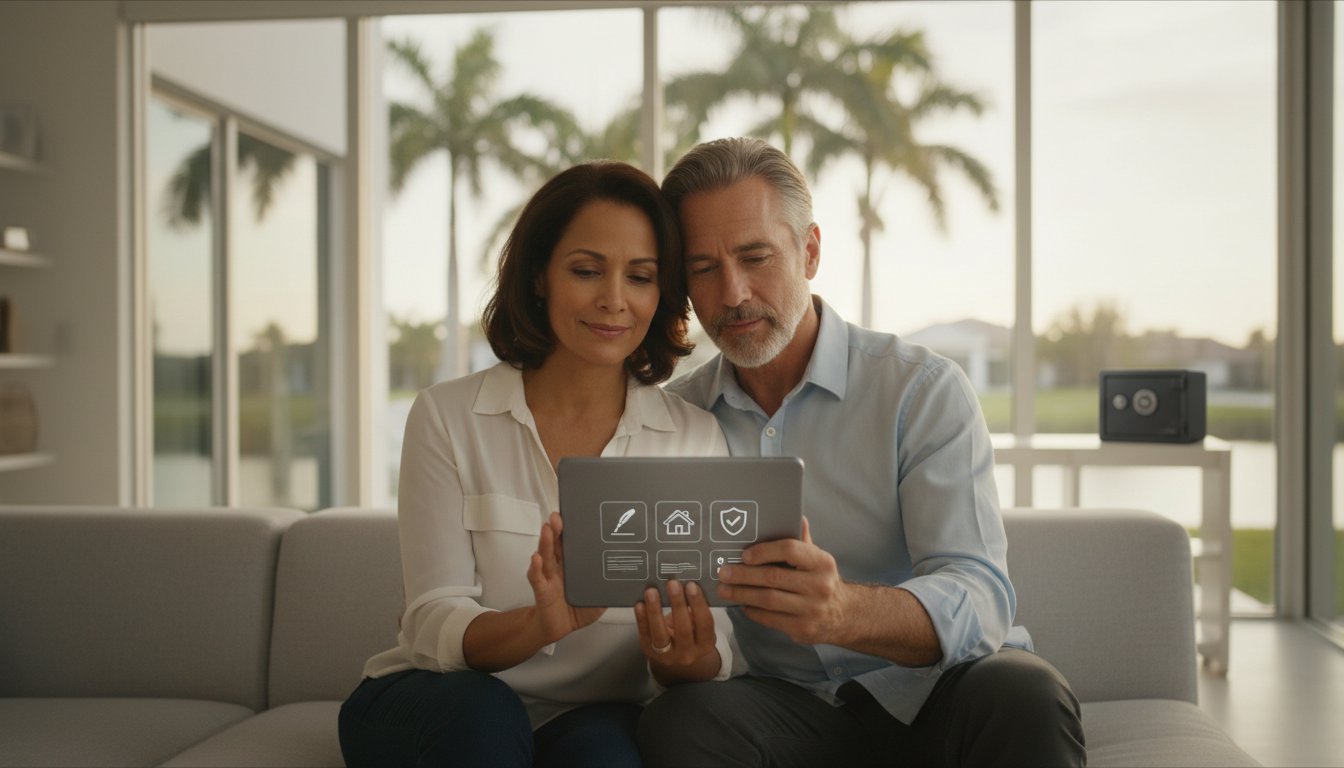
Most parents believe they've handled this. They haven't. Here are the five myths that leave families locked out of their own legacy — and the simple system that fixes all of them.
You've done the responsible things. Maybe there's a will somewhere. A filing cabinet with important papers. A fireproof safe in the closet. You feel prepared — and that feeling is exactly what puts your family at risk.
Because preparedness isn't a feeling. It's a system. And most families don't have one.
Over 200,000 families have used IronClad Family to discover exactly where their protection gaps are. What we've learned is that the same five myths come up again and again — and every single one creates a crisis that was completely preventable. Let's walk through each one.
67% of adults don't have a will
$58B in unclaimed assets held by states
100+ accounts the average person manages
Myth #1
## "My Fireproof Safe Will Protect Everything"

A fireproof safe feels like certainty. It's heavy, it's locked, it's physical. It gives parents a sense of control that's deeply reassuring — and deeply false.
Most home safes are rated for 30 to 60 minutes of heat exposure. A serious house fire burns for hours. Your documents can still char, warp, or become unreadable. And if flooding is involved? Paper turns to pulp in minutes.
Worse: the safe can't follow your family if they evacuate. It can't be accessed remotely when your spouse is in the ER needing your insurance card. It can't update itself when you open a new account or change a password.
**The truth:** A safe is a good first layer — but a single point of failure is never a plan. Your family needs access to your most critical information from anywhere, at any time, without needing you in the room.
And it's not just about where your physical documents live. The bigger problem is whether your family actually knows what exists — and whether they can find it without you.
Myth #2
## "My Family Knows Where Everything Is"

You know where everything is. That's not the same thing.
If something happened to you tonight, could your spouse locate your life insurance policy in under five minutes? Could your adult children find the deed to your house? Do they know every account, every subscription, every password you use?
In 2024, billions in assets went unclaimed because families simply didn't know they existed. Bank accounts, investment portfolios, and life insurance payouts sit in state treasuries every year because heirs couldn't find the paperwork. The money was there. The plan wasn't.
**The truth:** Your family knowing "roughly where things are" is not a plan. A plan means every critical document, account, and credential is organized, labeled, and accessible to the right people — without you having to be there.
Take Action Now — Before Reading On
### Find out where your family actually stands today.
Most families don't realize how many gaps they have until they see it clearly. Answer a few quick questions and get a personalized score showing exactly where your family's plan has gaps — and what to fix first.
[Take the Free Assessment →](https://www.ironcladfamily.com/family-readiness-assessment)
Free · Takes 3 minutes · No credit card required
Now let's cover the three myths that catch even the most organized parents off guard — starting with the tool almost everyone is already using the wrong way.
Myth #3
## "Google Drive Is Good Enough for This"
Convenient? Yes. Built for your family's most sensitive documents? No.
Standard cloud storage was designed for sharing work files and vacation photos — not wills, insurance policies, account credentials, and final wishes. There's no structure, no per-document access controls, no way to designate who gets what when something happens to you.
More importantly, there's no delivery system. Your family knowing a folder exists is not the same as being able to access the right document, at the right time, without you there to walk them through it.
**The truth:** A family digital vault isn't just storage — it's an organized, secure system that ensures the right people can access exactly the right information when they need it most, without confusion or delay.
And the part of your life that most estate planning completely ignores? Your entire digital world.
Myth #4
## "I'll Handle the Digital Stuff Later"
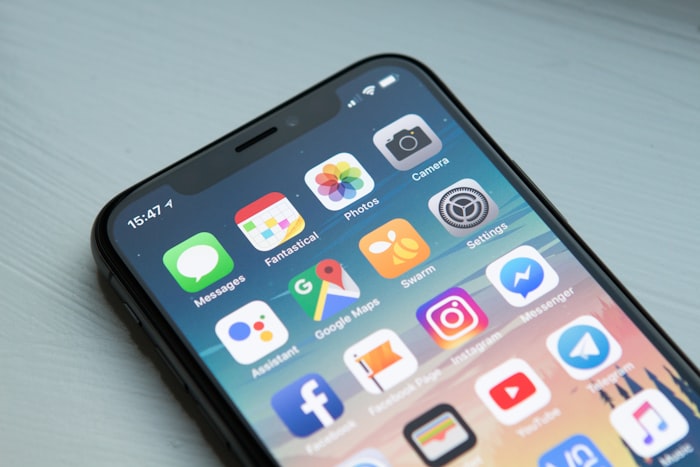
The average person manages over 100 online accounts. Banking, investments, retirement funds, subscriptions, social media, photo storage, email. Every one of those accounts has value — financial, sentimental, or both.
None of them show up in a paper folder.
Americans estimate the value of their digital assets at an average of $191,516. Online brokerage accounts, digital photo archives, and email accounts are real assets that disappear permanently if your family doesn't have the access credentials when they need them.
"Later" is when the crisis has already happened. Later is too late.
**The truth:** Your digital life is your real life. Organizing your physical documents without a plan for your digital accounts leaves the most valuable part of your legacy completely exposed.
And perhaps the most painful myth of all — the one that turns a hard moment into an impossible one for the people you love most.
Myth #5
## "My Family Will Figure It Out When the Time Comes"

This is the most expensive myth of all — emotionally and financially.
When a crisis hits, your family is already operating at maximum stress. They're grieving, overwhelmed, and racing against deadlines. Asking them to simultaneously figure out your estate, locate documents, contact institutions, and manage legal processes on their own is not fair to them.
Unorganized estates can increase settlement costs by 20%. Legal fees, delays, and missed assets are all preventable. The families who avoid this pain have one thing in common: someone made the plan before it was needed.
**The truth:** Getting organized isn't about you. It's an act of love for the people who will have to manage your life when you can't. The best gift you can give them is clarity.
Every one of these myths has the same root cause: good intentions without a real system. Parents who love their families deeply still leave them unprepared — not because they don't care, but because they kept waiting for the right moment.
The right moment is right now, before anything happens. IronClad Family was built for exactly this — to take everything that feels overwhelming and turn it into something you can finish in an afternoon, so your family never has to figure it out under pressure.
Your Next Step
### Start your free IronClad Family vault today.
Secure your documents, organize your digital life, and make sure your family is never left searching when it matters most. It takes less than 5 minutes to get started.
[Start My Free Vault →](https://www.ironcladfamily.com/digital-vault)
✓ Used by 200,000+ families · ✓ Zero-knowledge encryption · ✓ No credit card required

### Sahar Lester
Sahar Lester is the Founder and CEO of IronClad Family, a company dedicated to helping families and businesses safeguard their most valuable assets through secure digital vaults. With a master’s degree in Security Technologies from the University of Minnesota and experience spanning cybersecurity, leadership, and international commerce, Sahar bridges the gap between innovation and protection. She also serves as an adjunct professor at Metropolitan State University, mentoring the next generation of cybersecurity professionals.
[mailto:sahar.lester@ironcladfamily.com](mailto:sahar.lester@ironcladfamily.com)
## Latest posts
- [ALL POSTS](https://www.ironcladfamily.com/blog/all)
[](https://www.ironcladfamily.com/blog/diy-will-guide-protect-your-family-in-2026)
Sep 19, 2026, 6:41:12 AM
### [DIY Will Guide: Protect Your Family in 2026](https://www.ironcladfamily.com/blog/diy-will-guide-protect-your-family-in-2026)
[](https://www.ironcladfamily.com/blog/everplans-vs-digital-vault-with-zero-knowledge-encryption-choosing-your-legacy-strategy-2026)
Sep 19, 2026, 6:23:11 AM
### [Everplans vs Digital Vault with Zero Knowledge Encryption: Choosing Your Legacy Strategy (2026)](https://www.ironcladfamily.com/blog/everplans-vs-digital-vault-with-zero-knowledge-encryption-choosing-your-legacy-strategy-2026)
---
[](https://ironcladfamily.com)
**66 W. Flagler Street, Suite 900**
**Miami, FL 33130**
**United States**
[Tel: 1-786-360-1352](tel:7863601352)
[admin@ironcladfamily.com](mailto:admin@ironcladfamily.com)
#### Products
#### Pages
- [Physical Protection](https://shop.ironcladfamily.com)
- [Digital Protection](https://www.ironcladfamily.com/digital-vault)
- [Advisors](https://www.ironcladfamily.com/advisor)
- [Pricing](https://www.ironcladfamily.com/plans-and-pricing)
- [Security](https://www.ironcladfamily.com/security)
- [Contact](https://www.ironcladfamily.com/contact-us)
#### Learn
- [FAQ](https://www.ironcladfamily.com/faq)
- [Learning Center](https://www.ironcladfamily.com/learning-center)
- [Support](https://support.ironcladfamily.com)
### Get family protection tips and holistic advisor insights!
- [Terms and Services](https://www.ironcladfamily.com/terms-and-conditions)
- [Privacy Policy](https://www.ironcladfamily.com/privacy-policy)
© 2026 IronClad Family. All Rights Reserved. [Follow us on Facebook](https://www.facebook.com/ironcladfamily) [Follow us on LinkedIn](https://www.linkedin.com/company/ironcladfamily) [Follow us on Twitter](https://twitter.com/IronClad_Family) [Follow us on Facebook](https://www.instagram.com/ironcladfamily)

```json
{
"@context" : "https://schema.org",
"@type" : "BlogPosting",
"author" : {
"@type" : "Person",
"name" : "Sahar Lester",
"url" : "https://www.ironcladfamily.com/blog/author/sahar-lester"
},
"dateModified" : "2026-05-03T22:27:56.512Z",
"datePublished" : "2026-04-20T15:45:47.000Z",
"headline" : "Online Family Document Organizer: 5 Dangerous Myths About Your Legacy",
"image" : [ "https://getautoseo.com/storage/hero_images/article_1270489_1776533690.jpg" ],
"mainEntityOfPage" : {
"@id" : "https://www.ironcladfamily.com/blog/online-family-document-organizer-5-dangerous-myths-about-your-legacy",
"@type" : "WebPage"
},
"publisher" : {
"@type" : "Organization",
"logo" : {
"@type" : "ImageObject",
"url" : "https://www.ironcladfamily.com/hubfs/Logo%20PNG-1.png"
},
"name" : "IronClad Family"
}
}
```
```json
{
"@context" : "https://schema.org",
"@type" : "Organization",
"address" : {
"@type" : "PostalAddress",
"addressCountry" : "US",
"addressLocality" : "Miami",
"addressRegion" : "FL",
"postalCode" : "33130",
"streetAddress" : "66 W. Flagler St #900"
},
"areaServed" : {
"@type" : "Country",
"name" : "United States"
},
"description" : "Veteran-owned family protection and digital legacy company offering zero-knowledge encrypted digital vaults.",
"email" : "admin@ironcladfamily.com",
"foundingLocation" : {
"@type" : "Place",
"address" : {
"@type" : "PostalAddress",
"addressCountry" : "US",
"addressLocality" : "Miami",
"addressRegion" : "FL"
}
},
"logo" : "https://8926831.fs1.hubspotusercontent-na1.net/hubfs/8926831/Optimization-2022/Logo%20PNG-1.webp",
"name" : "IronClad Family LLC",
"sameAs" : [ "https://www.facebook.com/ironcladfamily", "https://www.linkedin.com/company/ironcladfamily" ],
"telephone" : "+17863601352",
"url" : "https://www.ironcladfamily.com"
}
```
```json
{
"@context" : "https://schema.org",
"@type" : "NewsArticle",
"alternativeHeadline" : "Is your fireproof safe a risk? Discover 5 myths about legacy planning and why an online family document organizer is the only way to truly protect your family.",
"author" : {
"@type" : "Person",
"name" : "Michael Lester",
"url" : "https://www.linkedin.com/in/michaellester"
},
"dateModified" : "2026-05-03T22:27:56+0000",
"datePublished" : "2026-04-20T15:45:47+0000",
"description" : "Is your fireproof safe a risk? Discover 5 myths about legacy planning and why an online family document organizer is the only way to truly protect your family.",
"headline" : "<span id="hs_cos_wrapper_name" class="hs_cos_wrapper hs_cos_wrapper_meta_field hs_cos_wrapper_type_text" style="" data-hs-cos-general-type="meta_field" data-hs-cos-type="text" >Online Family Document Organizer: 5 Dangerous Myths About Your Legacy</span>",
"image" : "https://getautoseo.com/storage/hero_images/article_1270489_1776533690.jpg",
"mainEntityOfPage" : {
"@id" : "https://www.ironcladfamily.com/blog/online-family-document-organizer-5-dangerous-myths-about-your-legacy",
"@type" : "WebPage"
},
"publisher" : {
"@type" : "Organization",
"logo" : {
"@type" : "ImageObject",
"height" : 60,
"url" : "https://blog.ironcladfamily.com/path-to-logo.png",
"width" : 600
},
"name" : "IronClad Family"
}
}
```