


- 12 mins
Imagine your child standing on the front porch of their childhood home, holding a set of keys but feeling completely overwhelmed by a mountain of legal paperwork and unexpected tax bills. You've worked your entire life to build this legacy, yet without a clear plan, the simple act of passing down a house to a child can turn into a stressful, multi-year battle in probate court. It's a common fear that the family home might be lost to rising nursing home costs or that siblings will end up at odds over property management.
You want this transition to be a moment of security, not a source of family friction. This guide provides the most secure and tax-efficient ways to transfer your property while protecting your heirs from unnecessary financial loss. We'll walk through the 2026 rules for the "step-up in basis," explain how to use trusts to bypass the courts, and show you how to prepare your child to actually manage the home. By the end of this article, you'll have a definitive roadmap to ensure your family's most valuable asset remains a protected foundation for the next generation.
Key Takeaways
- Understand the 2026 tax rules, including the $19,000 annual gift exclusion and how the "step-up in basis" can save your heirs thousands in capital gains taxes.
- Discover the most secure legal tools for passing down a house to a child while avoiding the long, expensive process of probate court.
- Learn why selling your home to a child for a symbolic amount like $1 is a major mistake that can trigger avoidable tax penalties and legal issues.
- Create a "Home Manual" to ensure your child is prepared to manage the property's maintenance, utilities, and service providers.
- See how a digital vault keeps your property deeds and emergency instructions safe and accessible for the next generation.
Why Passing Down a Home is More Complex Than You Think
Transferring a family home involves more than just signing a piece of paper. Many parents assume that passing down a house to a child is a simple legal handoff, but the reality is far more intricate. There is a massive gap between owning the legal title and actually knowing how to manage the physical property. If your child inherits the house but doesn't know where the main water shut-off is or how to access the security system, the gift quickly becomes a burden.
Relying on a handshake agreement or a verbal promise is a recipe for family conflict. Even the closest siblings can find themselves at odds when faced with the high-stakes decisions of property management. Without a clear, documented plan, your legacy can dissolve into arguments over who pays the property taxes or who is responsible for a sudden roof repair. These disputes often stem from a lack of clarity regarding the rules of inheritance that govern your specific state.
Hidden costs are another silent threat to an unorganized home transfer. While the legal title remains in limbo, the property still requires insurance, utilities, and upkeep. Missing paperwork can stall a legacy for years, leaving the home in a state of "legal purgatory" where no one can sell it or live in it comfortably. This delay doesn't just cost money; it drains the emotional energy of your heirs.
The Problem with Just "Leaving It in the Will"
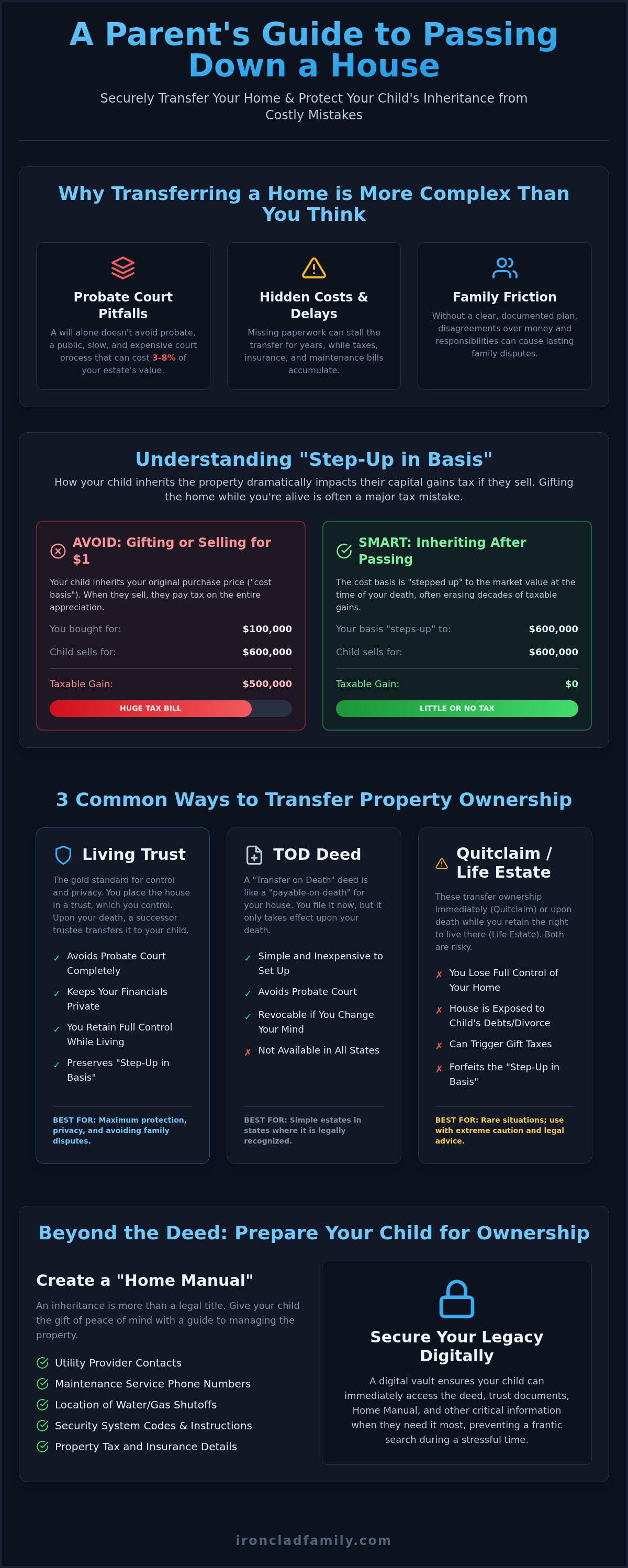
A will is a vital document, but it doesn't bypass the probate court. This court-supervised process is notoriously slow and expensive. In many states, probate can eat up 3% to 8% of your estate's total value. While the legal wheels turn, the house often sits empty, vulnerable to maintenance issues. Because probate is a public process, your family's private financial business becomes a matter of public record, inviting unwanted scrutiny during a sensitive time.
The Emotional Burden on Your Children
Grief is a heavy weight. Forcing your child to go on a scavenger hunt for a missing deed or a hidden safe key while they are mourning is an unnecessary hardship. The stress of inheriting a home with no instructions can be overwhelming. True protection means leaving behind a complete operational guide. When you organize your records and provide clear steps for passing down a house to a child, you aren't just transferring an asset. You are giving them the gift of peace and the ability to grieve without the distraction of a legal crisis.
Three Common Ways to Transfer Property Ownership
Every family has different goals. Some want to move the title now, while others prefer to wait. When passing down a house to a child, your choice of legal tool dictates how much tax your child pays and how long they wait for the keys. You must choose a method that aligns with your financial situation and your state's specific property laws. Because these rules vary by location, a strategy that works in one state might not be available or effective in another.
The Living Trust: Maximum Control and Privacy
A revocable living trust is often the gold standard for families seeking a smooth transition. It allows you to keep full control of the property while you are alive. You can sell the house, refinance it, or change the beneficiaries at any time. When you pass away, the house transfers to your child almost immediately, skipping the expensive probate process. This keeps your private family matters out of the public eye. It's a protective shield that ensures the transition follows your exact instructions without court interference.
Transfer on Death (TOD) Deeds
Sometimes called a "beneficiary deed," this document works similarly to a bank account's "payable on death" setting. You record the deed now, but it doesn't take effect until you pass. You remain the full owner and can revoke the deed if your plans change. However, you must check your local regulations. By 2026, many states allow TOD deeds, but they aren't universal. This is a simple and low-cost option, though it doesn't offer the same complex asset protection or backup options that a trust provides.
Quitclaim Deeds and Life Estates
A quitclaim deed transfers ownership immediately. This is often risky because you lose control of the asset the moment the paper is signed. If your child faces a lawsuit, debt collection, or divorce, the house could be at risk. A life estate is a middle ground. It lets you live in the home for the rest of your life, at which point it automatically transfers to your child. You must consider the gift tax implications when moving property before your death, as this can impact your lifetime exemption limits. These methods require high trust because they are often difficult or impossible to undo once finalized.
Once you choose the right legal tool, ensure the signed documents are stored where your family can find them. Using a secure digital vault ensures these deeds and instructions are accessible to your heirs the moment they are needed.
Avoiding the Tax and Legal Traps
One of the most common mistakes parents make is selling their home to their child for a symbolic amount like $1. While this seems like a clever way to simplify passing down a house to a child, it often creates a massive tax bill. The IRS views this transaction as a gift of the home's fair market value minus one dollar. For 2026, the annual gift tax exclusion is $19,000 per recipient. Any gift above that amount must be reported and counts against your lifetime exemption of $15 million. While most families won't pay immediate gift taxes, the real damage happens later with capital gains.
Keeping the house in your name or a trust also protects it from your child's potential creditors. If you deed the house directly to a child who later faces a lawsuit, bankruptcy, or a divorce, your family home could be seized to pay their debts. Maintaining control through a trust ensures the home stays in the family and isn't lost to someone else's legal troubles. By avoiding these traps, you turn a complex legal process into a secure foundation for your child's future.
The Capital Gains Tax Trap
Gifting a house while you're alive means your child takes over your "basis." This is the price you originally paid for the home. If you bought the house for $100,000 decades ago and it's now worth $500,000, your child's tax starting point remains $100,000. If they sell it, they'll owe capital gains tax on that $400,000 difference. In 2026, federal capital gains rates can reach 20% for high earners. Inheriting the property at death provides a "step-up in basis." This resets the tax value to the current market price of $500,000. If your child sells the home shortly after, they may owe zero in capital gains taxes.
Medicaid and the Five-Year Lookback
Handing over the legal title is just the first step. The true success of passing down a house to a child lies in the operational handoff. If you've lived in your home for decades, you know its unique quirks. You know which breaker trips when the microwave and toaster run at the same time. You know the name of the plumber who has fixed the same pipe for fifteen years. Without this knowledge, your child isn't just inheriting a home; they're inheriting a mystery. Creating a central hub for this information ensures they can step into their role as a homeowner with confidence rather than confusion.
This process transforms a physical asset into a living legacy. It's about more than just maintenance; it's about providing the tools your child needs to protect the home's value. When you organize your service providers and maintenance history, you're preventing future financial leaks. A well-documented home is much easier to manage, insure, and eventually pass on again. This preparation is a quiet, powerful way to show your family that you've thought of everything.
The Physical and Digital Checklist
Start with the basics. Where are the spare keys hidden? What is the code to the safe in the basement? Beyond the physical, our homes are now digital ecosystems. Your child needs access to smart thermostats, security cameras, and solar panel monitoring apps. Organize your insurance policies, property tax history, and utility account logins. To ensure your heirs have a complete picture of the land's legal status, you can explore WithEasement Membership to gather recorded easements and property data. If the roof was replaced three years ago, include the warranty information. This isn't just a list; it's a map of the property's health. Having these records in one place prevents a frantic search during a crisis.
If the inherited property is intended to be an investment, providing your child with a system to manage financial records is a vital part of their preparation. For example, you can learn more about PropAlly to see how modern dashboards help investors stay organized with cash flow, tax, and compliance tracking.
Instructions for the Future
A home manual should also include your personal wishes. These legacy messages explain your hopes for the family home, whether you want it kept in the family or sold to fund a grandchild's education. Include a "Who to Call" list for immediate emergencies. If a pipe bursts at midnight, your child shouldn't have to guess who is trustworthy. Store this entire manual in a secure family document storage system. This ensures the information is protected from data leaks but remains perfectly accessible when the time comes for passing down a house to a child.
Preparation is the ultimate act of protection. Don't leave your child to figure it out alone. You can start securing your property's future today by setting up The Vault to store your home manual and legal deeds.
How a Digital Vault Secures Your Real Estate Legacy
Many families keep their most important documents in a desk drawer or a basic fireproof box. While a physical safe feels secure, it's vulnerable to fire, flood, or simply being forgotten over time. When the time comes for passing down a house to a child, a missing deed or an unreadable will can bring the entire legal process to a painful halt. You need a solution that is as unshakeable as the foundation of the home itself. A digital backup isn't just a convenience; it's a fortress for your family's future.
IronClad Family provides a secure digital repository known as The Vault. This system is designed to act as a technical guardian for your life's work. By storing digital copies of your property deeds, title insurance, and the home manual we discussed earlier, you ensure that your child has every tool they need the moment they need it. One of the most powerful features is the automated delivery system. You can set up Emergency Access Credentials that trigger the release of specific documents to your beneficiaries only when they are needed, ensuring your instructions are never lost in the shuffle of a crisis.
Storing Your Will and Trust Securely
A will that nobody can find is the same as having no will at all. Probate courts often require the original physical document, but having a verified digital backup can be a lifesaver if the original is damaged or misplaced. Your child needs instant access to these estate documents to manage the home and stay current on property taxes during the transition. You can learn more about how to store a will online securely to prevent these common legal roadblocks and keep your family business private.
The Final Piece of Generational Wealth
A house is a physical asset, but its daily management has become almost entirely digital. From utility logins to tax records, the practical essence of the home lives in bits and bytes. IronClad Family acts as a partner in your generational wealth transfer, bridging the gap between your hard work and your child's preparedness. Taking the first step to organize these records today is a profound act of love. It moves your family from a state of uncertainty to a feeling of absolute peace of mind. By securing these digital assets, you ensure that passing down a house to a child is a smooth, successful handoff of your legacy.
Protect Your Legacy and Your Family's Peace of Mind
You now have the practical tools to turn a complex legal hurdle into a seamless gift. By selecting the right transfer method and understanding the 2026 tax rules, you protect your child from the stress of probate and unnecessary financial loss. Successful planning ensures that passing down a house to a child remains a blessing rather than a burden. It requires both a legal strategy for the title and an operational strategy for the home itself.
True security comes from knowing your instructions are safe and accessible. Secure your family home legacy today with The Vault from IronClad Family. Our platform uses zero-knowledge encryption to ensure only you and your child see your sensitive data. We also provide state-specific legal tools for every US jurisdiction to help you build a fortress-like plan for your property. You've worked hard for your home, and you deserve the peace of mind that comes with being prepared. Take that first step today to ensure your family's foundation remains strong for generations to come.
Frequently Asked Questions
Is it better to gift a house or leave it in a will?
Leaving a house in a will or trust at death is usually better for taxes. Gifting while you're alive uses your original cost basis, but inheriting provides a "step-up in basis" to the current market value. This can save your child thousands in capital gains taxes. While a will is better than a gift, a trust is often the most efficient choice for passing down a house to a child because it also avoids probate.
What is a step-up in basis and how does it help my child?
A step-up in basis resets the property's taxable value to its fair market value on the day you pass away. If you bought a home for $150,000 and it's worth $700,000 when you die, your child's new tax starting point is $700,000. If they sell it shortly after for that price, they'll owe zero capital gains tax. This is a massive financial advantage compared to giving the house away during your lifetime.
Can I put my house in a trust and still live in it?
Yes, you can absolutely live in your home after placing it in a revocable living trust. You remain the trustee and maintain full control over the property. You can sell it, refinance it, or make changes to the trust at any time. The trust simply holds the legal title so the home can transfer to your heirs instantly and privately, skipping the expensive and public probate court process entirely.
What happens if I pass away without a deed transfer plan?
Your home will likely enter the state's probate process if you don't have a plan. This court-supervised distribution can take months or even years to finish. During this time, the house may sit empty while property taxes and insurance bills continue to arrive. If you don't have a will, state laws decide who inherits the property. This might not match your wishes and can lead to painful arguments among your survivors.
Do I need a lawyer to pass down my house to my child?
You don't always need a lawyer for simple transfers, but professional guidance is helpful for complex estates. You can use state-specific legal tools to create deeds or trusts that follow local rules. These tools help you avoid common errors that cause title disputes later. You must ensure all documents are properly signed, notarized, and recorded with your local county office to make the transfer legally binding and secure for your heirs.
How does the Medicaid lookback period affect my home?
Can I leave my house to multiple children equally?
You can leave a house to multiple children as "tenants in common," but this often causes stress over repairs or selling decisions. A better way is using a trust with clear instructions. You can give one child the right to buy out the others or mandate that the home be sold and the money divided. This prevents future legal battles and ensures your children remain on good terms while managing their inheritance.
What documents should I keep in my digital vault for my house?
Your digital vault should hold your deed, title insurance policy, and recent property tax statements. You should also include a "Home Manual" with utility logins, security codes, and contact info for trusted contractors. Storing these records in a secure place like The Vault ensures your children have the knowledge they need to run the home. It protects your sensitive data while making the transition as smooth as possible for the next generation.

