

- 14 mins
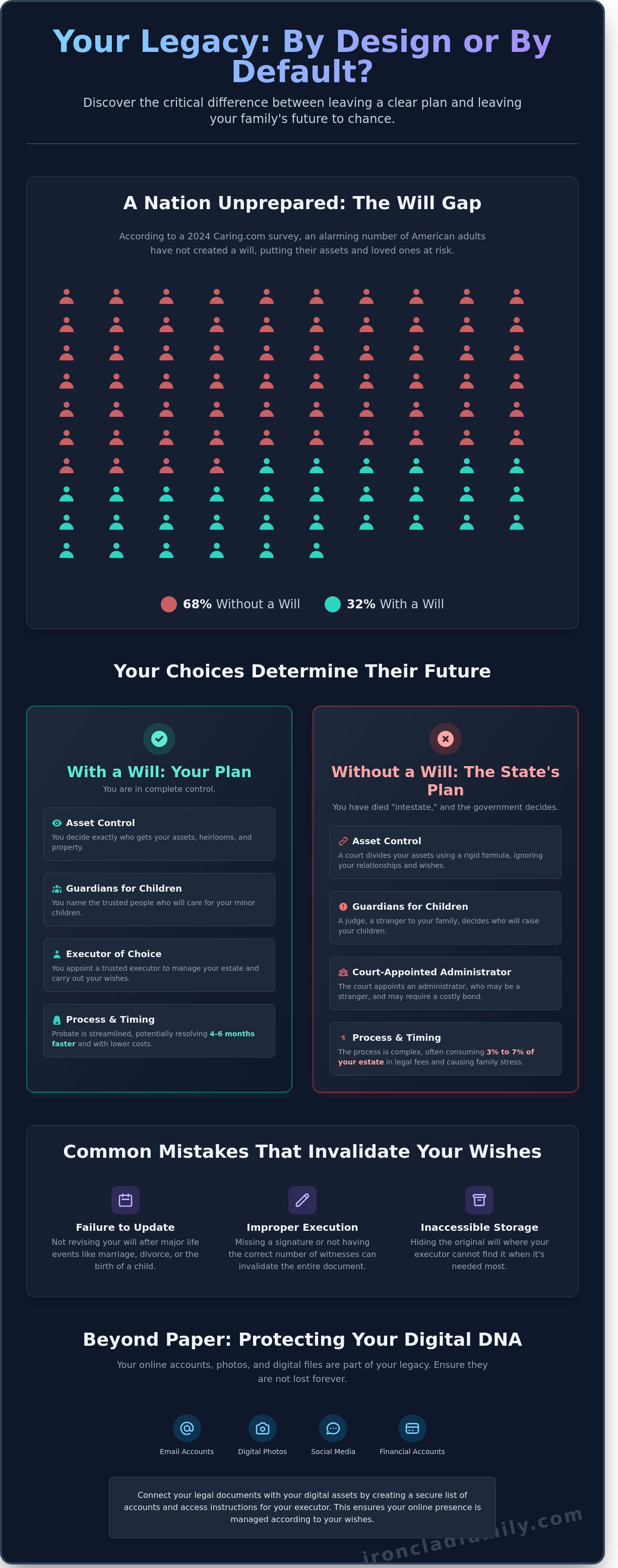
What if your family spent the next 18 months in a crowded courtroom because you missed a single signature? According to a 2024 survey by Caring.com, 68% of Americans still don't have a legal will, leaving their children's future and their digital legacy to chance. It's a heavy thought to carry. You want to protect your loved ones from the stress of legal battles and ensure your assets go to the right people. Nobody wants their private memories or digital accounts to vanish into a void because of a simple paperwork error.
We agree that the legal system often feels like a maze of confusing terms and high stakes. You've worked hard to build a life; you deserve to know that your heritage is secure. This guide will show you how to create a clear plan for your assets and your children's care. You'll learn the difference between various protection tools and how to organize your digital DNA so nothing gets lost. We're going to break down the legal requirements and provide a simple path to total peace of mind.
Key Takeaways
- Understand why a will serves as your family's legal blueprint, ensuring your assets are managed by someone you trust rather than the state.
- Discover how having a clear plan keeps your family out of messy legal battles and gives you complete control over your legacy.
- Learn the critical difference between planning for your medical care while alive and protecting your heritage after you are gone.
- Identify common mistakes, such as failing to update documents after major life changes, that can lead to unnecessary family conflict.
- Explore how to connect your legal papers with your digital assets to ensure your loved ones are never left in doubt.
What is a Will and Why Does Your Family Need One?
A will is much more than a stack of legal papers; it's a protective blueprint for your family's future security. By definition, a What is a Will? is a legal document that coordinates the distribution of your assets after you pass away. It allows you to speak for your loved ones when you are no longer there to guide them. You take on the role of the testator, which is the person creating the document. You also choose an executor, who acts as the manager to ensure your final wishes are carried out exactly as you intended.
To better understand how this process works, watch this helpful video:
Many adults believe they're too young to need a formal plan. However, a 2021 Gallup poll revealed that only 46% of Americans have a will in place. This leaves over half the population vulnerable. Emergency scenarios, such as a sudden illness or a fatal accident, don't follow a schedule. Without this document, your family is left in a state of uncertainty during their most difficult moments. Having a plan is the most basic act of protection you can provide for those you love.
The Consequences of Having No Will
If you die without a legal plan, you're considered "intestate." This means the state government steps in to decide who gets your home, your savings, and even your family heirlooms. This process is often cold and follows a rigid formula that might not match your family's needs. In many states, probate costs for intestate estates can consume 3% to 7% of your total asset value in legal fees. The emotional toll is even higher. Your family must guess what you wanted, which often leads to painful disagreements. Most importantly, if you have children under age 18, a judge will decide who raises them if guardians are not legally named in your documents.
Key Takeaways for Your Legacy
- Immediate Protection: A will ensures your minor children are cared for by the people you trust most.
- Asset Control: It prevents the state from using a generic formula to divide your property and money.
- Flexibility: This is a living document; you can change it as your life, family, or assets grow.
- Secure Storage: You must keep the original document in a safe, accessible place so your executor can find it when it's needed.
Will vs. Dying Intestate: Comparing Your Choices
Leaving your legacy to chance is a risk no family should take. When you die without a will, the legal term is "dying intestate." This means you've handed the keys to your life's work over to state lawmakers rather than your loved ones. Understanding What is a will? helps you realize that this document is your primary tool for maintaining control. Without it, a judge who never met you will decide who receives your assets and who raises your children.
The probate process changes significantly based on your level of preparation. If you have a clear plan, probate serves as a roadmap for your executor. It typically moves faster and costs less for the grieving family. When someone dies intestate, the court must appoint an administrator and often requires a "surety bond." This bond acts as an insurance policy for the estate; however, it adds an extra expense that can cost hundreds or thousands of dollars. Statistics show that settled estates with a clear will can be resolved 4 to 6 months faster than those caught in intestate proceedings.
Who Gets Your Assets?
State laws follow a strict hierarchy that often ignores modern family dynamics. Generally, assets flow to a legal spouse and biological or adopted children. If you aren't married, your partner of 20 years could receive nothing. In many states, 0% of an intestate estate goes to an unmarried partner, regardless of how long you lived together. This rigid structure also excludes stepchildren and close friends, potentially leaving your heritage and physical property in the hands of distant relatives you haven't spoken to in years.
The Power of Choice
A written plan allows you to be specific about your legacy. You can ensure a grandmother’s wedding ring goes to a specific niece or that a vintage car stays with a brother. It also gives you the right to exclude individuals who might mismanage an inheritance. Most importantly, you can name a backup executor. If your first choice is unable to serve, your backup ensures the plan never fails. You can store these vital instructions in a secure digital vault for families to ensure they are accessible the moment they are needed. This simple step moves your family from a state of uncertainty to absolute peace of mind.
Last Will vs. Living Will: Understanding the Difference
A 2023 study by Caring.com found that only 32% of American adults have a basic estate plan. Many people believe a standard will is enough to cover every scenario; however, it isn't. While a Last Will handles your physical assets after you pass, a living will protects your dignity while you're still here. Understanding the legal definition of a will helps clarify that its power only begins after death. A living will, by contrast, is a medical document. It outlines exactly which treatments you want or don't want if you become incapacitated. It's your voice when you can't speak for yourself.
| Feature | Last Will and Testament | Living Will |
|---|---|---|
| Effective Timing | After death | While alive but incapacitated |
| Primary Purpose | Asset distribution and guardianship | Medical treatment preferences |
| Legal Focus | Probate court and executors | Doctors and healthcare proxies |
When a Living Will Matters
Imagine a sudden car accident or a severe stroke. In these moments, doctors need to make fast decisions about life support, feeding tubes, or surgery. If you haven't documented your wishes, your family is forced to guess what you'd want. This creates immense emotional trauma and often leads to family disputes. A living will relieves this burden. It acts as a clear roadmap for your medical team. Most experts recommend pairing this with a durable power of attorney. This ensures a trusted person has the legal authority to enforce the choices you've written down.
Combining Documents for a Full Shield
Having just one document leaves a massive gap in your family's preparedness. If you only have a Last Will, your family is left defenseless during a medical crisis. If you only have a living will, your will and legacy remain unprotected after you pass. These documents work together to create a full shield of protection. You should store these instructions in a secure place where your family can find them instantly. Sharing these details now prevents confusion later. It moves your family from a state of fear to a state of absolute preparedness. When your medical and financial instructions are locked together, your legacy remains ironclad.
Common Mistakes in Making a Will
Creating a legacy plan is a profound act of love for your family. However, a will that is poorly drafted or out of date can create more confusion than clarity. Many people treat estate planning as a one-time task rather than a living process. According to a 2023 study by Caring.com, only 32% of Americans have a will, and of those who do, many fail to update them after significant life shifts. If you don't revise your documents after a marriage, a divorce, or the birth of a child, your assets might end up in the hands of an ex-spouse or exclude a new family member entirely.
Vagueness is another frequent trap. When instructions are broad, they leave room for interpretation. This often leads to heated family arguments during an already emotional time. Being specific about who receives sentimental items or specific bank accounts prevents these conflicts. You also need to choose the right executor. This person manages your entire estate, which is a heavy burden. Don't simply name your oldest child because of tradition; choose someone who is organized, financially literate, and genuinely willing to do the work.
The Digital Asset Gap
A traditional paper document often fails to protect your online life. We call these "digital ghosts." These are the social media profiles, photo libraries, and subscription accounts that remain active but inaccessible after you're gone. If your family doesn't have the login credentials, precious memories stored in the cloud could be lost forever. This gap is even more dangerous for those with cryptocurrency or digital businesses. Without a clear path to access these private keys, your financial legacy could vanish into the ether. You need a secure digital vault for families to bridge this gap between your physical and digital worlds.
Actionable Steps to Start Today
You can take immediate control of your heritage by following these practical steps:
- Inventory your world: Create a comprehensive list of all major assets, including property, bank accounts, and debts.
- Interview your executor: Sit down with the person you want to name. Ask them if they feel comfortable handling your affairs and explain your expectations clearly.
- Verify legal standards: Use state-specific templates to ensure your documents meet local laws. Rules for witnesses and notarization vary by location.
- Audit your beneficiaries: Check your retirement accounts and insurance policies to ensure the named beneficiaries match your current wishes.
Protecting your family means looking beyond the physical. Learn how to secure your important documents and digital legacy to ensure nothing is left to chance.
Beyond the Paper: Protecting Your Digital DNA
A traditional will is a powerful legal tool, but it often fails to account for the digital reality of modern life. Paper documents sitting in a lawyer's office or a dusty filing cabinet don't help your family find your online bank accounts or social media passwords. To be truly effective, your estate plan needs a digital partner that works in real time. This is where the gap between legal theory and family reality becomes clear.
IronClad Family helps you bridge this gap by acting as a digital guardian. While a will tells the court what you want to happen, a vault ensures your executor actually has the power to make it happen. Without the right keys, your loved ones could spend months trying to access your "digital DNA." You can provide them with a clear map instead of a mystery. This ensures that your life’s work isn't lost behind a locked screen.
Legacy planning is about more than just distributing money or property. It's about passing down your values and stories. Through Legacy Messages, you can leave personal videos or letters for your children and grandchildren. These are the treasures that matter most once the legal process ends. A vault keeps these memories safe and delivers them exactly when they're needed. It ensures your voice is heard long after the paperwork is filed.
What is a Digital Vault?
Think of a digital vault as a secure fortress for your most sensitive information. It's a high-security space where you store "the keys to your life." This includes everything from insurance policies to private passwords. The system uses military-grade encryption to protect your data from hackers and unauthorized access. It's much safer than a standard cloud storage folder or an email draft.
- Automated Delivery: The vault automatically sends specific information to your beneficiaries after a verified event.
- Professional Access: It provides a client document vault for financial advisors and lawyers to keep their clients organized.
- Encryption: Your data is scrambled so only you and your chosen heirs can read it.
Final Steps for Peace of Mind
You can stop worrying about the "what ifs" by getting organized today. Many people wait until a crisis happens to think about their will or digital assets. Research shows that 67 percent of Americans don't have a basic estate plan in place. Don't be part of that number. The best time to start was years ago; the second best time is right now. Procrastination is the only thing standing between your family and absolute clarity.
Protecting your family's future doesn't have to be overwhelming. By taking small steps today, you create a lasting legacy of security and care. We invite families to learn how to protect their important documents and ensure their digital DNA remains safe for the next generation. Your will is the foundation, but a vault is the roof that keeps the rain out.
Secure Your Legacy for the Next Generation
Planning for the future is a selfless act of love for your family. Recent studies show that 67% of adults lack a basic estate plan. Without a legal will, your state’s laws decide who raises your children and who inherits your home. You now know how to avoid common mistakes and why your digital DNA requires its own fortress. This isn't just about paperwork; it's about making sure your life's work isn't lost in a locked account or a confusing legal battle.
IronClad Family offers state-specific legal documents tailored to your unique situation. We use zero-knowledge encryption to ensure your privacy remains absolute. Our system also provides automated delivery of credentials to your loved ones in emergencies. This ensures they have the keys to your life exactly when they need them. You've moved from a state of uncertainty to a place of absolute preparedness. Taking these steps today removes the burden of doubt from those you love most.
Learn how to protect your family’s most important documents today
You've done the hard work of building a life. Now, you can rest easy knowing your family’s future is safe and sound.
Frequently Asked Questions
Do I need a lawyer to write a valid will in 2026?
You don't legally need a lawyer to create a valid document in 2026. Many people use online templates or software that costs between $50 and $150 to draft their own plans. However, you must follow your specific state laws, such as Florida Statute 732.502, which requires two witnesses to watch you sign. If your estate is worth more than $11 million or involves complex business assets, professional legal advice is a safer choice to avoid mistakes.
What happens to my children if I die without a will?
The state court will decide who raises your children if you die without naming a guardian. A judge uses the "best interests of the child" standard to pick a relative or friend, but this person might not be who you wanted. This legal process often takes 6 to 12 months to resolve. During this time, your family could spend $3,000 to $7,000 in legal fees just to settle custody disputes that a simple document could have prevented.
Can I change my will after it has been signed and notarized?
Yes, you can update your will at any time as long as you're of sound mind. You can add a codicil, which is an amendment, or write a completely new version that revokes the old one. Most experts suggest reviewing your plan every 3 to 5 years or after major life events like a birth or divorce. Never just cross out words on your original paper; this often leads to the court throwing out the entire document during probate.
Is a handwritten will legally binding in most states?
Only 27 states, including Texas and California, recognize handwritten documents, also known as holographic wills. To be valid, the entire paper must be in your own handwriting and signed by you. Even in states where they're legal, these documents are contested in court 50% more often than typed ones. Judges often struggle to verify the handwriting, which can delay the distribution of your assets to your family for years.
What is the difference between a beneficiary and an executor?
A beneficiary is the person who receives your assets, while the executor is the person who manages the business of your estate. The executor handles tasks like paying your final taxes and filing paperwork with the court during the 12 to 18 month probate process. You can choose one person to fill both roles, which happens in about 70% of simple family estates. It's important to choose an executor who is organized and stays calm under pressure.
How do I ensure my family can access my online accounts after I pass?
You must provide your heirs with the digital keys to your life through a secure organization system. Most social media and banking platforms have strict privacy rules that block family members from entering accounts after a death. Ironclad Family provides a protected vault where you can store login details and instructions for your digital legacy. This prevents your photos and financial records from being lost forever behind 256 bit encryption.
Does a will cover my life insurance or 401k accounts?
No, these accounts usually bypass your will and go directly to whoever you named on the specific account forms. These are called non probate assets because they transfer automatically upon your death. If you updated your testament in 2023 but forgot to change your 2015 life insurance beneficiary, the old name on the insurance policy usually wins. You should check these specific designations every 2 years to make sure they still match your wishes.
Where is the safest place to store my last will and testament?
The safest strategy is to keep the original paper in a fireproof home safe and a digital copy in a secure repository like Ironclad Family. While some people use bank safe deposit boxes, these are often sealed by the bank immediately after a death, making it hard for your executor to get inside. Since 350,000 house fires occur in the U.S. every year, having a digital backup ensures your family can always find the instructions they need to honor your legacy.

