
- 14 mins
Imagine your family gathered to honor your memory, only to discover that your final wishes are tied up in a costly court battle because of one missing signature. It's a devastating thought, yet it happens every day. With the federal estate tax exemption now at 15 million dollars per person in 2026, you might think your plan is simple, but the real dangers often hide in the fine print. Understanding the specific mistakes to avoid when writing a will is the only way to ensure your legacy remains a gift rather than a burden.
You've worked hard to build a life for your family, and you deserve the peace of mind that comes with a solid plan. We agree that protecting your loved ones should be straightforward, not a source of constant anxiety. In this guide, you'll discover how to navigate new regulations like California's Digital Financial Assets Law and avoid the legal traps that lead to family conflict. We will examine the ten most critical errors people make today, from ignoring digital passwords to failing to update state specific documents, so you can build a fortress around your family's future.
Key Takeaways
- Update your plan after every major life event to ensure your assets go to the right people without legal delays.
- Identify the state-specific legal requirements that help you navigate common mistakes to avoid when writing a will.
- Protect your digital legacy by including cryptocurrency, photos, and social media accounts in your final instructions.
- Appoint backup executors and alternate beneficiaries to build a resilient plan that works even if your first choice is unavailable.
- Learn why storing your will in a home file cabinet creates unnecessary risks and how to secure your documents for the long term.
Key Takeaways for a Mistake-Free Will
Most people think a will is a task you finish once and put away. This is one of the biggest mistakes to avoid when writing a will. Your life is dynamic, and your legal plans must keep up. To see the basics, you can look at what is a last will and testament; it's the core document that protects your family's future. Without it, the state decides who gets your home, your savings, and your memories. It acts as the anchor for your entire estate plan.
To better understand how the probate process works and why a clear will is essential, watch this helpful video:
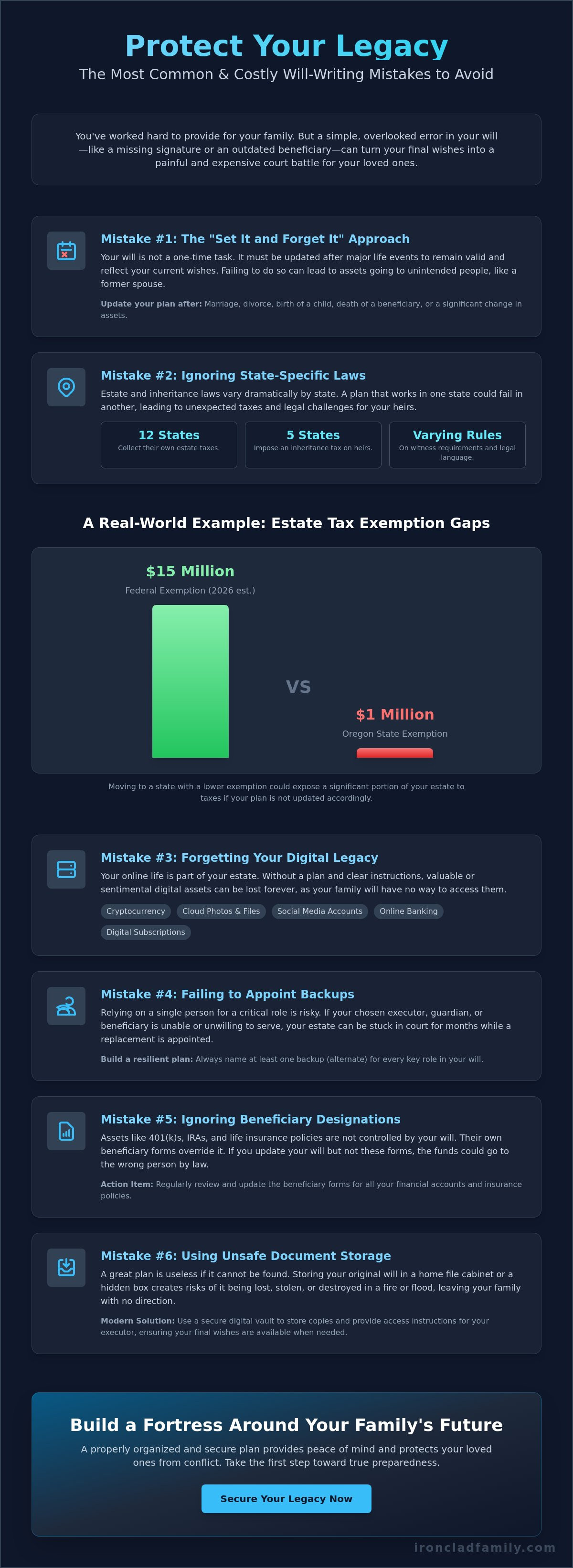
Life doesn't stand still. A birth, a marriage, or a move to a new state changes your legal standing. For example, if you move to Oregon, the state tax exemption is only 1 million dollars. This is a huge drop from the federal 15 million dollar limit in 2026. A plan that worked in one state might fail in another. You need to review your plan often to make sure it still provides a safe harbor for your loved ones. It's about staying one step ahead of changing laws.
Don't rely on just one person to handle everything. Naming only one executor is a common point of failure. If that person can't serve, your estate gets stuck in court for months. By naming a backup executor and alternate beneficiaries, you build a safety net. It's about being prepared for the unexpected so your family doesn't have to worry. This simple backup plan prevents legal delays and keeps your legacy moving forward.
Your legacy now includes your online life. Many people forget to list digital assets like cryptocurrency or cloud photos. This is another one of the mistakes to avoid when writing a will. Without clear instructions, these digital treasures can be lost forever. Your survivors need a map to find every part of your life's work. True preparedness means covering both your physical belongings and your digital footprint.
A great plan is only useful if it's accessible. Storing your documents in a secure digital vault ensures your family has the keys when they need them. This moves you from a state of worry to a feeling of absolute preparedness. It's the best way to keep your family's future secure and your legacy intact. When you organize your documents properly, you give your family the gift of clarity during a difficult time.
Table of Contents
- Why Your Last Will and Testament Needs to Be More Than a Piece of Paper
- Common Legal Pitfalls: Mistakes to Avoid When Writing a Will
- The Digital Blind Spot: Forgetting Your Online Legacy
- Step-by-Step: How to Organize and Protect Your Final Wishes
- Beyond the Document: Securing Your Family with a Digital Vault
Common Legal Pitfalls: Mistakes to Avoid When Writing a Will
Writing a legal document feels like a heavy task. One of the most dangerous mistakes to avoid when writing a will is assuming one set of rules applies everywhere. Every state has its own specific requirements. For example, in 2026, twelve states like Connecticut and Washington still collect their own estate taxes. Five other states, including Kentucky and Pennsylvania, impose an inheritance tax on your heirs. If your document doesn't use the right state-specific language, your family might face unexpected bills. Even learning how to write a will through official guides shows that small details, like the number of witnesses required, can make or break your plan.
Another common trap is forgetting about assets that don't pass through a will. Your life insurance policies and 401k accounts have their own beneficiary forms. These forms usually override whatever you write in your will. If you updated your will but forgot to change your 401k beneficiary after a divorce, your former spouse could legally receive those funds. This creates a painful conflict for your family during an already difficult time. Reviewing these designations is just as important as writing the will itself.
Naming the Right People for the Right Roles
Choosing your team is a critical step. An executor is the person who handles the business side of your estate, like paying bills and giving out assets. A guardian is someone who will physically care for your children if you aren't there. These are very different jobs. You might want a sibling to raise your kids, but a professional advisor to handle the money. Always name a backup person for both roles. If your first choice can't do the job, a successor ensures your family isn't left waiting for a judge to decide who takes over. Talk to these people before you sign anything. Make sure they feel ready for the responsibility.
The Danger of Outdated Documents
Your life changes, and your will should too. Major events like marriage, a new baby, or buying a home mean it's time for a review. Leaving an old document in place can lead to messy court battles between relatives. When you make a new version, you must perform a revocation. Revocation is simply the formal way you cancel your old will so there is no confusion about which one is active. Keeping your plan current is the best way to maintain family preparedness and peace of mind.
The Digital Blind Spot: Forgetting Your Online Legacy
You might think your estate is fully protected once you sign your paper will. However, leaving out your online life is one of the most common mistakes to avoid when writing a will. In 2026, our lives are deeply rooted in the digital world. From family photos stored in the cloud to cryptocurrency wallets, these assets represent the electronic DNA of your life. If you don't create a clear path for your family to reach them, these pieces of your legacy could be locked away forever behind encrypted walls.
One of the biggest hurdles is a law called RUFADAA. This stands for the Revised Uniform Fiduciary Access to Digital Assets Act. Most states use this law to decide who has the legal right to access your accounts after you pass away. Without specific permission in your legal documents, service providers like Google or Apple may refuse to give your family access, even if they have a death certificate. This creates a painful barrier for loved ones who just want to preserve your memories or manage your final affairs.
Security is another major concern. Some people try to solve this by writing their passwords or PINs directly into their paper will. This is a dangerous move. Once a will goes through the probate process, it becomes a public record. This means anyone can request a copy and see your sensitive login details. You need a way to share access that stays private and secure until the moment it is actually needed.
What Counts as a Digital Asset?
A digital asset is anything you own that is stored on a device or in the cloud. It is more than just money. Think of these assets as a living legacy that includes:
- Financial Assets: Cryptocurrency, online bank accounts, and digital storefronts like Etsy or Amazon seller accounts.
- Sentimental Assets: Years of family photos, videos, and personal emails stored in cloud accounts.
- Valuable Perks: Accumulated airline miles, hotel loyalty points, and even digital gaming collections.
In California, new rules like the Digital Financial Assets Law, starting July 1, 2026, mean that companies handling your digital money must follow strict licensing rules. This makes it even more important to have a plan that matches these new legal standards.
Managing Access Without Compromising Security
To protect your family, you must name a "digital executor" and give them the legal authority to act. This person doesn't have to be the same person who handles your physical property. Their job is to follow your instructions for your online life. Instead of writing passwords on paper, use a system that provides emergency access credentials. This allows your chosen protector to step in safely without exposing your data to the public. It moves your family from a state of worry to a feeling of absolute preparedness.
Step-by-Step: How to Organize and Protect Your Final Wishes
A perfect legal plan is useless if your family can't find it when the time comes. Many families spend months searching for a will that was tucked away in a "safe" place that nobody can access. This is one of the most heartbreaking mistakes to avoid when writing a will. You must organize your records so they are accessible the moment they are needed. Start by gathering your physical deeds and titles, then move to your digital records. Having everything in one central location prevents the confusion and anxiety that often follows a loss.
Once you have your information ready, you need a document that stands up in court. Using a template that isn't specific to your state is a major risk. Laws in 2026 are precise. For example, the California probate threshold was increased to 208,850 dollars in 2025. If your estate is worth more than that, your will must be perfect to avoid a long court process. Following a professional guide on how to make a will ensures you don't miss these critical local details.
The Signature and Notary Process
A handwritten will, also known as a holographic will, might seem easy, but it's a trap. These documents are often rejected by courts because they lack proper witnesses. To be safe, your will should be signed in front of at least two witnesses and a notary. If you have a busy schedule, you can use remote online notary services. These services are now legal in most states and allow you to finish your document from your own home. This formal step is what turns a piece of paper into a powerful legal shield for your family.
Organizing Your Legacy for Your Heirs
Your will handles the big assets, but a "Letter of Instruction" handles the heart of your estate. This is a separate, informal document where you list things like the location of your house keys, funeral wishes, and a list of people to notify. It's a practical roadmap for your survivors. To make sure you haven't missed anything, use a family emergency plan checklist. This helps you organize your legal documents so they are found within minutes, not months. You can secure all these vital instructions and documents today by setting up your own secure digital vault.
When you take these steps, you move from a state of uncertainty to a feeling of absolute preparedness. You aren't just filing papers; you are creating a clear path for your family to follow. This level of organization is the ultimate gift of peace of mind for those you love most.
Beyond the Document: Securing Your Family with a Digital Vault
A signed will is a powerful tool, but its location matters just as much as its content. One of the most common mistakes to avoid when writing a will is relying on a home file cabinet for storage. If a fire, flood, or theft occurs, your years of planning could vanish in minutes. Physical documents are fragile. They don't have the strength to survive a disaster, and they can't speak for themselves when your family needs them most. Protecting your legacy requires a solution that is as unshakeable as your commitment to your loved ones.
Digital security provides a level of defense that physical locks cannot match. Using zero-knowledge encryption ensures that your sensitive information remains private. This means only you and your chosen heirs hold the keys to your data. Not even the service provider can see what you've stored. It turns your digital information into a living legacy, held in a sacred repository that stands watch over your family's future security. This approach moves you from a state of worry to a feeling of absolute preparedness.
Why a Physical Safe is Not Enough
Many people believe a home safe is the ultimate protection. However, the "lost key" problem is a very real threat. If your heirs cannot find the key or the combination, your final wishes remain trapped inside. Bank safe deposit boxes present another hurdle. When a person passes away, banks often freeze these boxes until a court grants permission to open them. This creates a delay that can last weeks or even months during a time when your family needs answers quickly. A digital vault offers a better way. It provides instant, global access to your documents, ensuring your family has what they need exactly when they need it.
The IronClad Family Approach to Legacy
IronClad Family acts as a technical guardian for your family story. Through iVaultX, you can protect more than just PDF files and legal papers. You can store the very essence of your life's work. One of the most meaningful features is the ability to leave behind legacy messages. These are personal notes or videos that deliver emotional value to your children and grandchildren long after you are gone. It's a way to ensure your voice is heard and your wisdom is passed down through generations.
Getting started with a family preparedness service helps you move from uncertainty to absolute peace of mind. You can automate the delivery of your emergency access credentials, so your survivors aren't left guessing. By choosing a partner that understands both high-tech security and family dynamics, you build a fortress around your legacy that will stand firm for years to come.
Build a Fortress Around Your Family's Future
Your legacy is more than just a list of assets; it's the living story of your life and the security of your children. By focusing on state-specific legal requirements and including your digital world in your plans, you ensure your wishes are followed exactly as intended. Avoiding common mistakes to avoid when writing a will means your family won't have to face legal delays or lost memories during their most difficult moments. True peace of mind comes from knowing you've left a clear, accessible roadmap for those you love.
You don't have to carry the weight of this planning alone. IronClad Family provides the tools you need to stay organized and protected. With zero-knowledge encryption, only you and your heirs can see your data. Our system offers state-specific legal document tools and automated emergency credential delivery to keep your plan working when it matters most. Secure your legacy today with an IronClad Family Digital Vault. Taking this small step today creates a lasting shield for your family's future. You're doing the important work of protecting the next generation, and that's a gift they'll cherish forever.
Frequently Asked Questions
Can I write my own will without a lawyer?
Yes, you can legally write your own will in every state. Many families use state-specific templates or online drafting tools to create a valid document without the high cost of a law firm. The key is to ensure you follow your local rules for witnesses and signatures. If your estate is very large or involves complex business holdings, you may want a professional to review your work to ensure it stands up in court.
What happens if my family cannot find my original will?
If the original document is missing, the probate court may assume you intended to cancel it. This often results in your assets being distributed according to state default laws rather than your personal wishes. To prevent this, you must store your documents in a place that is both secure and accessible. Using a technical guardian for your records ensures your heirs aren't left searching through old boxes during a time of grief.
Do I need to notarize my will for it to be legal?
Notarization is not a strict requirement for a will to be valid in most states, but it is a vital safety step. A notary's seal helps create what is known as a self-proving will. This allows the court to accept the document as authentic without needing to find and bring in your witnesses to testify. It is a simple step that provides an extra layer of protection and speeds up the legal process for your survivors.
How often should I update my estate plan?
You should review your estate plan every three to five years or whenever a major life event occurs. Events like marriage, divorce, the birth of a child, or moving to a new state can change your legal needs. For instance, moving to a state with an inheritance tax, like Pennsylvania or Kentucky, requires a plan update. Keeping your documents current is the best way to account for the specific mistakes to avoid when writing a will.
What is the most common reason a will is contested in court?
Improper execution is the most frequent reason a will is challenged. This happens when the document wasn't signed or witnessed exactly as the law requires. Other common reasons include claims that the person was under pressure or lacked the mental capacity to make decisions. Following a formal process with clear signatures and witnesses is the best way to build a fortress around your final wishes and prevent family conflict.
Can I leave my social media accounts to someone in my will?
Yes, you can and should name someone to manage your social media presence. Most platforms have specific policies for deceased users, and without clear instructions, your family might be locked out of your accounts forever. By naming a protector for your online life, you ensure your digital DNA and family photos are preserved. This proactive step helps you navigate the modern mistakes to avoid when writing a will.
What is a digital executor and do I need one?
A digital executor is a person you appoint to manage your online assets and electronic records. This role is separate from the person who handles your physical property. They take care of your email, cloud storage, and even cryptocurrency wallets. Since so much of our lives now exists in the digital world, naming a specific person for these tasks is essential for a complete and modern estate plan.
Does a will cover my life insurance policy beneficiaries?
No, a will does not override the beneficiary designations on your life insurance policy. These policies are private contracts that pay out directly to the person named on the insurance company's forms. If you want to change who receives your life insurance benefits, you must contact the provider and update their records. Relying on your will to change these payouts is a common error that can lead to unintended financial outcomes.

