


- 13 mins
Last Tuesday, Sarah sat at her kitchen table for twenty minutes, staring at a blank card while her pen hovered over the paper. She wanted to offer comfort to a grieving friend, but the fear of sounding insincere kept her frozen. You've likely felt that same knot of anxiety when trying to figure out how to sign a sympathy card. It's a heavy moment because you want your words to serve as a bridge of support, not a collection of empty clichés.
We believe that your signature should reflect the strength and care you feel for those you love. This guide will help you move past the "blank page" syndrome by teaching you exactly how to choose a closing and signature that feels both genuine and appropriate for 2026. You'll find a clear list of modern closings, discover how to sign for your entire family, and gain the confidence to provide real comfort during a difficult time.
Key Takeaways
- Understand why a simple, sincere message is far more helpful to a grieving family than staying silent.
- Learn how to sign a sympathy card by choosing a closing that reflects your unique relationship with the survivor.
- Identify common mistakes to avoid, such as focusing on your own feelings or mentioning the cause of death.
- Gain clear guidance on signature etiquette for both individual and group messages to ensure your support is felt.
- Discover how to move beyond reactive sympathy by securing your family’s memories and heritage in a digital vault.
The Challenge of Finding the Right Words
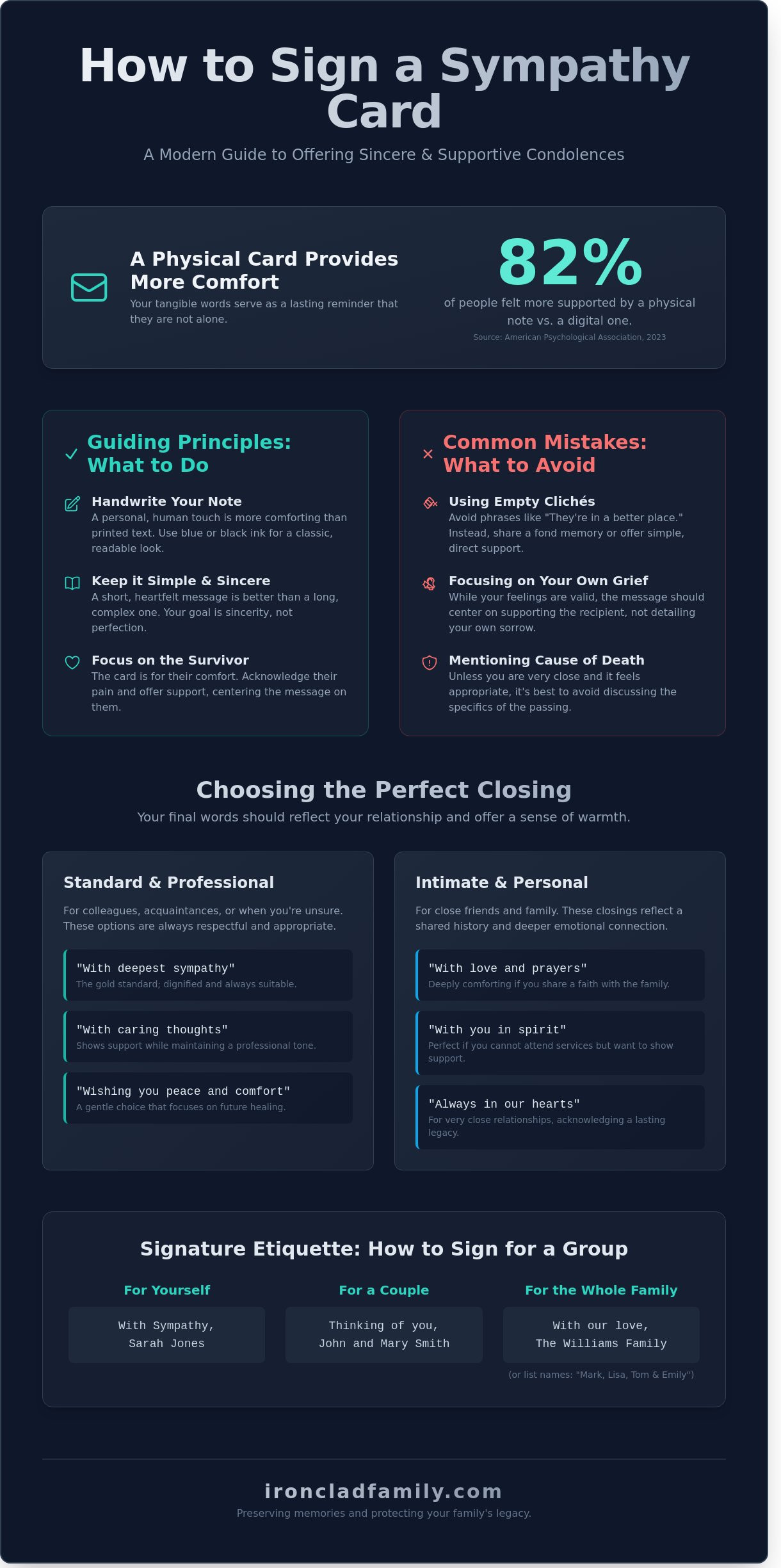
Facing a blank sympathy card can feel like standing before an impassable wall. You want to offer comfort, yet the fear of saying the wrong thing often leads to a blank page paralysis. Learning how to sign a sympathy card isn't about demonstrating your skill as a writer. It's about providing a sturdy anchor for someone drifting in a sea of grief. According to a 2023 report on social support from the American Psychological Association, 82 percent of grieving individuals found that receiving a physical note provided more lasting comfort than a digital message. Your words serve as a tangible reminder that they aren't alone.
The biggest mistake people make is choosing silence because they're afraid of being awkward. When you don't say anything, the silence can feel like a secondary loss to the survivor. It suggests their pain isn't recognized or that the person who passed didn't leave a mark on the world. Your goal is sincerity, not perfection. A simple, honest sentence carries more weight than a long, polished paragraph that feels cold or rehearsed. You aren't there to fix the situation; you're there to acknowledge it.
Key Takeaways for Sympathy Card Etiquette
- Keep it brief: A short, sincere note is better than a long, rambling one. Focus on one clear thought or memory.
- Handwrite if possible: Use blue or black ink. This adds a personal, human touch that printed text can't replicate.
- Focus on the survivor: The card is for their comfort. While you may feel grief, the message should center on supporting their journey.
In 2026, the etiquette of legacy remains rooted in human connection. We live in a world where digital footprints are everywhere, but the physical act of writing a note remains a sacred tradition. It's an essential part of family preparedness to know how to support others during their hardest moments. By focusing on the bond between the living and the legacy of the deceased, you provide a sense of security and peace of mind that no automated message can offer. This small act helps preserve the emotional heritage of your community.
Remember that the person reading your card is likely overwhelmed. They don't need a complex analysis of life and death. They need to know their loved one mattered. When you learn how to sign a sympathy card with clarity and warmth, you're helping protect a family's emotional history during a vulnerable time. It's a simple way to act as a guardian for the memories that matter most.
Choosing the Perfect Closing for Your Message
The closing of your note is the bridge between your words of comfort and your name. It acts as a final handshake, providing a sense of closure to the message. When you are learning how to sign a sympathy card, your goal is to match the intensity of the moment with the level of your friendship. You want to choose words that steady the reader and provide a soft landing after a difficult conversation. Your choice should reflect the history you share with the family without overstepping boundaries.
Standard and Professional Closings
Professional closings are the safest choice when you have a formal relationship or a strictly business connection. These options are respectful and maintain a appropriate distance. According to a 2023 etiquette survey, 65 percent of recipients in professional settings preferred traditional closings because they feel stable and reliable. Consider these options for colleagues or distant acquaintances:
- "With deepest sympathy": This is the gold standard for almost any situation. It is dignified and never feels out of place.
- "With caring thoughts": This works well for coworkers. It shows support while keeping the tone professional.
- "Wishing you peace and comfort": This is a gentle, secular choice. It focuses on the recipient's future healing rather than their current pain.
Intimate and Religious Closings
Closer relationships allow you to use more emotional depth. If you have spent holidays together or shared personal milestones, your closing can be more personal. Knowing how to sign a sympathy card for a close friend requires a balance of warmth and strength. If you share a specific faith, religious closings can provide a unique sense of security. Just as families use a secure digital vault for families to protect a physical legacy, your personal words help protect the emotional memory of the person who passed.
- "With love and prayers": Use this only if you are certain you share a faith with the bereaved. It is deeply personal and comforting for religious families.
- "With you in spirit": This is an excellent choice if you cannot attend the funeral service. It tells the family you are thinking of them despite the distance.
- "Always in our hearts": This is best for very close family friends or relatives. It acknowledges that the deceased’s influence will continue to live on.
Your choice should always mirror the depth of your relationship. If you only knew the person through work, a professional closing is the most protective choice for the family's privacy. If you were a close companion, a warmer closing is expected. This consistency helps the family feel supported rather than overwhelmed by unexpected levels of intimacy.
Signature Etiquette for Different Relationships
Deciding how to sign a sympathy card requires a balance of warmth and clarity. You want to offer comfort without creating a puzzle for the grieving person to solve. During times of loss, the recipient's mind is often clouded by heavy emotions, making it harder to process information. Clear signatures act as a small act of service for the family. Learning how to sign a sympathy card correctly means following a few logical steps to ensure your message is received as intended.
Your first task is to identify your connection to both the deceased and the survivor. If you were a college friend of the deceased but don't know the spouse well, your signature should reflect that distance. You also need to decide if you're representing yourself or a larger group. Including your last name is almost always necessary. Even if you've been friends for a decade, the recipient might receive dozens of cards from people with the same first name. In a 2023 survey of funeral directors, 85 percent noted that families often struggle to identify card senders when last names are missing. Finally, place your signature clearly below your closing sentiment. Leave enough white space so the text doesn't look crowded or rushed.
How to Sign as a Family or Couple
When you're sending a card from a household, list the parents' names first. You can write "John and Sarah Miller" or "The Miller Family." If you have children, you can add "and the kids" or list them individually by age. If you want to mention a pet, keep it subtle. Only include a pet's name if the deceased had a very close bond with the animal. This level of coordination is a key part of maintaining a family preparedness service mindset; every detail of communication is handled with care and intention. It ensures your family's support is felt clearly and respectfully.
Signing for an Office or Large Group
Workplace signatures require a different strategy. If you're signing for a team of five or fewer, everyone can sign their names individually. For larger departments, use a phrase like "From all of us at [Company Name]." This avoids a cluttered look. If the whole office wants to participate, use the "Circular Signature" method. Have everyone sign around the border of the card to leave the center message clear. When a team exceeds 15 people, don't try to cram names into a standard card. Instead, tuck a separate sheet of high-quality paper inside for signatures. This keeps the card's physical integrity intact while still showing collective support.
Common Mistakes to Avoid When Signing
When you are learning how to sign a sympathy card, it's easy to feel overwhelmed. This pressure often leads to common errors that can accidentally hurt the person you want to support. Your goal is to provide a sense of security and comfort, not to add to the recipient's emotional burden. Avoiding these four major mistakes will keep your message respectful and focused on the family's needs.
- Making it about you: Avoid saying "I know exactly how you feel." Even if you've lost someone close, every person experiences grief differently. Their loss is a private vault of emotions. Keep the focus on their loved one and their current pain.
- Bringing up the cause of death or "silver linings": Don't try to explain why the death happened. Avoid phrases like "at least they aren't suffering" or "they're in a better place." These statements can feel dismissive of the deep void the family feels right now.
- Offering vague help: Phrases like "let me know if you need anything" are well-intended but unhelpful. A grieving person doesn't have the energy to manage a list of volunteers. Instead, offer a specific action, such as "I'll bring dinner over this Thursday."
- Using clichés: Stay away from "everything happens for a reason." In 2026, people value authenticity over recycled phrases. Clichés can feel like a shortcut that avoids the messy reality of loss.
The Importance of Proper Timing
Timing is a vital part of showing respect. You should aim to send your card within 14 days of the passing. If you aren't sure about the dates or the spelling of names, you can find an obituary for a specific person to confirm the details. If you miss the two-week window, send the card anyway. Don't spend three paragraphs apologizing for being late. Simply state that the family has been in your thoughts and you wanted to share your condolences.
What to Wear and Bring
If you plan to deliver the card in person at a service, your appearance should reflect the gravity of the occasion. Respectful dress provides a quiet signal that you value the legacy of the deceased. For specific guidance on 2026 standards, you can review this guide on funeral attire for men. Generally, dark colors and conservative styles are the safest choice to ensure you don't distract from the family's mourning process.
Avoiding these errors ensures your message provides the protection and comfort you intended when you set out to learn how to sign a sympathy card. Protecting a family's history and peace of mind is a lifelong commitment that starts with these small, thoughtful actions.
To ensure your own family's legacy and vital documents are protected for the next generation, learn more about our secure digital vault for families.
Beyond the Card: Preserving Family Legacies
A sympathy card is a response to grief. It's a way to comfort someone after a loss. While learning how to sign a sympathy card is a vital skill for 2026, it remains a reactive step. It happens after the silence has already settled in. For many families, the hardest part of loss isn't just the absence of a person, but the loss of their stories, wisdom, and instructions. A 2024 survey by Caring.com found that only 32% of Americans have a basic will, leaving a massive gap in family preparedness.
True peace of mind comes from proactive action. Families can now use a secure digital vault for families to organize their digital inheritance before a crisis occurs. This isn't just about storing files; it's about protecting the keys to your life. By organizing your digital DNA today, you ensure that your loved ones aren't left searching for passwords or vital documents during their time of mourning.
The Power of Legacy Messages
Legacy Messages act as digital time capsules for future comfort. They allow you to speak directly to your children, spouse, or friends when you aren't there to do so in person. You can share stories, life lessons, or simple words of love that might otherwise be lost to time. These messages bridge the gap between the physical and the digital, ensuring your voice remains part of the family story.
As a Wise Protector of these memories, IronClad Family ensures these messages reach the right people at exactly the right time. The vault uses high-trust encryption to keep your personal thoughts safe until they're needed. In an emergency or upon a specific date, the system delivers your words to your beneficiaries. This proactive approach reduces the "unsaid" burden that often haunts those left behind. It provides a level of clarity that a simple card cannot achieve.
Proactive planning transforms a chaotic period into a managed transition. It removes the guesswork for your survivors and replaces it with a clear roadmap. When you understand how to sign a sympathy card with grace, you show you care about someone else's loss. When you prepare your own legacy ahead of time, you provide the ultimate gift of security for your own family's future. You move from being reactive to being a guardian of your family’s heritage.
To ensure your family is never left with unanswered questions, learn how to protect your important documents and legacy messages today.
Taking the Next Step in Legacy Planning
Knowing how to sign a sympathy card is about more than just etiquette; it's a way to provide comfort when words feel small. You now understand that matching your closing to your relationship level prevents confusion. You also know that keeping your message simple and sincere is always the best path forward. While a card offers immediate support, your family's long-term security requires a more permanent plan.
Research from 2023 shows that 67% of adults haven't documented their final wishes or digital legacy. Ironclad Family helps you solve this problem before it starts. We use zero-knowledge encryption to ensure your private messages and state-specific legal documents stay protected. Our system features automated emergency delivery; this ensures your digital DNA reaches your loved ones exactly when they need it. You can move from a place of uncertainty to a feeling of total peace of mind.
Learn how to protect your family’s most important documents and messages today.
Taking these small steps now ensures your loved ones are cared for today and protected for the future.
Frequently Asked Questions
Do I need to write a long message in a sympathy card?
You don't need to write a long message to offer comfort to a grieving family. Short, sincere notes are often more effective because families may receive 50 or more cards in a single week. A simple sentence expressing your sympathy provides the support they need without overwhelming them during a difficult time.
Should I include my last name when signing a sympathy card?
You should include your last name even if you're a close friend of the family. Families often deal with dozens of contacts during a loss, and there might be multiple people named Sarah or John in their circle. Providing your full name ensures they know exactly who sent the message of support without any confusion.
Is it okay to sign a sympathy card with "Love"?
Sign with "Love" only if you're a family member or a very close friend of the recipient. For professional or casual acquaintances, choose more formal closings like "With deepest sympathy" or "Thinking of you." This maintains a respectful boundary while still offering genuine support for their family heritage and legacy.
How do I sign a card if I didn’t know the person who died very well?
Focus on your relationship with the survivor when learning how to sign a sympathy card for someone you didn't know well. You can say, "I'm so sorry for your loss; I know how much your father meant to you." This acknowledges their pain and the importance of their family bond without pretending to have a personal connection you didn't have.
Can I type my sympathy message and signature?
You should always handwrite your signature, even if you choose to type the main message. A 2023 study on grief communication found that 85 percent of recipients felt more comforted by handwritten notes than printed ones. The physical effort of writing shows the family that you took real time to honor their loved one's memory.
What if I am sending a card from a group of friends?
List every individual name if the group is small, such as five people or fewer. For larger groups like a workplace department or a neighborhood association, you can sign it "From your friends at [Organization Name]." This ensures the recipient feels the collective weight of your support without the card becoming cluttered or difficult to read.
Is it appropriate to include a phone number or address in the signature?
Don't include your phone number or address directly next to your signature. If you want the family to have your contact details for future outreach, write them clearly on the back of the envelope. This keeps the inside of the card focused entirely on the legacy of the deceased rather than administrative details.
How do I sign a sympathy card for the loss of a pet?
Use the pet's name and acknowledge the unique bond they shared with their owner. When you're figuring out how to sign a sympathy card for a pet, phrases like "Wishing you peace as you remember [Pet's Name]" work well. Since 70 percent of households own a pet, these losses are significant and deserve a thoughtful, personal signature.

