

Imagine facing a moment when you can no longer make vital decisions about your health, finances, or daily affairs. This is where the power of attorney and durable power of attorney become essential tools for protecting your interests.
In this article, we break down the distinctions between these legal documents, giving you the confidence to make informed choices for your estate planning in 2026. You will discover what each term means, how they differ, and which option best suits your needs. Take the first step toward securing your future by understanding these powerful legal safeguards.
Understanding Power of Attorney: Definition and Fundamentals
What exactly is the power of attorney and durable power of attorney, and why do these documents matter in estate planning? At its core, a power of attorney (POA) is a legal document allowing one person (the principal) to grant authority to another (the agent or attorney-in-fact) to act on their behalf. The scope of authority can range from managing finances to making healthcare decisions, depending on the document’s specifics. To be valid, a POA must meet state legal requirements, such as proper signatures and sometimes notarization. POAs can be revoked at any time, and they typically end if the principal becomes incapacitated—unless the document is made durable. For perspective, recent estate planning statistics show that only a minority of adults have a POA in place, despite its importance. For example, someone traveling abroad might use a POA to have a trusted friend pay bills on their behalf.
What Is a Power of Attorney?
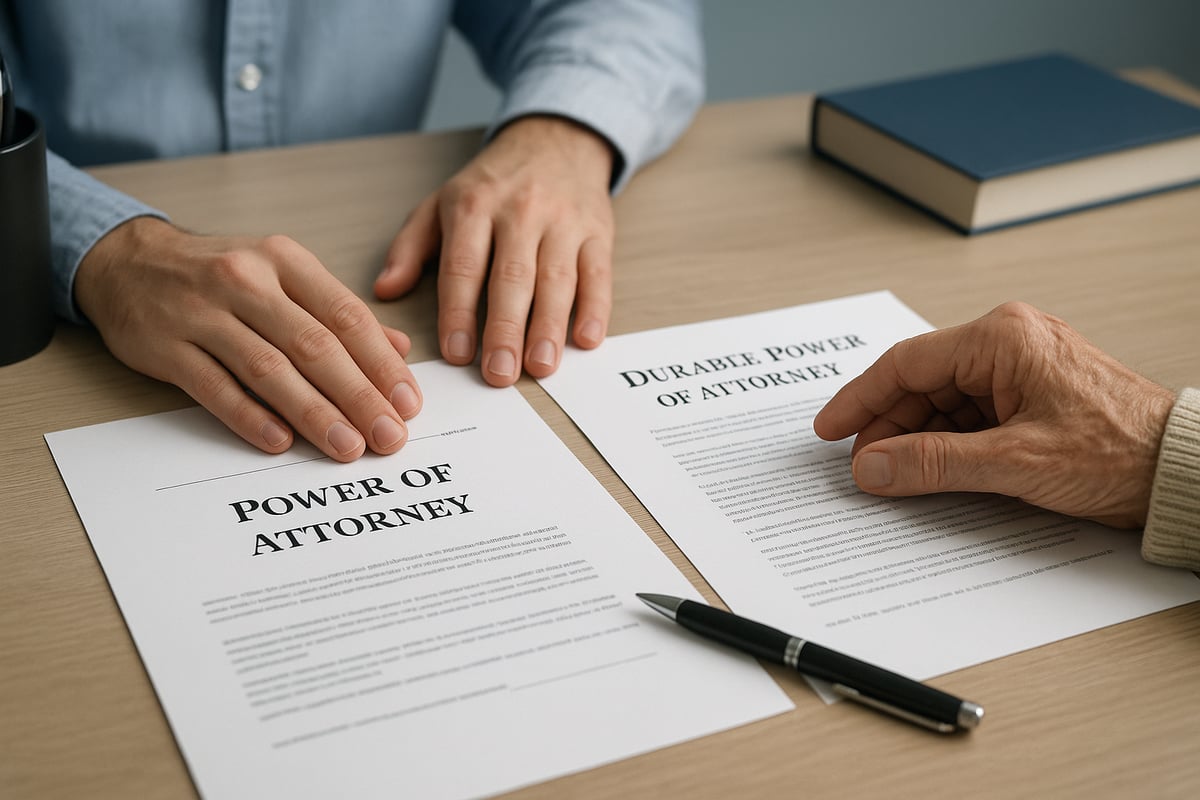
A power of attorney and durable power of attorney document delegates authority from the principal to an agent, allowing that agent to act in the principal’s best interests. The principal chooses what authority to grant, such as handling financial matters, making healthcare choices, or managing property. Legal requirements for validity include the principal’s mental capacity, proper signatures, and sometimes witnesses or notarization. The document can be temporary or ongoing, and the principal can revoke it at any time. For instance, someone taking an extended trip might appoint a relative to manage their bank accounts and pay bills while they are away.
Types of Powers Granted by a POA
The power of attorney and durable power of attorney can grant various powers, tailored to the principal’s needs. Common powers include managing finances, conducting real estate transactions, making legal or tax decisions, and providing authority over health and medical care if specified. Some POAs limit the agent’s authority to certain tasks, while others are broad. There are also exclusions, such as prohibiting the agent from making gifts or changing the principal’s will. An example is an agent authorized to sell a specific property on the principal’s behalf, ensuring flexibility without overreaching authority.
General vs. Limited (Special) Power of Attorney
When considering a power of attorney and durable power of attorney, it’s important to distinguish between general and limited versions. A general POA grants broad authority, allowing the agent to handle nearly all aspects of the principal’s affairs. In contrast, a limited or special POA restricts the agent’s authority to specific actions or timeframes, such as closing a real estate deal. General POAs offer convenience but pose greater risks if the agent is untrustworthy. Limited POAs reduce risk but may not cover unexpected needs. For example, a limited POA might only authorize the agent to sign documents for a home sale.
How a POA Ends: Revocation and Incapacity
A power of attorney and durable power of attorney can end in several ways. The principal can revoke the POA at any time, provided they are mentally competent. Otherwise, a standard POA automatically terminates if the principal is declared incapacitated, unless the document is durable. Misuse of a POA can lead to legal consequences for the agent, including civil or criminal penalties. Regularly reviewing and updating the document is vital to ensure it reflects current wishes. For instance, if a principal becomes incapacitated and the POA is not durable, the agent immediately loses authority, potentially leaving important matters unresolved.
Durable Power of Attorney: What Sets It Apart
A power of attorney and durable power of attorney are often confused, yet the “durable” aspect creates a critical distinction. In legal terms, “durable” means the document remains valid even if the principal becomes incapacitated. This feature is essential for anyone wishing to ensure their affairs are managed seamlessly if they lose the ability to make decisions. The durability comes from specific statutory language, which must be included for the DPOA to survive incapacity. For instance, if someone suffers a stroke and cannot communicate, a durable power of attorney and durable power of attorney allows the agent to continue acting without interruption. For a more detailed breakdown, visit this Durable Power of Attorney Document resource.
Defining Durable Power of Attorney
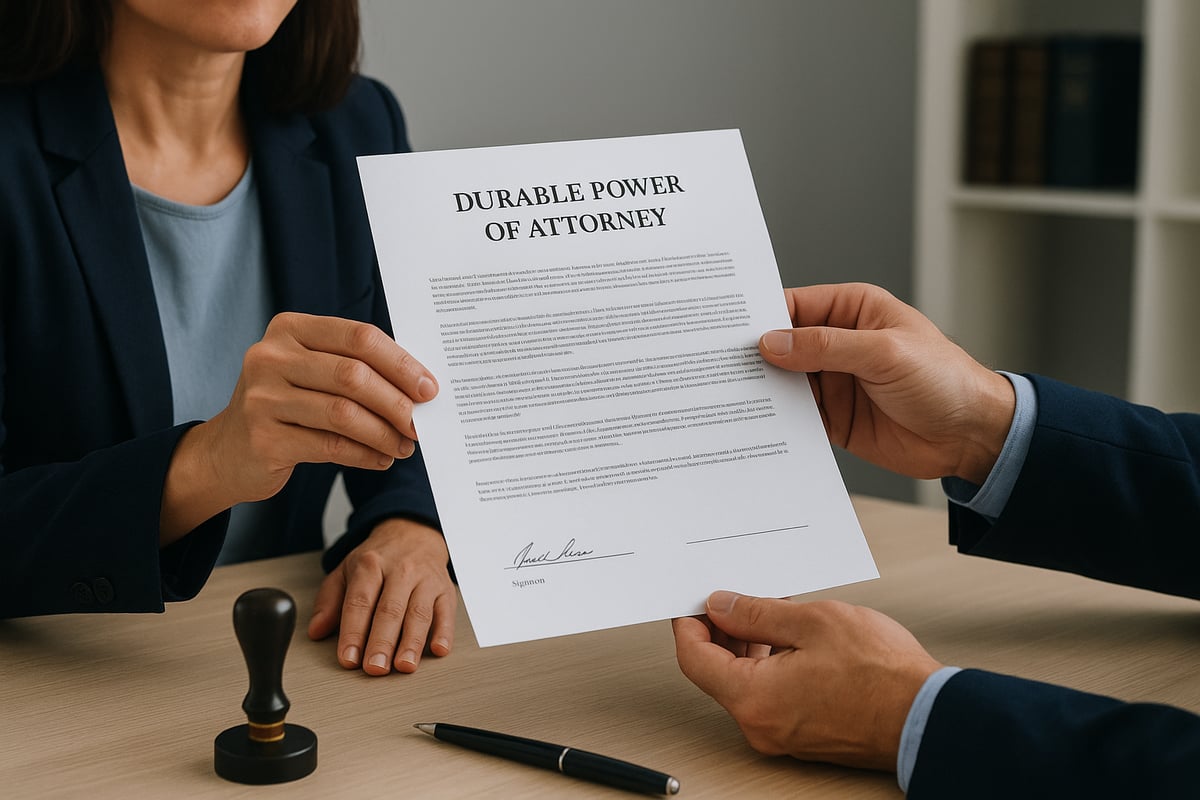
The term “durable” in the context of a power of attorney and durable power of attorney means the document is designed to endure through the principal’s incapacity. This durability ensures the agent’s authority does not end if the principal becomes mentally or physically unable to manage their own affairs. Key statutory phrases, such as “this power of attorney shall not be affected by subsequent disability or incapacity,” must appear in the document for it to be legally durable. For example, if a principal is hospitalized after a stroke, their DPOA remains valid, and their chosen agent can immediately step in to manage finances, pay bills, or make crucial decisions without court involvement.
Types of Durable Powers of Attorney
There are two main forms of power of attorney and durable power of attorney: the durable financial POA and the durable medical or healthcare POA. The financial DPOA grants authority to handle banking, investments, real estate, and business matters. The medical DPOA empowers an agent to make healthcare decisions if the principal is unable. Many people choose different agents for these roles, such as a spouse for medical matters and a business partner for financial affairs. For example, a principal may designate their spouse as the healthcare agent while entrusting a trusted business partner with financial management, ensuring expertise and trust in both areas.
Legal Requirements and State Variations
Every state imposes its own requirements for a power of attorney and durable power of attorney. These may include specific statutory wording, notarization, and witness signatures. In some states, a DPOA must be signed in front of two witnesses, while others require notarization for validity. Certain jurisdictions also mandate registration of the document with government offices, especially for real estate transactions. It is vital to use the correct forms and procedures for your state, as failing to meet these standards could render the DPOA invalid. For example, a DPOA signed without the proper witnesses in a state that requires them may not be recognized by banks or hospitals.
When and Why to Use a DPOA
Establishing a power of attorney and durable power of attorney is a proactive step for anyone concerned about potential incapacity, chronic illness, or age-related decline. A DPOA helps protect assets, ensures bills are paid, and avoids the costly and time-consuming process of court-appointed guardianship or conservatorship. It offers peace of mind to families, knowing someone they trust will have legal authority to act if needed. Many estate plans now include a DPOA as a standard component, reflecting its importance in comprehensive planning. By preparing this document in advance, individuals can maintain control over who manages their affairs, even in the most unexpected circumstances.
Key Differences: Power of Attorney vs. Durable Power of Attorney
Understanding the distinctions between a power of attorney and durable power of attorney is essential for effective estate planning. Each option offers unique protections and limitations, especially when it comes to incapacity, duration, authority scope, and risk management.
How Each Handles Incapacity
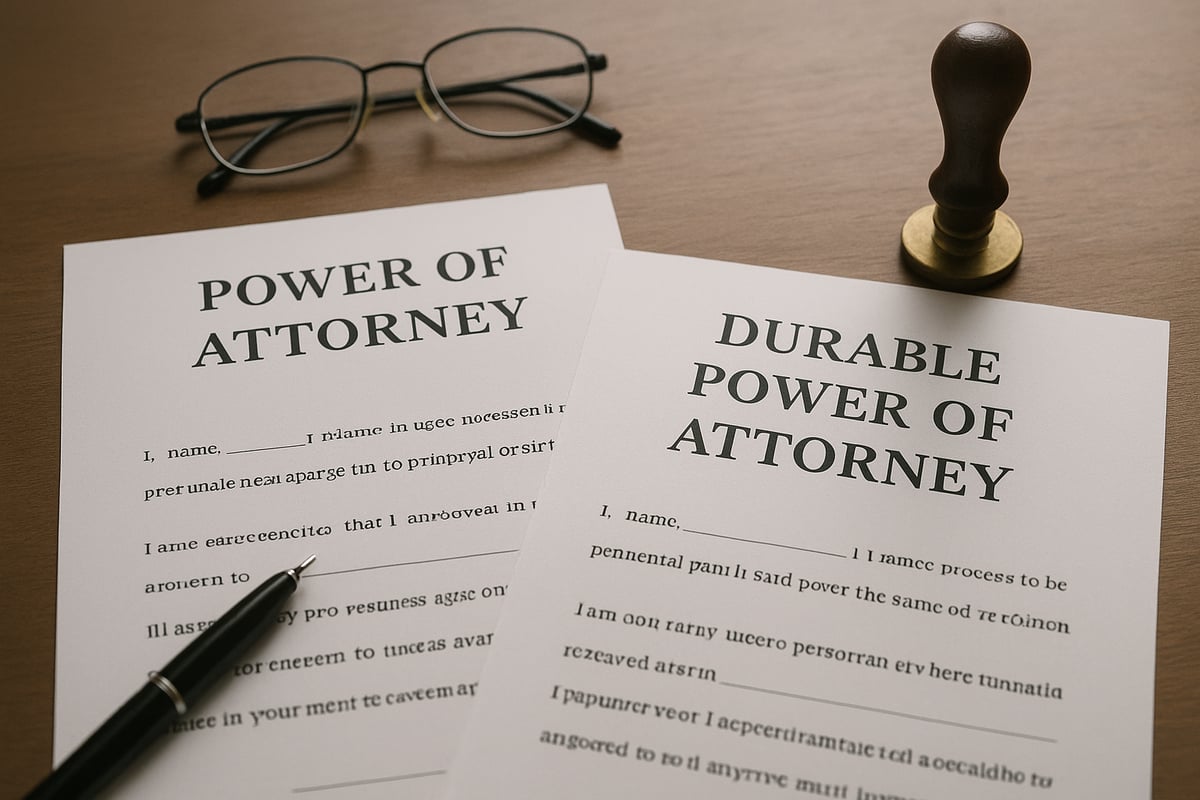
The most significant difference between a power of attorney and durable power of attorney is how each responds to incapacity. A standard POA automatically ends if the principal becomes incapacitated, leaving the agent unable to act during critical moments. In contrast, a durable power of attorney remains valid even if the principal loses mental capacity. This ensures continuity in decision-making when it is needed most. For example, if someone suffers a sudden medical event, a standard POA agent’s authority ends, while a DPOA agent can continue managing affairs without interruption. This crucial distinction makes the choice between a power of attorney and durable power of attorney especially important for long-term planning.
Duration and Revocation
The duration of a power of attorney and durable power of attorney varies based on the document type and specific language. A standard POA is often temporary or tied to a particular event or transaction, and it terminates upon the principal’s incapacity or death. In contrast, a DPOA persists through incapacity and remains valid until revoked or the principal passes away. Revoking either document requires proper notice to agents and relevant institutions. It is also critical to understand that both POA and DPOA end upon the principal’s death, as explained in Financial Power of Attorney After Death. Regular reviews and updates are essential, especially after life changes like divorce or relocation, to ensure your power of attorney and durable power of attorney reflect your intentions.
Authority Scope and Limitations
Both a power of attorney and durable power of attorney can grant broad or narrow powers, depending on how they are drafted. The scope of authority may include handling finances, managing property, or making healthcare decisions, but limitations are common. For instance, some documents restrict agents from gifting assets or engaging in self-dealing. Fiduciary duties require agents to act in the principal’s best interest at all times. Customizing the authority helps balance flexibility and protection, preventing misuse. For example, a principal might prohibit the agent from selling the family home. Carefully defining the scope ensures that your power of attorney and durable power of attorney serve your needs without exposing you to unnecessary risk.
Risks, Protections, and Legal Safeguards
With both a power of attorney and durable power of attorney, there is a risk of abuse or misuse by agents. Legal safeguards are critical to mitigate these risks. Common protections include requiring dual agents for significant decisions, third-party notifications, and regular oversight of agent activities. If misconduct occurs, legal remedies such as court intervention or civil actions are available. Choosing a trustworthy agent is paramount. Studies have shown that a significant percentage of elder financial abuse cases involve POA misuse, highlighting the need for vigilance. Regularly reviewing your power of attorney and durable power of attorney and communicating expectations can help protect your interests and provide peace of mind.
Choosing the Right Power of Attorney for Your Needs
Selecting the right power of attorney and durable power of attorney is a pivotal step in protecting your interests and those of your loved ones. With so many options and legal nuances, understanding which document fits your unique needs is essential for effective estate planning.
Assessing Your Personal and Family Situation
Begin by evaluating your current stage of life, health status, and family dynamics. The right power of attorney and durable power of attorney will vary depending on these factors. Younger adults may prioritize flexibility for short-term needs, while seniors or those with chronic conditions often require long-term protection.
Consider the complexity of your assets and any unique circumstances, such as blended families or business ownership. For example, a business owner may need specialized provisions to ensure business continuity, while parents of young children may focus on temporary delegation during travel.
Common Scenarios and Use Cases
Different situations call for distinct approaches to power of attorney and durable power of attorney. If you are traveling abroad or serving in the military, a standard power of attorney may suffice for managing day-to-day affairs. Conversely, individuals facing progressive illnesses or cognitive decline benefit from a durable power of attorney that remains effective if they become incapacitated.
Business continuity and estate planning are also important scenarios. For instance, using a power of attorney for a real estate closing or a durable power of attorney for long-term care decisions can provide peace of mind and avoid disruptions.
Questions to Ask Before Creating a POA or DPOA
To choose the right power of attorney and durable power of attorney, ask yourself key questions:
- What types of decisions do I want my agent to make?
- Who is the most trustworthy and capable person for the role?
- What are my state’s legal requirements?
- How frequently will I review and update these documents?
Using a checklist helps ensure you address all critical considerations. For example, regularly revisiting your documents after major life changes can help maintain their effectiveness and relevance.
Professional Advice and Legal Resources
Consulting an estate planning attorney is vital when establishing a power of attorney and durable power of attorney. While online templates can be tempting, professional guidance ensures legal compliance and that your wishes are accurately documented.
State bar associations and trusted online resources provide valuable information, but an attorney can tailor documents to your unique needs. For more context on how these documents fit within broader estate and legacy planning, visit Legacy Planning Simplified: Wills, Trusts & Estate Planning.
Always weigh the risks of do-it-yourself approaches, as improperly executed documents are more likely to be challenged or rejected by institutions.
Medical vs. Financial Power of Attorney: Specialized Roles
Choosing the right power of attorney and durable power of attorney can be confusing, especially when medical and financial decisions are at stake. Understanding these specialized roles is essential for effective estate planning and personal protection.
Medical (Healthcare) Power of Attorney
A medical power of attorney and durable power of attorney allows you to appoint someone to make healthcare decisions if you become unable to communicate or decide for yourself. The agent can consent to treatments, choose healthcare providers, and manage end-of-life care according to your preferences.
This document often works alongside living wills and advance healthcare directives, ensuring your wishes are respected even during emergencies. The scope of authority can be broad or limited, depending on your instructions. For example, your agent may be called upon to approve surgery or decline certain life-sustaining interventions if you are incapacitated. Selecting a trusted agent is vital, as they must act in your best interests at all times.
Financial Power of Attorney
A financial power of attorney and durable power of attorney grants your chosen agent authority to manage your financial affairs. This includes paying bills, handling investments, filing taxes, and managing real estate or business interests.
The agent’s responsibilities can range from routine banking to complex asset management, depending on the scope you define in your document. Some individuals use this authority temporarily, such as during extended travel, while others rely on it for long-term incapacity planning. Safeguards, like requiring dual signatures or periodic accounting, help prevent misuse and provide peace of mind that your financial matters will be handled responsibly.
Appointing Different Agents for Different Roles
Many people choose separate agents for their power of attorney and durable power of attorney, assigning one for medical decisions and another for financial matters. This division allows you to match each agent’s strengths to the responsibilities required.
Pros:
- Specialized expertise for each area
- Reduced conflict of interest
- More oversight and accountability
Cons:
- Potential for communication gaps
- Agents may disagree on priorities
For instance, you might appoint your spouse as your healthcare agent, trusting their understanding of your medical wishes, while naming a sibling or business partner as your financial agent due to their financial acumen. Clear communication between agents is crucial to avoid confusion and ensure your interests are always protected.
State Law and Advance Directive Integration
State laws play a significant role in the execution of power of attorney and durable power of attorney documents. Each state has unique forms, witness, and notarization requirements, particularly for healthcare directives and financial POAs.
It is essential to coordinate your medical and financial POAs with other estate planning documents, like living wills or trusts, to prevent conflicting instructions. Some states mandate specific language or forms for healthcare POAs, and others require registration for financial POAs. For a detailed overview, consult State Durable Power of Attorney Laws to ensure your documents comply with current regulations and remain effective when needed most.
Creating, Storing, and Updating Your Power of Attorney Documents
Setting up your power of attorney and durable power of attorney documents is essential for effective estate planning. These documents are only as strong as the steps you take to create, store, and maintain them. Let us walk through the best practices to ensure your wishes are honored and your agents are empowered when it matters most.
Steps to Legally Create a POA or DPOA
Drafting your power of attorney and durable power of attorney requires careful attention to legal details. Begin by clearly specifying the powers granted and identifying both principal and agent. Confirm your state’s requirements for signing, witnessing, and notarization. In 2026, many states require notarization, and some allow remote online notarization for added convenience. For current standards, refer to Notarization Requirements for POA in 2026.
Common steps include:
- Drafting the document with precise legal language
- Securing required signatures and witnesses
- Completing notarization, if applicable
- Registering with banks or institutions for recognition
Proper execution ensures your power of attorney and durable power of attorney stand up to legal scrutiny.
Safe Storage and Accessibility of POA Documents
Once created, your power of attorney and durable power of attorney documents must be stored securely yet remain accessible. Always keep originals in a fireproof safe or locked filing cabinet. Provide copies to your agent, backup agents, and your attorney. Make sure trusted family members know where to find the documents in an emergency.
Risks of lost or inaccessible documents can derail even the most carefully crafted plans. Consider digital storage options for backup. The goal is to ensure your power of attorney and durable power of attorney are available when needed, without delay or confusion.
Secure Digital Vaults for Estate Planning
A secure digital vault provides a modern solution for organizing and protecting your power of attorney and durable power of attorney. Digital vaults offer encrypted, cloud-based storage for instant access. In critical moments, agents or loved ones can retrieve documents from anywhere, even if originals are lost.
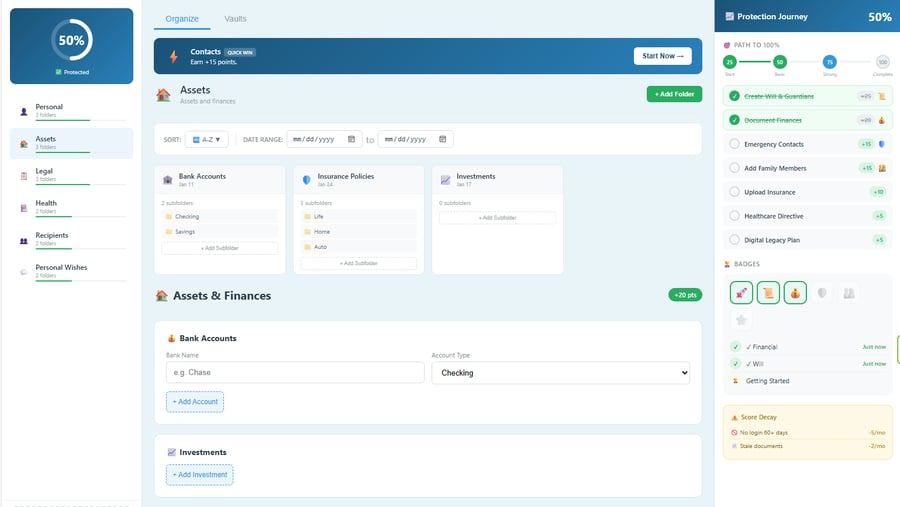
Many digital vaults provide automated delivery to agents under predetermined conditions, such as hospitalization. This means your power of attorney and durable power of attorney are always accessible, ensuring your wishes are carried out efficiently. Imagine the peace of mind knowing your legal documents are protected and ready at a moment’s notice.
When and How to Update or Revoke Your POA/DPOA
Life changes, so your power of attorney and durable power of attorney should evolve too. Review your documents after major events like marriage, divorce, moving states, or changes in health. To revoke a POA or DPOA, follow formal steps: draft a revocation, notify all agents and institutions, and destroy old copies.
Regular reviews keep your power of attorney and durable power of attorney aligned with your current wishes. Communicate updates to your agents and family to prevent confusion and ensure everyone is informed.
Legal Implications and Common Pitfalls in 2026
The legal landscape for power of attorney and durable power of attorney continues to evolve rapidly as technology and societal needs change. In 2026, new laws and regulations are shaping how these documents are created, executed, and enforced. States are increasingly adopting digital and electronic POA forms, making it easier to manage your affairs remotely. At the same time, there is heightened scrutiny on agents' fiduciary duties and a push for greater transparency. According to Record Highs in Lasting Power of Attorney Registrations, more people than ever are recognizing the importance of these documents and taking action to protect their interests. This trend underscores the urgency of understanding the current legal requirements for power of attorney and durable power of attorney.
Recent Legal Changes and Trends Affecting POA/DPOA
In 2026, several states have updated their laws to accommodate digital signatures and electronic notarization for power of attorney and durable power of attorney documents. This shift helps streamline the process and ensures faster access during emergencies. Additionally, there are new requirements for electronic registration and stricter guidelines for agent conduct. Some jurisdictions now mandate annual reporting by agents to reduce the risk of misuse. The surge in registrations, as noted in Record Highs in Lasting Power of Attorney Registrations, illustrates the growing public awareness and adaptation to these changes. Staying informed about your state's requirements for power of attorney and durable power of attorney is crucial as laws continue to change.
Common Mistakes and How to Avoid Them
Many individuals make errors when setting up their power of attorney and durable power of attorney. Common mistakes include failing to meet legal requirements, such as missing signatures or inadequate witnessing, and choosing agents without proper vetting. Another frequent pitfall is neglecting to update documents after major life events like divorce or relocation. Overly broad language can also lead to unintended consequences. To avoid these issues, use clear, precise language in your power of attorney and durable power of attorney, ensure all formalities are met, and review your documents regularly. A checklist can help prevent oversights and keep your estate plan effective.
Protecting Against Abuse and Fraud
Unfortunately, power of attorney and durable power of attorney documents can be misused if not carefully managed. Warning signs of abuse include unexplained financial transactions, sudden changes in asset ownership, or lack of communication from the agent. To protect yourself, consider appointing two agents who must act together or require regular financial reporting. Family members should stay informed and monitor the agent's activities. Legal remedies exist if abuse occurs, including removal of the agent and restitution. Staying vigilant is essential to ensure your power of attorney and durable power of attorney are used for your benefit, not someone else's gain.
Ensuring Your Wishes Are Honored
Clear communication is the foundation for honoring your intentions with a power of attorney and durable power of attorney. Discuss your wishes openly with your chosen agents and family members. Coordinate your documents with other estate planning tools like wills and trusts to avoid conflicts. Regularly reviewing and updating your power of attorney and durable power of attorney, especially after major life changes, helps ensure your plan stays current. As highlighted in Why Only 33% of Americans Have a Will, too many people leave their future to chance. Taking proactive steps now can prevent family disputes and provide peace of mind.
Now that you understand the key differences between a Power of Attorney and a Durable Power of Attorney, you know how vital it is to keep your documents secure, organized, and instantly accessible when your family needs them most. If you want peace of mind knowing your important estate plans are protected and can be delivered to your loved ones in any emergency, let’s make it easy for you.
You can see how a secure digital vault works for your situation with a no risk trial—take the first step to safeguarding your future and Start 14 Day Free Trial.

