
- 13 mins
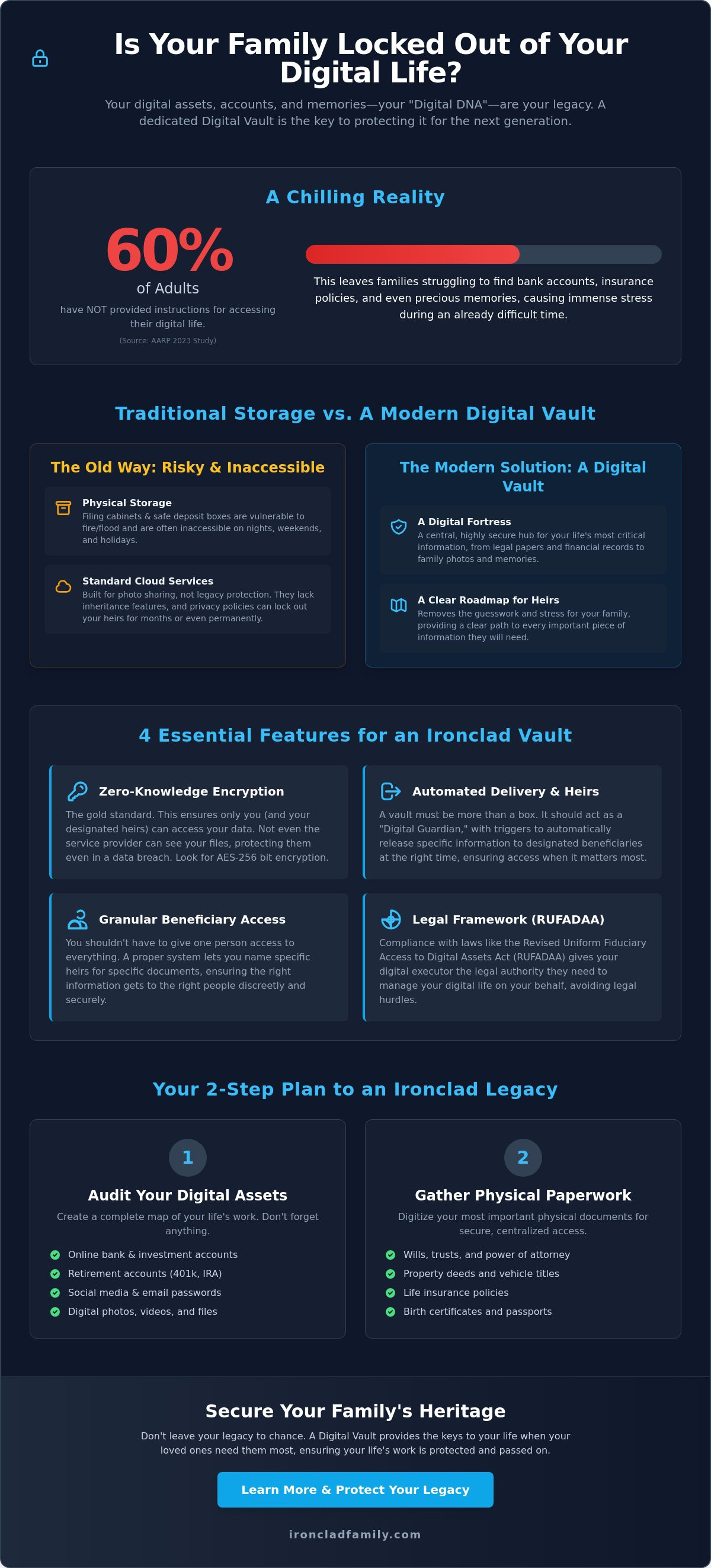
What if your family's entire financial history and personal legacy were locked behind a screen your heirs could never open? It's a chilling thought; yet, a 2023 study by the AARP found that 60% of adults haven't provided loved ones with instructions on how to access their digital accounts. You likely feel the weight of this responsibility every time you look at your disorganized files or worry about your online passwords. You want to protect your "Digital DNA," but the path to true security feels overwhelming.
We agree that your life's work deserves more than a standard cloud folder or a dusty filing cabinet. Finding the best digital vault for documents is about more than just storage; it's about creating a bridge to the next generation. This guide will show you how to choose a secure repository that guarantees your family can find what they need when they need it most. We'll explore the essential security features you need for 2026, common mistakes to avoid, and how to organize your information so your legacy remains ironclad.
Key Takeaways
- Understand why traditional cloud storage falls short and how a dedicated vault prevents your family from being locked out of your digital life for months.
- Discover the essential security features to look for when choosing the best digital vault for documents, including zero-knowledge encryption and the ability to name specific heirs.
- Learn the difference between passive storage and active protection to ensure your legal and financial records are truly guarded rather than just stored.
- Follow a simple two-step process to audit your digital assets and gather physical paperwork to create a complete map of your life’s work.
- See how a "Digital Guardian" approach secures your family’s heritage and provides the keys to your life when your loved ones need them most.
Why Your Family Needs the Best Digital Vault for Documents
A digital vault is a high-security fortress for your life’s most critical information. It is more than just a place to store files; it is the central hub for your "Digital DNA." This DNA includes the essential records, legal papers, and memories that define your life and legacy. Finding the best digital vault for documents is the first step in making sure your family stays protected when you are no longer there to guide them. Without a plan, your loved ones could spend months trying to find bank accounts or property deeds.
To better understand this concept, watch this helpful video:
When you don't organize your digital life, the consequences are heavy. Families often face extreme stress while grieving because they can't find a simple password or a life insurance policy. In many cases, assets like forgotten retirement accounts go unclaimed for years. This process is known as Digital Asset Management (DAM), and it is the foundation of any secure legacy plan. By using a dedicated vault, you remove the guesswork and provide a clear roadmap for your heirs.
Key Takeaways for Family Preparedness
- Security must be zero-knowledge. This ensures that only you and your chosen receivers have access to the data. Not even the service provider can see your files.
- Organization is the first step. A successful transfer of wealth starts with knowing where everything is located.
- Passive storage is not enough. You don't just need a box; you need a system that delivers information to the right people during an emergency.
The Problem with Traditional Storage
Physical safe deposit boxes are often a trap for families. They are locked away in banks that close on weekends and holidays. If an emergency happens on a Saturday night, your family is stuck. Standard cloud storage also has major risks. These platforms are built for sharing photos, not for protecting sensitive legal paperwork. They lack the specific inheritance features required to pass data to the next generation. The best digital vault for documents solves the "missing key" problem. It ensures that your grieving family isn't locked out of the very information they need to move forward.
Key Features to Evaluate in a Secure Digital Storage System
Choosing the best digital vault for documents is about more than just finding a place to park your files. It's about building a digital fortress that protects your family's "digital DNA." You need a system that balances military-grade security with an interface your grandmother can understand. Most people think a standard cloud folder is enough, but these systems often leave your legacy vulnerable to hackers or locked away from heirs because of strict privacy laws. A true vault acts as a digital guardian, ensuring your life's work isn't lost when you aren't there to provide the password.
Zero-Knowledge Encryption Explained
Zero-knowledge encryption is the highest level of privacy available. It means the service provider has no way to see what's inside your vault. They don't hold the key; only you do. This is vital for a secure digital vault for estate planning. If a provider is ever hacked, your data remains scrambled and unreadable to the intruders. You should also check how the system handles data at rest, which is when it's sitting on the server, and data in transit, which is when you're uploading it. Both stages must use AES-256 bit encryption, the same standard used by global banks to protect financial secrets.
Automated Delivery and Beneficiary Access
A vault is only useful if your loved ones can get in when it matters most. The best digital vault for documents uses "triggers" to release information. You can set these triggers for immediate emergencies or for a specific time after you pass away. This process must follow the Revised Uniform Fiduciary Access to Digital Assets Act (RUFADAA). This law has been adopted in 46 states and gives your digital executor the legal authority to manage your assets. Without this compliance, your family might face years of legal battles just to recover family photos or close an bank account. The system should allow you to name specific "receivers" for different types of data, ensuring the right person gets the right key at the right time.
Your life isn't just made of PDFs. A quality system should support a wide variety of assets. This includes legal documents like wills, financial records like crypto keys, medical directives, and even sentimental items like video messages for your kids. The user experience must be simple. If the interface is too complex, you won't use it, and your executor won't be able to find what they need during a crisis. A clean, intuitive design ensures your legacy is organized and accessible when emotions are high. If you want to ensure your family is truly prepared for any situation, consider a family preparedness service that guides you through the organization process.
Comparing Digital Vaults: Passive Storage vs. Active Protection
Many people assume that keeping files in a standard cloud folder is enough to protect their future. It's a common mistake. Standard cloud storage is passive. It sits there and waits for you to interact with it. A specialized vault is active. It's designed to move your information to the right people when you can't do it yourself. Finding the best digital vault for documents means looking for a tool that understands the difference between a simple file and a life's legacy.
Cloud Storage vs. Specialized Vaults
General cloud storage like Google Drive or Dropbox works well for daily tasks. However, these platforms often fail during the probate process. If an account holder passes away, family members often face a wall of red tape. Tech giants usually require a court order before they release any data. This process can take months and cost thousands in legal fees. Specialized vaults solve this by including legacy features that standard tech products lack. These features include emergency access triggers and designated heirs. These tools act as a vital bridge for generational wealth transfer. They ensure your digital DNA reaches the next generation without a legal fight.
Integrated Legal Services
The best digital vault for documents doesn't just store your papers; it helps you create them. Modern platforms now offer integrated legal tools. You can create state-specific wills directly inside the vault interface. This ensures your documents follow the specific laws of your home state. It's much safer than using a generic template found online.
Remote online notary services also simplify the process. As of 2024, 45 states have permanent laws allowing for remote notarization. You can sign and verify your most important documents from your own home. Keeping your legal documents and their storage in one secure place reduces the risk of identity theft. It's a more organized way to manage your estate.
- Passive Storage: High risk of account lockout after death; no legal document creation; no beneficiary management.
- Active Protection: Automated access for heirs; built-in will generation; remote notary integration.
Cost is another factor to consider. A monthly subscription for a vault might seem like an extra expense. But you have to compare it to the cost of lost assets. State governments in the U.S. currently hold over $70 billion in unclaimed property. This often happens because families don't know a bank account or insurance policy exists. IronClad Family helps prevent these losses by keeping everything visible to your loved ones. A small monthly fee is a smart investment when compared to the risk of losing a family's entire financial history.
How to Organize Your Life’s Critical Information
Organizing your digital life doesn't have to be overwhelming. It's about creating a clear path for your family when they're faced with a crisis. By following a structured process, you ensure that your digital DNA is preserved and accessible. The first step is to conduct a thorough digital asset audit. You need to list every bank account, social media profile, and cryptocurrency wallet you own. Recent data from 2024 shows that the average person has over 100 passwords. Don't let these become a locked door for your heirs. Write down the account names and the purposes they serve.
Next, collect your physical documents. These are the foundations of your estate, such as property deeds, birth certificates, and physical estate plans. While these often sit in a dusty filing cabinet, they need to be digitized. Once you have these files ready, you must categorize them by urgency. Ask yourself what your family would need in the first 24 hours after an emergency. This usually includes medical directives and home access codes. Finally, upload these files and assign specific receivers to each category. Using the best digital vault for documents allows you to designate who sees what, ensuring the right information reaches the right person at the exactly right time.
Practical Steps for Using the Best Digital Vault for Documents
The 24-Hour Emergency Kit
In a crisis, time is the most valuable resource. Your emergency kit should include house keys, alarm codes, and clear medical directives. You can use a digital vault to store these credentials securely, giving your family instant access without searching through your home. It's also a place for legacy messages. These personal notes provide emotional comfort and guidance, helping your loved ones feel your presence when they're making difficult decisions. It turns a cold data transfer into a meaningful heritage.
Maintaining Your Digital Heritage
Setting up your vault is just the beginning. Your life changes, and your digital records must change with it. Set a recurring schedule every six months to update your vault. This is the time to handle new financial accounts or updated passwords. It's a good idea to involve your financial advisor or estate planner in this process. They can help ensure your digital assets align with your legal estate plan. This proactive approach by IronClad Family moves you from a state of uncertainty to a feeling of absolute peace of mind. Your legacy isn't just a collection of files; it's the living history of your life's work.
Ready to secure your family's future? Explore how to build your secure digital vault today.
Securing Your Legacy with IronClad Family’s Vault
IronClad Family serves as the definitive Digital Guardian for your family's future. It's more than a place to store files; it's a fortress for your Digital DNA. When you search for the best digital vault for documents, you're looking for a system that understands the weight of your life's work. Our platform uses a zero-knowledge security architecture. This means your data is encrypted before it ever leaves your device. We don't hold your keys, and we can't see your files. Only you and the people you choose have the power to unlock your legacy.
The true strength of IronClad lies in its automated delivery system. Most storage services are passive; they wait for someone to log in. If something happens to you, those files might sit untouched forever. Our system acts as a protective heartbeat. It checks in on you and, if you don't respond over a set period, it automatically triggers the delivery of your "keys to your life" to your designated beneficiaries. This ensures your family isn't left guessing or locked out during a crisis.
Beyond Storage: A Complete Estate Solution
IronClad Family moves past simple file hosting by offering a comprehensive ecosystem. We combine high-security storage with tools to create state-specific legal documents. You can draft a Will or Power of Attorney that meets the specific legal codes of your home state without the high cost of traditional legal fees. To make things even easier, we provide integrated remote online notary sessions. You can sign and notarize your most important papers from your living room. Families and financial advisors trust the iVaultX platform because it bridges the gap between digital files and legally binding protection. It ensures that your heritage is documented and your wishes are enforceable.
Getting Started with IronClad
Setting up your account is a straightforward process designed to replace anxiety with action. You start by uploading your Digital DNA, which includes everything from property deeds to sentimental photos. Next, you assign specific "Legacy Contacts" who will receive access to certain folders when the time is right. This setup provides immediate peace of mind. You'll know that if an emergency occurs tomorrow, your family has a clear map to follow. According to 2024 industry data, nearly 67% of adults don't have an up-to-date estate plan. You can step out of that statistic in less than an hour. Choosing the best digital vault for documents is the ultimate act of love. It's a final gift of clarity for your loved ones. Start your family preparedness service plan today and ensure your legacy remains ironclad.
Take Control of Your Family’s Digital Legacy
Protecting your life’s work shouldn't be a source of stress. You've seen why a standard cloud drive fails to meet the needs of a modern estate. Industry data shows that 67 percent of adults lack a basic estate plan, leaving their families at risk during a crisis. True security requires a proactive approach that guards your information while you're here and delivers it when you aren't. Choosing the best digital vault for documents means you're investing in more than just storage; you're building a fortress for your family's history.
A secure vault must offer zero-knowledge encryption to keep your private keys truly private. It should also provide integrated state-specific legal documents to ensure your plans work where you live. With an automated emergency delivery system, you can trust that your loved ones will have the keys to your life exactly when they need them. IronClad Family stands as your digital guardian, protecting the essence of your heritage from loss or theft.
You have the power to eliminate the uncertainty that keeps you up at night. Secure your family’s future today with The Vault from IronClad Family. It’s a simple step that creates a permanent foundation of safety for those you love most.
Frequently Asked Questions
Is a digital vault safer than a physical safe deposit box?
A digital vault is safer because it protects your records from physical disasters like the 2019 floods that destroyed thousands of bank boxes. While a bank box requires a physical key and your presence during business hours, a digital vault uses AES-256 encryption to keep your data secure and accessible 24/7. It removes the risk of a single point of failure, ensuring your family isn't locked out of vital information during an emergency.
What documents should I prioritize putting in my digital vault?
You should prioritize your digital DNA, which includes your 2024 estate plan, life insurance policies, and property deeds. Include a master list of your 15 most important account passwords and your latest healthcare directives. These are the keys to your life that your family will need immediately to manage your affairs and protect your heritage without searching through paper files.
How does my family get access to the vault if I pass away?
Your family gains access through a secure beneficiary process that you set up in advance. When your designated legacy contact provides a verified death certificate, the system triggers the transfer of your digital inheritance based on your specific instructions. This prevents the typical 6 month probate delays that occur when families don't have a clear path to digital assets.
What happens if I forget my master password to the vault?
If you forget your password, you must use the unique recovery key or 12 word seed phrase you generated during setup. Because the best digital vault for documents uses zero-knowledge encryption, the service provider cannot see or reset your password for you. This ensures your privacy remains absolute, but it means you must store your recovery key in a safe, separate location.
Is a digital vault RUFADAA compliant for my digital executor?
Yes, a digital vault fulfills the requirements of the Revised Uniform Fiduciary Access to Digital Assets Act, which is now law in 46 U.S. states. By using a vault, you provide the "explicit consent" required by law for your executor to handle your digital assets. This legal clarity protects your executor from privacy violations and ensures your digital DNA is handled according to your wishes.
Can I store photos and videos in a digital vault or just documents?
You can store both, and we encourage you to include high-value memories that represent your living legacy. While documents provide the technical foundation for your estate, a 60 second video message or a folder of 50 family photos provides emotional resonance for your heirs. Most vaults support common file formats like PDF, JPEG, and MP4 to preserve your family story for the next generation.
Do I need a lawyer to set up a digital vault for my estate?
You don't need a lawyer to start your vault, but 80% of estate planners suggest using one to verify that your digital assets align with your legal will. A vault acts as the delivery vehicle for your legacy, while a lawyer ensures the legal language is binding. Using both tools together creates a fortress of protection that makes the transition of your life's work much easier for your survivors.
How much storage space do I actually need for family documents?
Most families only need between 2 and 5 gigabytes of space for their most critical records. A standard PDF document is usually around 500 kilobytes, so a 2 gigabyte vault can hold more than 4,000 essential files. This amount of space is more than enough to secure your property records, identity documents, and the digital keys to your family's future security.

