

- 13 mins
What if the only person who holds the key to your family’s financial security is you, and you’re suddenly unable to provide it? It’s a heavy thought that keeps many of us awake at night. You’ve worked a lifetime to build your legacy, yet the average internet user in 2025 manages between 100 and 150 online accounts. The fear of your spouse or children being locked out of bank accounts or sentimental archives during a crisis is valid. You want to protect them without exposing your sensitive data to hackers or getting lost in complex encryption jargon.
Learning how to share passwords with family safely is more than a digital chore; it’s an essential act of care for those you love. We understand that you need a system that’s both fortress-like and simple to use. This guide will show you how to build a secure bridge to your digital life so your family is never left in the dark. You’ll discover how to implement "set it and forget it" systems, such as Emergency Access Credentials and the Vault, ensuring your legacy assets are protected and accessible to your heirs without requiring a tech degree.
Key Takeaways
- Understand the risk of a "Digital Lockout" and why physical keys are no longer enough to protect your family's access to critical cloud-based accounts.
- Identify why common habits like sticky notes or unencrypted emails leave your sensitive data vulnerable to modern security threats.
- Learn how to share passwords with family safely by prioritizing high-stakes access points like financial portals and primary communication hubs.
- Discover why a digital vault offers superior legacy protection compared to standard password managers through the use of zero-knowledge encryption.
- Establish a "set it and forget it" system that organizes your credentials, legal documents, and legacy messages into a single, secure repository for your heirs.
The Danger of a Digital Lockout for Your Loved Ones
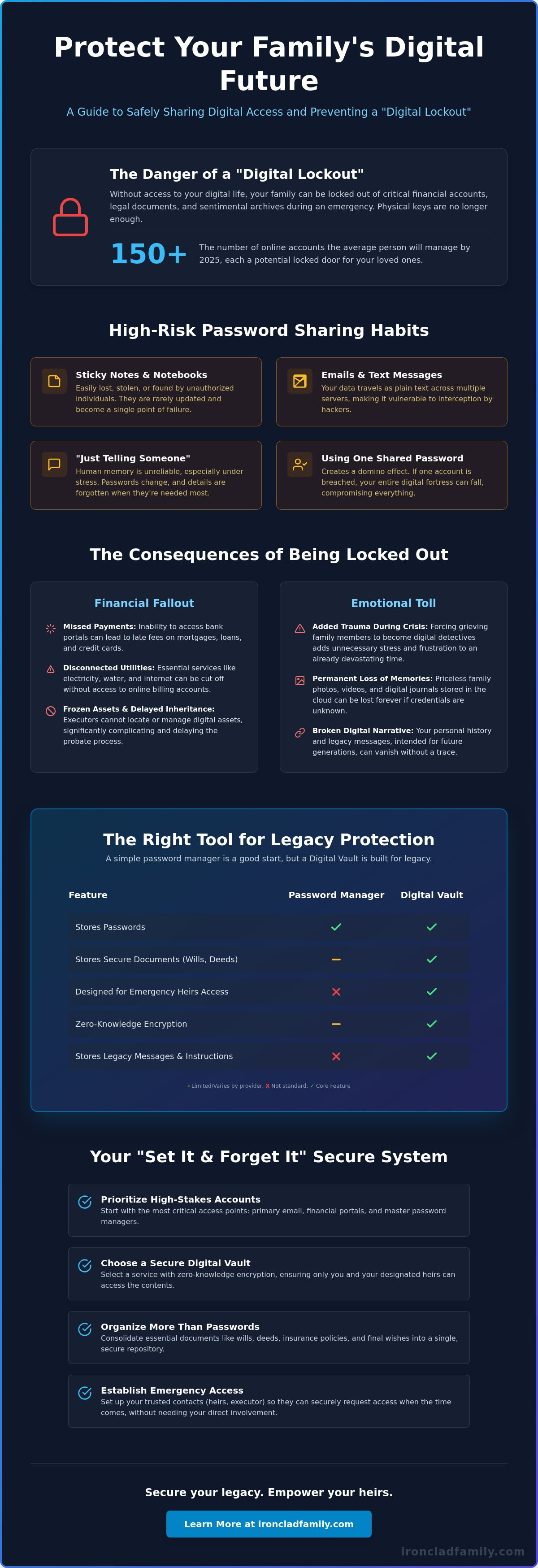
Imagine the frustration of a locked door with no key. Now, imagine that door is digital and holds the entirety of your family's financial and emotional life. A Digital Lockout is the sudden, jarring realization that your loved ones cannot access the accounts they need to keep the household functioning. Our lives aren't stored in filing cabinets or physical folders anymore; they live in the cloud. While physical keys were once the standard for estate planning, they offer no help against a locked bank portal or a protected email account. Understanding how to share passwords with family safely is a vital step in modern legacy planning.
When a crisis hits, the last thing your family should do is play detective. Searching through old notebooks or guessing security questions adds a layer of trauma to an already grieving heart. This isn't just about technical access; it's about providing a roadmap for your family’s survival. Proactively sharing these keys is an act of deep care. It ensures that your digital narrative remains intact and accessible when it's needed most.
To better understand this concept, watch this helpful video:
The Problem with "Just Telling Someone"
Many people believe that a quick conversation at the dinner table is enough. It isn't. Verbal instructions are often the first things to vanish during a high-stress crisis. Human memory is fallible, especially when clouded by grief. Even if your spouse remembers a password today, it will likely change in six months. Relying on memory creates a fragile link that is easily broken. Without a clear, documented system like a password manager, accounts can become permanently frozen after too many failed attempts, leaving your family on the outside looking in.
Financial and Emotional Consequences
The fallout of a digital lockout is both financial and emotional. If a primary provider is incapacitated, a locked portal can lead to missed mortgage payments or disconnected utilities. These are practical disasters that add unnecessary chaos to a family's life. Beyond the bills, there is the risk of losing sentimental assets. Family photos, private videos, and digital journals can be lost forever if the credentials die with the owner. Legally, a lack of access can significantly complicate the probate process. Executors often struggle to identify and secure assets they can't even see, delaying the transfer of your life's work to the next generation. Learning how to share passwords with family safely prevents these fractures before they occur.
Common Mistakes When Sharing Sensitive Login Information
While the intention to protect your loved ones is noble, many people inadvertently leave the digital front door wide open. When considering how to share passwords with family safely, the path of least resistance often leads to the highest risk. Security isn't just about having a strong lock; it's about how you distribute the keys to your life's work. Scribbling a master password on a sticky note under a keyboard is a classic error that turns your home office into a vulnerability. These physical lists are static and easily compromised by anyone entering your space, from guests to service workers.
Sending a password via text message or email is another frequent pitfall. It's like writing your most private information on a postcard and dropping it in the mail. Every server that message passes through can potentially see your data. This isn't just a threat to your current accounts; it endangers your entire digital legacy. Furthermore, many families fall into the trap of using a single, shared password for every account. This creates a domino effect where one minor breach can bring down your entire financial fortress. Perhaps the most common mistake is simply waiting for a "perfect time" to organize. Emergencies don't wait for your schedule to clear, and procrastination is the enemy of a secure heritage.
The Risk of Unencrypted Channels
Unencrypted means your data travels as plain text. If a hacker intercepts an unencrypted email or text, they don't need a complex key to read it; the information is already fully visible. Cybercriminals actively scan digital traffic for terms like "login" or "password" to harvest credentials from unsuspecting users. This is why using standard messaging apps for sensitive data is fundamentally unsafe. A password on a screen is only as safe as the app holding it.
The False Security of Physical Binders
Many people rely on "Just in Case" binders, but these physical repositories are surprisingly fragile. They can be lost during a move, stolen in a burglary, or destroyed in a house fire. Beyond the physical risks, keeping a paper list updated is a logistical nightmare. As passwords expire or security protocols change, a binder quickly becomes an obsolete map that leads your family to dead ends. A secure digital vault for estate planning is a far more resilient choice for a modern family. Instead of relying on these outdated and risky methods, adopting a centralized Digital Vault ensures your information remains encrypted, current, and accessible only to those you trust.
The Essential Checklist for Sharing Passwords Safely
Securing your digital world requires more than a random assortment of logins. It demands a structured blueprint. When you organize how to share passwords with family safely, you're building a bridge that allows your loved ones to cross the chasm of a crisis without stumbling. Think of your digital assets not as dry data points, but as the vital organs of your family's daily life and future security. A complete checklist ensures no critical portal is left behind, providing a clear path through the complexity of modern life.
- Primary Financial Portals: This includes banking, credit card accounts, and investment platforms. These are the lifeblood of your household's immediate stability and long term growth.
- Communication Hubs: Access to primary email accounts is often the "master key" for resetting other passwords. Social media profiles also hold years of irreplaceable family history and personal narratives.
- Household Logistics: Don't overlook the practical. Logins for utility portals, mortgage accounts, and home security systems keep the lights on and the physical doors locked.
- Legal Access: Your family must be able to find digital copies of your Will, Trust, and living will. Having these documents accessible prevents legal delays and emotional exhaustion during medical emergencies.
- Digital Inheritance: This category covers cryptocurrency wallets, which are lost forever without specific keys, and cloud-stored archives containing your family’s photographic history.
Naming Your Digital Executor
A digital executor is the person you designate to manage your online presence if you're unable to do so yourself. They don't need to be a lawyer, but they must be trustworthy and comfortable with technology. This role is critical because of the Revised Uniform Fiduciary Access to Digital Assets Act (RUFADAA). Without explicit legal permission granted through this framework, your family might be viewed as "digital trespassers" by service providers, even if they have your password. By naming an executor, you provide the legal authority required to manage your digital narrative with dignity and clarity.
Managing Two-Factor Authentication (2FA)
A password is no longer a solitary key; it's often half of a pair. Two-factor authentication adds a vital layer of security, but it can also become a barrier for your family if the secondary device is inaccessible. You must plan for how to share passwords with family safely while accounting for these extra hurdles. Include "recovery keys" and emergency backup codes in your sharing system. These one-time-use codes act as a digital bypass, ensuring that a lost phone doesn't mean a permanent lockout from your family’s most sensitive assets.
Why a Digital Vault is Better Than a Simple Password Manager
A standard password manager is a tool designed for the convenience of the present. It helps you log into your email or pay a monthly bill with ease. However, when you're looking at how to share passwords with family safely for the long term, a simple manager often falls short. It lacks the depth and gravity required for true estate planning. While a password manager acts like a digital wallet you carry in your pocket, a vault is a heavy-duty safe bolted to the floor of your digital estate. It isn't just about storing characters; it's about preserving the essence of your life's work.
Zero-Knowledge Encryption is the gold standard of this protection. In this model, your master key is never stored on a server; it exists only with you. It’s the digital equivalent of a physical safe where you are the sole locksmith. If a hacker were to breach the facility, they would find a room full of locked boxes with no keys to open them. This ensure that your private information remains yours until the moment you decide to pass it on. This level of cryptographic safety transforms a mere utility into a sacred digital repository for your family’s future.
One of the biggest hurdles in how to share passwords with family safely is the "all or nothing" problem. You may not be ready to hand over the keys to your entire financial life today. Triggered Access solves this by keeping the safe locked until it is truly needed. This allows you to maintain total privacy while you are active, knowing the bridge will appear for your family the moment you can no longer lead the way. Unlike daily managers, The Vault stores more than just logins; it holds the weight of your legacy, including Wills, property Deeds, and your most personal Legacy Messages.
The Benefit of Automated Delivery
Privacy and preparedness often feel like they are at odds, but automated delivery creates a perfect balance. A vault can be configured to release credentials to a designated "Receiver" only after a specific event or a period of inactivity. This protects your boundaries while you are healthy and vibrant. You don't have to worry about sensitive data being viewed prematurely. Automated delivery removes the heavy burden of searching for answers from a grieving family, providing them with a clear map exactly when they need it most.
Bank-Level Security for Families
Your family’s heritage deserves the same level of protection as the world’s largest financial institutions. We utilize high-trust security terminology and protocols, such as AES-256 bit encryption, to create a fortress-like environment for your data. This unshakeable storage is necessary for a multi-generational legacy that must withstand the evolving threats of the digital age. There is a profound peace of mind that comes from knowing your family’s most sensitive information is held in a centralized, encrypted fortress. Secure your family’s future by establishing your own Digital Vault today.
How IronClad Family Protects Your Digital Narrative
IronClad Family acts as the technical guardian of your family’s heritage. We don't just store data; we protect the living legacy you’ve spent a lifetime building. By providing a secure, centralized environment, we solve the complex dilemma of how to share passwords with family safely. Our platform, known as The Vault, serves as a sacred repository where your credentials, state-specific legal documents, and personal messages exist in harmony. It’s a fortress designed to withstand the uncertainties of the future while remaining accessible to those you love. This approach elevates digital storage into a true partner for your family’s long term narrative.
The IronClad Receiver system is the heart of our sharing philosophy. It allows you to designate trusted individuals who will receive access to specific information only when the time is right. This triggered release ensures that your privacy is respected today while guaranteeing your family’s security tomorrow. This system helps you move from a state of anxious uncertainty to a feeling of absolute preparedness. It’s a transition from worrying about "what if" to knowing exactly "how" your family will be cared for. With us, you aren't just managing data; you're securing the very essence of your life’s work.
A Holistic Solution for Modern Families
For those who want more than just a software solution, our Family Preparedness Service offers white-glove assistance to organize your digital estate. We bridge the gap between complex digital assets and traditional estate planning, ensuring your plan is robust and compliant with modern regulations like RUFADAA. Beyond financial portals, we emphasize the value of Legacy Messages. These allow you to leave behind the wisdom, stories, and love that define your family’s history. You’re passing on more than just account access; you’re transferring the biological and physical metaphors of your life to the next generation.
Take the First Step Toward Peace of Mind
Starting your journey toward total security is remarkably simple. You can begin by creating your Digital Vault and inviting your first recipient in just a few minutes. This initial step is the most important one you'll take for your family's future. Organizing your digital life is the final act of care you can perform for those you love. It removes the burden of guesswork and replaces it with the clarity of a well-paved road. Don't leave your family’s future to chance. Secure your digital narrative and provide your loved ones with the peace of mind they deserve today.
Build a Bridge to Your Family’s Future
Protecting your digital world is an act of deep responsibility. You've learned that a simple password manager isn't enough for long term legacy planning. You need a fortress that combines high-tech security with a human touch. By moving away from unencrypted texts and physical binders, you ensure your family’s emotional and financial stability remains intact. This journey isn't just about data; it's about preserving the very essence of your life's work and ensuring your heirs aren't left playing detective during a crisis.
Understanding how to share passwords with family safely is the first step toward absolute preparedness. With features like zero-knowledge encryption for total privacy and automated delivery to your designated beneficiaries, you can rest easy knowing your heritage is in safe hands. Our system even provides state-specific legal document support to help you navigate the complexities of digital inheritance with ease. Don't wait for a crisis to find a solution. Take charge of your digital narrative and secure your family’s future with The Vault today. It's the ultimate act of care for those you love most.
Frequently Asked Questions
What are the most important things my family needs to know immediately after I die?
Your family must have immediate access to your primary financial portals, your main email account, and the location of your Will or Trust. They also need the credentials for household logistics, such as the mortgage and utility portals, to prevent service interruptions. Providing this information through a centralized system ensures they aren't overwhelmed by detective work during a period of intense grief.
How can I safely share my digital passwords with my family for after I pass away?
The most secure method for how to share passwords with family safely is through a dedicated digital vault that utilizes zero-knowledge encryption. This technology allows you to store credentials privately while you are active and set a specific trigger for their release to designated beneficiaries. Avoid unencrypted methods like email or paper lists; these are easily intercepted or lost.
Is a physical "just in case" binder better than a digital vault?
No, a digital vault is superior because it offers encryption, remote access, and automated updates that a paper binder cannot provide. Physical binders are vulnerable to theft, misplacement, or destruction in a fire. Additionally, they quickly become obsolete as you change passwords for your 100 to 150 online accounts. A vault acts as a living repository that evolves with your digital life.
What happens to my digital assets if I do not leave instructions?
Your assets may become permanently inaccessible or enter a lengthy legal limbo governed by platform-specific terms and state laws. Without clear instructions or RUFADAA compliance, families often face a "digital lockout" where they cannot retrieve sentimental photos or manage financial accounts. This lack of preparation can complicate the probate process and lead to the permanent loss of your digital heritage.
Do I need a lawyer to organize what my family needs to know?
You don't strictly need a lawyer to organize your passwords, but using a professional service ensures your plan is legally robust and technically secure. Our Family Preparedness Service provides the guidance needed to bridge the gap between your digital assets and traditional estate planning. This holistic approach ensures your family has both the legal authority and the technical keys required to manage your legacy.
How do I ensure my family can access my bank accounts to pay for funeral expenses?
You should include your primary banking credentials and any specific Emergency Access Credentials in your digital vault. It is also vital to designate a beneficiary on the accounts themselves at your financial institution. By organizing these portals in one secure, encrypted place, your family can avoid the stress of frozen assets when they need to settle immediate final expenses.
What is a "Legacy Message" and why should I include one?
A Legacy Message is a personal communication, such as a letter or video, stored securely for your family to receive after you pass away. It is an opportunity to share wisdom, final words of love, or the philosophy behind your life's work. Including these messages transforms your digital storage from a simple list of data into a sacred vessel for your family’s multi-generational history.
How often should I update my estate planning information?
You should review and update your information at least once a year or after any major life event, such as a birth, death, or property purchase. Since passwords for your online accounts change frequently, using a system that allows for easy updates is essential. Regular maintenance ensures your digital narrative remains accurate so your family is never locked out of your life's work.

