

- 13 mins
Imagine a midnight phone call and a frantic search through a filing cabinet for a document that isn't there. It's a scenario that haunts many parents and providers. Having a complete estate planning documents checklist isn't just about legal compliance. It's about ensuring your loved ones aren't left searching for answers when they should be focused on each other.
We know the process feels heavy. Legal terminology can feel like a barrier, and the fear of missing one vital signature is real. You want to build a fortress around your family's future, but the blueprints often feel too complex to read. It's natural to feel uncertain about where to store sensitive information so it stays both safe and reachable for those who will eventually need it.
This guide changes that. You'll learn how to identify, organize, and protect the essential legal documents your family needs for a secure 2026 and beyond. We've stripped away the confusion to give you a clear path toward total preparedness and confidence.
We're going to break down the required records for every estate, explain how to handle your digital legacy, and show you the simplest way to share access with your beneficiaries. By the end, you'll have the peace of mind that comes from knowing your life's work is safe and your family is protected.
Key Takeaways
- Identify the foundational legal documents every family needs to prevent confusion and ensure a smooth transfer of assets.
- Understand the vital role of medical and financial directives in protecting your interests during unexpected health emergencies.
- Follow a complete estate planning documents checklist to bridge the gap between having legal papers and ensuring your family can actually use them.
- Recognize common organizational mistakes that render even the best plans useless, such as storing vital papers in inaccessible locations.
- Discover how a digital vault provides a secure way to store your living legacy and share access with those you love most.
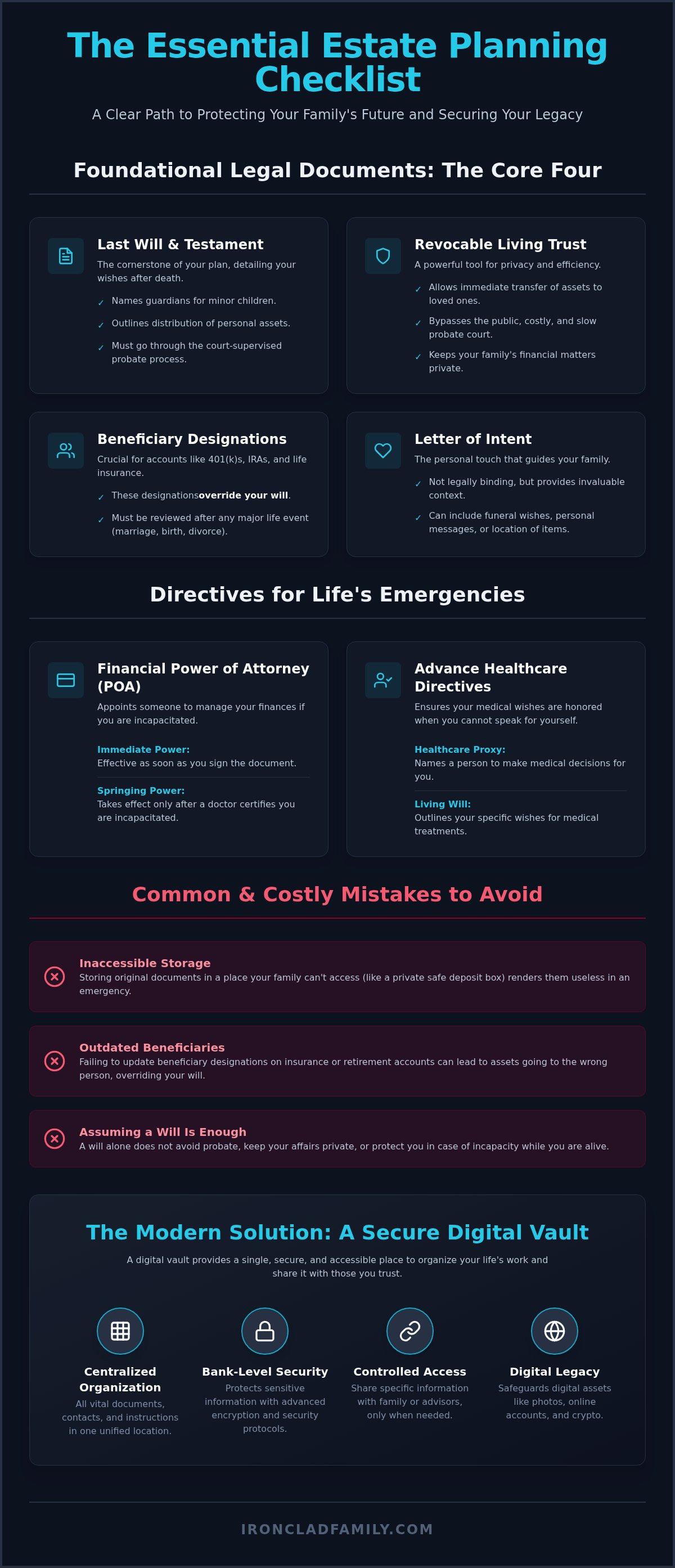
The Essential Estate Planning Documents Checklist: The Core Four
A legacy is more than just a list of assets. It's the sum of a life's work. To protect that work, you need a solid foundation. An effective estate planning documents checklist begins with what we call the Core Four. These documents act as the pillars of your family's future security. Before diving into the specifics, it's helpful to understand What is Estate Planning? at its most basic level. It's the strategic process of arranging the management and disposal of your assets during your life and after death.
The goal is to move from a state of uncertainty to a feeling of absolute preparedness. By organizing these four specific documents, you ensure your family has a clear map to follow. This prevents the confusion and emotional distress that often follows a lack of preparation.
The Last Will and Testament
Think of the will as the cornerstone of your plan. It's the primary document where you name guardians for your minor children. Without this, a court decides who raises them; that's a risk most parents aren't willing to take. It also outlines how you want your physical property and personal assets distributed. However, a common misconception is that a will avoids the legal system. In reality, a will must still go through the probate process. This is a court-supervised procedure that validates the document and settles debts before heirs receive anything. It's necessary, but it's only the first step in a complete estate planning documents checklist.
Trusts and Beneficiary Designations
If the will is the cornerstone, a Revocable Living Trust is the fortress. Trusts allow for the immediate transfer of assets to your loved ones. They bypass the public and often expensive delays of probate court. This keeps your family's financial matters private and accessible when they're needed most. Alongside trusts, you must manage your beneficiary designations. These are found on accounts like 401ks, IRAs, and life insurance policies. These designations are powerful. They actually override whatever is written in your will. You should review these names after every major life event, such as a birth, marriage, or divorce, to ensure your plan remains accurate.
The final piece of the Core Four is the Letter of Intent. While it isn't a formal legal document, it's vital for providing personal instructions. It can include funeral wishes, the location of hidden keys, or the stories behind specific family heirlooms. It bridges the gap between legal requirements and the emotional needs of your survivors.
Protecting Your Daily Life: Medical and Financial Directives
Most people think of a will as the end of the story. They focus entirely on what happens after they are gone. But a robust estate planning documents checklist must also protect you while you're still here. Life is unpredictable. An accident or sudden illness can leave you unable to speak for yourself. Without clear directives, your family is left guessing. This creates unnecessary stress during an already emotional time. True preparedness means having a plan for "living" emergencies just as much as for the legacy you leave behind.
Financial Power of Attorney
Who would pay your mortgage or manage your investments if you were in a hospital for a month? A Durable Power of Attorney (POA) answers this question. It grants someone you trust the legal authority to handle your financial affairs. You can choose an "immediate" power, which starts as soon as you sign. Alternatively, a "springing" power only takes effect if a doctor certifies you are incapacitated. Selecting the right person for this role is a key part of generational wealth transfer. It ensures your assets are managed properly until you can take the reins again. It's a technical safeguard for your family's financial continuity.
Advance Healthcare Directives
Medical crises are hard enough without family members arguing over treatment options. Advance directives clarify your wishes before a crisis happens. They provide a calm voice of reason when emotions are high. There are two primary parts to this:
- Healthcare Proxy: This names a specific person, often called a medical power of attorney, to make medical decisions on your behalf if you can't.
- Living Will: This outlines your specific preferences for end-of-life care, such as life support or tube feeding.
These documents often have state-specific requirements. It's vital to use forms that meet your local legal standards to ensure they're honored by hospitals. In 2026, your directives should also address digital access. Laws like RUFADAA allow your representatives to access online medical portals or financial accounts if you've granted permission. Including these digital permissions in your estate planning documents checklist keeps your entire life protected. Ensuring these documents are accessible to your family is just as important as signing them. You can store family records safely in a central location so your healthcare proxy never has to hunt for paperwork during an emergency.
Common Mistakes Families Make When Organizing Records
Even a perfect estate planning documents checklist fails if the documents aren't reachable. Many people think they've checked every box once the ink is dry. But a plan is only as good as its accessibility. One of the most common errors is putting the only copy of a will in a bank safe deposit box. When the owner passes away, the bank often seals that box. Heirs might need a court order just to open it to find the will they need. It's a circular problem that causes months of delay and unnecessary legal fees.
Another risk is relying solely on physical paper. Fire, flood, or simple misplacement can destroy a lifetime of preparation in minutes. We also see families forget to include their digital essence. In 2026, your legacy includes more than just land and bank accounts. It includes cryptocurrency, social media archives, and digital photos. Without a specific list of these assets and the keys to access them, they can be lost to the void of the internet forever. True protection requires a balance of physical originals and secure digital backups.
The "Hidden Document" Trap
A signed will is a silent witness if your family can't find it. If your survivors don't know where you've tucked away your papers, the state's default laws take over. This often leads to results you never intended. Some try to solve this by emailing PDFs to their children. Don't do this. Standard email isn't encrypted and leaves your sensitive data vulnerable to hackers. While digital copies are great for reference, remember that many probate courts still require the original document with wet-ink signatures to start the legal process. You need a way to share the location of those originals without compromising your privacy.
Outdated Information
Life doesn't stand still. Your estate planning documents checklist shouldn't either. We recommend a yearly review of every document. A birth, death, or divorce can make a five-year-old plan irrelevant. For example, your medical preferences in a living will might change as you age or as new treatments become available. You might also find that the person you named as your executor years ago is no longer able to serve. They might have moved across the country or faced their own health challenges. Keeping your plan current is the only way to ensure it actually works when the time comes.
Practical Steps to Build and Verify Your Estate Plan
Starting your journey toward total preparedness doesn't have to be overwhelming. It begins with a single, deliberate step: gathering the essence of your life's work into one place. This estate planning documents checklist serves as your map. Use it to audit what you currently have and identify where your family remains vulnerable. Gathering these records is more than a chore; it's an act of love for those who will follow you. Start by pulling together your financial statements, property deeds, and existing medical records. As you review them, you'll likely find gaps you hadn't considered. Perhaps your will is a decade old, or you've never formalized your healthcare preferences.
Consulting with a professional or using a state-specific document service can help you navigate these complexities. This ensures your plan meets current state laws and protects your family from future legal hurdles. Once your papers are gathered and verified, you must move beyond physical storage. Digitize every page. Create a secure, encrypted backup that ensures a house fire or flood cannot erase your legacy. This transition from paper to a protected digital format is the key to modern family security.
Inventory Your Assets and Debts
Your inventory is a living record of everything you've built. List every bank account, investment portfolio, and piece of real estate you own. To ensure your stock and dividend records are always up-to-date for your heirs, you can visit Dividend Portfolio Planner. In 2026, this list must extend to your digital existence. Your online accounts, cryptocurrency keys, and digital photo archives are part of your family's inheritance. Laws like the Revised Uniform Fiduciary Access to Digital Assets Act (RUFADAA) provide a legal framework for this. By naming a digital executor and documenting your wishes, you grant your loved ones the legal right to manage these virtual assets. This prevents your digital life from becoming locked away forever after you're gone.
Signing the papers is only the midpoint of your estate planning documents checklist. To be legally binding, most documents require witnesses and notarization. You don't need to spend hours traveling to a physical office anymore. Remote online notary services have removed the friction from this process, allowing you to finalize your plan from the comfort of your home. As you finish, consider keeping a family emergency plan checklist for quick reference. This one-page guide helps your family act quickly when seconds matter. You can protect important documents today by starting your organization process with a professional framework designed for long-term security.
How a Secure Digital Vault Protects Your Living Legacy
Completing your estate planning documents checklist is a major milestone. But the final step is ensuring those documents are reachable when the world turns upside down. Traditional storage methods often fail during the moments they are needed most. A digital safe deposit box solves this by acting as a centralized sanctuary for your family's vital information. It moves your legacy from a dusty shelf into a protected, accessible environment. This isn't just about convenience; it's about building a technical fortress that stands guard over your life's work. By consolidating your legal, financial, and personal records, you provide your loved ones with a clear path forward.
The Vault: A Centralized Command Center
A secure digital vault for families replaces the old, messy "emergency binder" that many people keep in a kitchen drawer. While binders can be lost or destroyed, a digital vault remains unshakeable. It allows you to keep state-specific wills, powers of attorney, and trust documents in one organized location. IronClad Family serves as an ideal solution for this organization. It uses zero-knowledge encryption, which means your data is so private that even the service provider cannot see it. Only you and your designated "Receivers" hold the keys to this information.
Professionals also recognize the value of this streamlined approach. Many financial experts use a digital vault platform for advisors to help their clients maintain an updated estate planning documents checklist. This collaborative environment ensures that your advisor can see the "big picture" of your preparedness while keeping your most sensitive data behind a wall of cryptographic safety. One of the most critical features is automated delivery. If an emergency occurs, the vault automatically sends access credentials and instructions to your beneficiaries. This removes the burden of searching for paperwork from your family's shoulders during a crisis.
Leaving More Than Just Assets
True legacy planning involves more than just transferring bank accounts and property. It's about passing down your values, your stories, and your final words. Within a secure vault, you can create "Legacy Messages" for your children or spouse. These are digital letters or videos that are delivered only when the time is right. This feature allows you to store family records safely alongside the emotional essence of your life.
The peace of mind that comes from this level of preparation is profound. You can rest easy knowing that your family won't just inherit assets; they will inherit a well-organized map to their future. You've done the hard work of identifying what matters. Now, you've provided the fortress to protect it. This is the ultimate gift of security for the next generation.
Building a Fortress for Your Family Narrative
Planning for the future is a profound act of care. By completing your estate planning documents checklist, you've moved from a place of uncertainty to a position of absolute strength. You now understand that a true legacy includes both foundational legal papers and the medical directives that protect your daily life. However, a signed document only has power if your loved ones can find it during a crisis. Accessibility is the final, vital link in your family's security chain.
Real protection requires a partner that acts as a technical guardian. By using zero-knowledge encryption and automated emergency access delivery, you can ensure your life's work is never lost to a filing cabinet or a forgotten password. Whether you are generating state-specific legal documents or recording final values for the next generation, these tools bridge the gap between simple paperwork and true peace of mind.
Learn how to protect your family’s most important documents with a secure digital vault.
Take this final step today. Your family deserves the confidence that comes from a plan that is both legally sound and instantly accessible. You've done the hard work of building a life; now, ensure it's protected for generations to come.
Frequently Asked Questions
What are the 7 most important estate planning documents?
The seven essential records for a complete estate planning documents checklist include a Last Will and Testament, a Revocable Living Trust, and a Durable Power of Attorney. You also need a Healthcare Proxy, a Living Will, and updated Beneficiary Designations for your financial accounts. Finally, a Letter of Intent provides personal instructions that legal forms might miss. Together, these papers create a protective shield around your family and your life's work.
Can I create an estate planning documents checklist without a lawyer?
Yes, you can begin organizing your records without hiring a lawyer for every step. Many families use state-specific document services to create foundational papers like wills and powers of attorney. Services like IronClad Family provide the tools to generate these documents legally and store them securely. While complex estates might still require legal counsel, using a structured platform allows you to take immediate, practical action to protect your legacy.
How often should I update my estate planning documents?
You should review your plan at least every three to five years. However, you must also update your documents after major life changes such as a marriage, a divorce, or the birth of a child. Significant shifts in tax laws, like the federal exemption changes arriving in 2026, are also critical triggers for a review. Regular checkups ensure your plan reflects your current wishes and provides the highest level of security for your heirs.
Where is the safest place to store my estate planning checklist?
The safest location for your estate planning documents checklist is a secure digital vault that uses zero-knowledge encryption. This ensures that your sensitive data remains private and protected from physical threats like fire or flood. While you should keep original wet-ink copies in a fireproof safe at home, a digital repository allows your family to access vital information instantly during an emergency, no matter where they are located.
What happens if I die without a will or estate plan?
Dying without a plan means the state's intestacy laws will determine who receives your assets. This often results in a long, expensive probate process that ignores your personal wishes. A court will also decide who becomes the guardian of your minor children. This lack of preparation leaves your family in a state of uncertainty and can lead to emotional conflict during an already difficult time.
Do digital assets need to be included in my estate planning checklist?
Your digital assets are an essential part of your modern legacy and must be included. This includes cryptocurrency, social media accounts, and digital photo archives. Without specific instructions and access credentials, these assets can be lost forever. Laws like RUFADAA give your representatives the legal right to manage these assets, but only if you have named a digital executor and provided a clear path for them to follow.
What is the difference between a will and a living trust?
A will is a legal document that outlines your final wishes, names guardians for children, and goes through the public probate court process. A living trust is a more robust tool that holds your assets for your benefit during your life and transfers them to heirs immediately upon your death. Unlike a will, a trust bypasses probate, which keeps your family's financial affairs private and avoids the delays of the court system.
How do I ensure my family has access to my digital vault?
You can ensure access by using a platform that offers automated delivery of credentials to your chosen beneficiaries. These individuals, often called Receivers, are granted the keys to your vault only when a specific emergency or triggering event occurs. This system removes the burden of searching for paperwork. It guarantees that your family has the exact instructions they need to manage your affairs and honor your living legacy.
