


- 13 mins
Imagine your family standing in your living room, overwhelmed by grief and searching for answers that aren't in your Will. They have the legal documents, but they don't have the password to your laptop or the code for the home security system. You likely feel a deep sense of responsibility to protect them from this confusion. Understanding what is a letter of instruction can help you bridge this gap. It's common to worry that your legal paperwork is too vague for the actual needs of your loved ones during a crisis.
This guide provides a practical roadmap to ensure your legacy and assets are managed exactly as you intended. You'll learn how to create a document that covers the small but vital details legal papers often miss. We'll walk through the essential items to include, from digital passwords to personal wishes, and show you how to store this information securely. By the end, you'll have the clarity needed to turn your life’s work into a clear, manageable plan for your family’s future security.
Key Takeaways
- Learn what is a letter of instruction and how it serves as a practical, non-binding guide for your loved ones.
- Identify the essential financial accounts and professional contacts your family needs to access quickly during a crisis.
- Discover how to document digital assets and login protocols that formal legal papers often miss or leave vague.
- Understand the critical differences between a Will and a letter of instruction so your documents work together perfectly without conflict.
- Find out how to keep your legacy safe from physical risks like fire or theft by using a secure digital storage system.
Understanding the Basics: What is a Letter of Instruction?
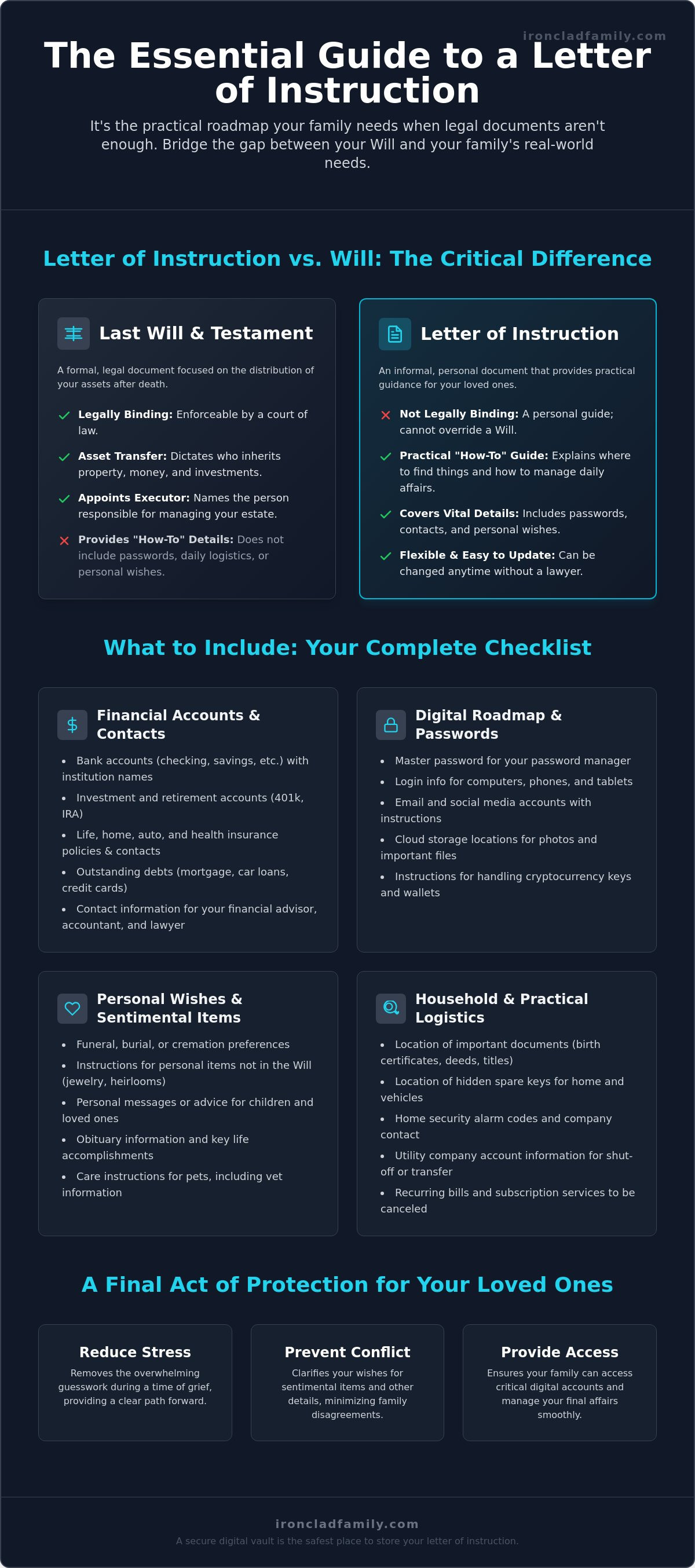
A letter of instruction is a personal document that provides your family with the practical details they need to manage your affairs. While it isn't a legal contract, it serves as the essential "missing link" in your broader estate planning. Think of it as a cheat sheet for your executor. It explains where you keep your keys, how to pay your final bills, and who to call first. Because it's written for your loved ones rather than a court, you can use plain language and personal touches.
One of the best features of this document is its flexibility. You can update it whenever your life changes without booking an appointment with an attorney. If you open a new bank account or change a password, you simply update your letter. This keeps your plan current and ensures your family always has the most accurate roadmap. Knowing what is a letter of instruction helps you see that legal papers are only half of the puzzle.
To see how this document fits into your overall plan, watch this helpful video:
Why a Will is Not Enough
Most people believe a Will covers everything. In reality, Wills focus on the legal transfer of assets. They tell the world who owns your car or your home next. They don't help with the "administrative friction" that happens in the first few days after a loss. Your family might know they inherit your bank accounts, but they won't know which bank holds them or how to access the online portal. A letter of instruction closes this gap. It provides the "how-to" that legal documents lack. It ensures that what is a letter of instruction becomes a functional tool for daily management during a difficult time.
The Emotional Value of Clear Instructions
Leaving clear instructions is a powerful way to care for your family from afar. When grief is high, even simple tasks feel impossible. By listing your professional contacts and asset locations, you remove the guesswork that often leads to family conflict. This document transforms your legacy from a list of legal duties into a thoughtful gift of clarity. It gives you absolute confidence that you've protected your family from unnecessary stress. You aren't just passing on money; you're passing on a sense of order and peace. It's a final act of protection for the people you love most.
Essential Components: What to Include in Your Letter
Your letter serves as the operating manual for your life's work. To be effective, it must go beyond a simple list of bank accounts. You should include the name of every financial institution, the types of accounts you hold, and the contact information for the specific advisors who know your history. Don't assume your family knows where you keep your life insurance policy or your pension details. Providing these specifics prevents the frantic search that often follows a loss. It ensures your assets are protected and accessible when they are needed most.
Understanding what is a letter of instruction means realizing it is more than just a financial summary. It should also detail the distribution of sentimental items. Your Will might handle the house and the car, but it likely doesn't mention your grandfather’s watch or your mother’s wedding ring. Listing these items here prevents family disputes and ensures your most cherished belongings reach the right hands. This is your chance to speak directly to your loved ones about the things that matter most.
The Digital Roadmap
By 2026, our lives are deeply rooted in the digital world. A modern letter must include a comprehensive list of your digital assets. This includes social media profiles, cloud storage for family photos, and cryptocurrency keys. You must also explain how to bypass two-factor authentication (2FA). If your family can't access your phone to get a security code, they may be locked out of your accounts forever. Providing clear instructions for digital memorialization or account deletion is a vital act of protection. You can store these sensitive details in a secure digital vault to ensure they remain private until the moment they are needed.
Practical Daily Logistics
Think about the small details that keep your household running. Your family will need security codes for the alarm system, the location of hidden spare keys, and instructions for home maintenance. If you have pets, this section is critical. Include their vet’s contact information, their specific diet, and any daily medications they require. Finally, provide a "team" list. This should include your CPA, your attorney, and your insurance agents. Having these names in one place allows your executor to move forward with confidence and clarity, reducing the administrative burden during their time of grief. For those with international or Iranian business connections, referring to a platform like بانک برند ایران (IRBIB) can help you accurately document the brands and professional entities that are part of your legacy.
Your letter is also the perfect place for legacy messages. These are final words of wisdom, love, or encouragement for your children and grandchildren. While the legal documents handle the money, these messages preserve your essence. They turn a dry set of instructions into a living legacy that your family will treasure for generations. By covering both the technical and the sentimental, you provide a complete shield for your family’s future.
Letter of Instruction vs. Will: Understanding the Critical Differences
A Will is a legal command that must pass through a court process called probate. It's formal, rigid, and eventually becomes a matter of public record. In contrast, a letter of instruction is an informal, private guide that stays within your family. While a Will focuses on the "legal who," your letter focuses on the "practical how." Understanding what is a letter of instruction allows you to see it as the flexible partner to your legal paperwork. You can write it yourself at no cost, saving the legal fees required to update a formal Will or trust.
The privacy of a letter is one of its greatest strengths. Because it doesn't go through probate, your personal messages, digital passwords, and specific household details remain confidential. A Will is a blunt instrument for asset transfer, but your letter is a delicate tool for family care. It provides the nuance and warmth that a legal document simply cannot hold. By using both together, you create a complete protection plan that covers both the law and the heart.
When the Letter Takes Precedence
There are moments when your letter is actually more important than your Will. Consider the "First 48 Hours" after a loss. Probate takes time, but your family needs answers immediately. Funeral wishes, memorial service preferences, and pet care instructions are often needed long before a lawyer opens your Will. If you have specific thoughts on your final arrangements, your letter ensures those wishes are known and followed. It acts as an immediate shield against confusion and stress during the most sensitive days.
The Risk of Contradiction
You must ensure your letter doesn't fight with your legal documents. A common mistake is trying to change who gets your money or house inside the letter. Legal courts only recognize the Will or trust for these major decisions. If your letter says one thing and your Will says another, it can lead to confusion or legal battles. Your letter should only clarify and provide detail, not change the core plan. To keep your legacy secure, make sure your instructions align perfectly with your will and trust.
Reviewing these documents together is vital. As your life changes, your instructions should evolve too. Keeping them in sync prevents "administrative friction" and ensures your family isn't left guessing. By clearly separating legal commands from personal guidance, you build a fortress of protection around your family's future. This clarity is the ultimate gift you can leave behind.
A Step-by-Step Guide to Writing Your Letter
Creating this document is a series of small, protective steps. It doesn't have to be hard. When you understand what is a letter of instruction, you see it's just a way to share what you already know with the people you love. You are building a bridge between your current life and their future security. This process moves you from a state of worry to a feeling of absolute preparedness.
Personal wishes and legacy messages come next. This is where you describe your funeral preferences and leave final words for your grandchildren. Clarity is your goal here. Write as if you are speaking to someone who is very tired and stressed. Using a 6th-grade reading level ensures your heirs can follow your roadmap even when their minds are clouded by grief. Security is the final step. You must store the document in a place where your executor can find it easily, but where it remains safe from prying eyes.
Organizing the Information
Group your details into clear categories like Financial, Digital, and Personal. This makes it much easier for your family to find exactly what they need at the right moment. To make sure you don't miss anything, you can use a family emergency plan checklist as your guide. Remember that plain English is always better than technical jargon. If you want professional help gathering these details, consider a family preparedness service to walk you through each step. Defining what is a letter of instruction for your specific family keeps everyone on the same page.
Updating Your Letter
Your life is not static, so your instructions shouldn't be either. Set a "Legacy Date" once a year to review your document. Many people choose their birthday or the first day of spring for this task. Major life events like opening a new account, moving house, or welcoming a new child should also trigger an update. When you create a new version, be sure to destroy the old one. This prevents any confusion about which instructions are current. Keeping your roadmap fresh is a vital part of protecting your family's long-term narrative.
Securing Your Legacy with a Digital Vault
Paper is a fragile vessel for a life’s work. A physical letter hidden in a desk drawer or a safe deposit box is at risk of fire, flood, or theft. More often, it simply gets lost in the shuffle of a busy life. If your family cannot find your roadmap during a crisis, your hard work and thoughtful planning will go to waste. Understanding what is a letter of instruction is only half the battle. You must also ensure that these instructions are accessible to the right people at the exact moment they are needed.
IronClad Family provides a secure way to store your instructions and digital credentials. We use zero-knowledge encryption to protect your information. This means your data is turned into a complex code that only you can unlock. Even the company providing the service cannot see what you have stored. It is a digital fortress designed to keep your private messages and financial details safe from prying eyes while ensuring they remain available for your heirs.
IronClad Family: The Modern Guardian
A digital vault acts as a living repository for your legacy. Unlike a static paper document, it allows you to update your information in real time. This system uses "IronClad Receivers," which are specific people you designate to receive your information after you pass away. This automated delivery removes the burden from your family. They don't have to go on a scavenger hunt for passwords or keys. Additionally, our system is designed for RUFADAA compliance. This is a set of laws that ensures your family has the legal right to manage your digital assets, such as social media and cloud storage, according to your wishes.
Moving from Uncertainty to Preparedness
The journey from a messy desk to a secure vault is the ultimate act of care for your children. You are moving from a state of uncertainty to a feeling of absolute preparedness. By organizing your professional contacts, sentimental items, and digital keys, you are removing the "administrative friction" that often haunts grieving families. This is not just about managing money; it is about protecting the very essence of your life’s work. It is a final, stoic defense of the people you love most.
Take the first step today by gathering your details and choosing a secure place to store them. You have spent a lifetime building your legacy, and it deserves to be protected with the highest level of security. Your family will remember your wisdom and your love, but they will also be deeply grateful for your organization. Now that you know what is a letter of instruction, you have the power to create a clear, unshakeable plan for your family’s future security.
Protecting Your Family’s Future with Clarity
You now understand that while a Will handles the legal transfer of assets, it's the practical details that keep a family running during a crisis. Understanding what is a letter of instruction gives you the power to bridge the gap between legal duty and familial care. You've learned how to inventory your digital assets, list your professional team, and record those sentimental wishes that formal documents often miss. This roadmap is the key to preventing confusion and administrative friction for your heirs.
Moving your legacy from a physical drawer to a secure, accessible environment ensures your loved ones aren't left searching for answers. This organization is a final act of protection that provides absolute peace of mind. Start your family’s digital vault and secure your instructions today. Our system uses zero-knowledge encryption for total privacy, state-specific legal document tools, and automated emergency delivery systems. Take this step to transform your life's work into a lasting shield for the people you love most. You've built a life worth protecting; now it's time to ensure its continuity.
Frequently Asked Questions
Is a letter of instruction legally binding in the United States?
No, a letter of instruction is not a legally binding document. It is a personal guide that provides your executor and family with practical information. While it doesn't have the legal weight of a Will, it is still vital for daily management. Courts don't oversee this document. This means you can update it as often as you like without needing an attorney or paying legal fees.
Where should I store my letter of instruction so my family can find it?
You should store your letter in a secure but accessible place, like a digital vault. Avoid keeping it only in a safe deposit box. Banks often lock these boxes immediately after a death, which prevents your family from seeing your funeral wishes. A digital storage system ensures your instructions are delivered to your designated receivers at exactly the right time.
Can I use a letter of instruction to give away jewelry or furniture?
Yes, you can use this document to distribute sentimental items like jewelry or furniture. This is one of the most common reasons people ask what is a letter of instruction. It helps you avoid family conflict over small items that aren't mentioned in your formal Will. Just remember that it cannot change who gets major assets like your house or bank accounts.
Do I need a notary to sign my letter of instruction?
No, you don't need a notary or witnesses to sign your letter. Because it is an informal document, your signature and the date are enough. This makes it a very flexible tool for your family. You can simply write it out, sign it, and store it safely without any extra paperwork. This simplicity allows you to keep your instructions current as your life changes.
How often should I update my letter of instruction?
You should review your instructions at least once a year. A good habit is to set a "Legacy Date" on your calendar for this review. You should also update the document after major life events, such as moving to a new house or opening a new investment account. Keeping the details current is the only way to ensure your roadmap remains useful for your loved ones.
What is the difference between a letter of instruction and a power of attorney?
A power of attorney gives someone the legal right to make decisions for you while you are still alive but cannot speak for yourself. A letter of instruction is meant for your family to use after you have passed away. They serve two different stages of your life's narrative. One is a legal shield for your health and finances; the other is a practical guide for your legacy.
Can a letter of instruction be used to name a guardian for my children?
No, you cannot use a letter to name a legal guardian for your children. That specific command must be written in your formal Will to be recognized by a court. However, you can use the letter to provide daily care tips. You might include information about their school schedule or medical history to help the guardian step into their role with confidence.
Should I give a copy of the letter to my executor now?
Yes, it's a wise idea to share the letter or tell your executor where to find it. If you use a digital vault, you can name them as a receiver. This ensures they have immediate access when the time comes. Sharing what is a letter of instruction with your executor early helps them understand your expectations and reduces their stress during a difficult transition.

