

- 14 mins
What if your family's inheritance wasn't lost to taxes, but simply locked behind a password they'll never find? It's a heavy thought. You've worked your whole life to build a legacy, yet the sheer volume of paperwork and digital DNA can feel impossible to manage. You aren't alone in feeling overwhelmed; knowing exactly what documents to organize before you die is the difference between leaving a gift and leaving a legal nightmare. While the median cost for an attorney-drafted last will sits at $625 in 2026, the emotional and financial cost of leaving your records unorganized is far higher.
In a world of paperless statements, your financial footprint can become invisible overnight. If you don't leave a clear trail, your family is left guessing where your assets are held. Creating an "Asset Map" is the most critical step in deciding what documents to organize before you die. This map isn't just a list of numbers; it's a comprehensive directory of your bank accounts, investment portals, and retirement funds. Without this roadmap, your life's work remains locked behind digital walls that your heirs cannot scale. Your legacy is more than a balance sheet. If you want to explore Free forensic essays on global power structures, financial architecture, and erased history. options, you can discover the broader systems that influence these assets. It's the fuel for your family's future security.
This 2026 guide provides the ultimate roadmap to secure your heritage and understand the $15 million federal estate tax exemption. You'll discover exactly which legal, financial, and digital records you need to secure today to ensure your family is protected tomorrow. We'll walk through the creation of a complete Just in Case system, showing you how to step into the role of a Digital Guardian by using RUFADAA compliance and military-grade vault protection.
Key Takeaways
- Build a state-specific will and Power of Attorney to grant your loved ones clear legal permission when they need it most.
- Map your complete financial footprint by listing every bank account, investment portal, and property deed in one secure location.
- Learn exactly what documents to organize before you die to ensure your family can bypass 2FA security and access your digital DNA.
- Protect your legacy from the "safe deposit box trap" by using a military-grade vault that remains accessible to your chosen heirs.
- Establish a clear digital roadmap for your executor that covers everything from your private keys to your sentimental digital heritage.
The Real Problem: Why You Must Know What Documents to Organize Before You Die
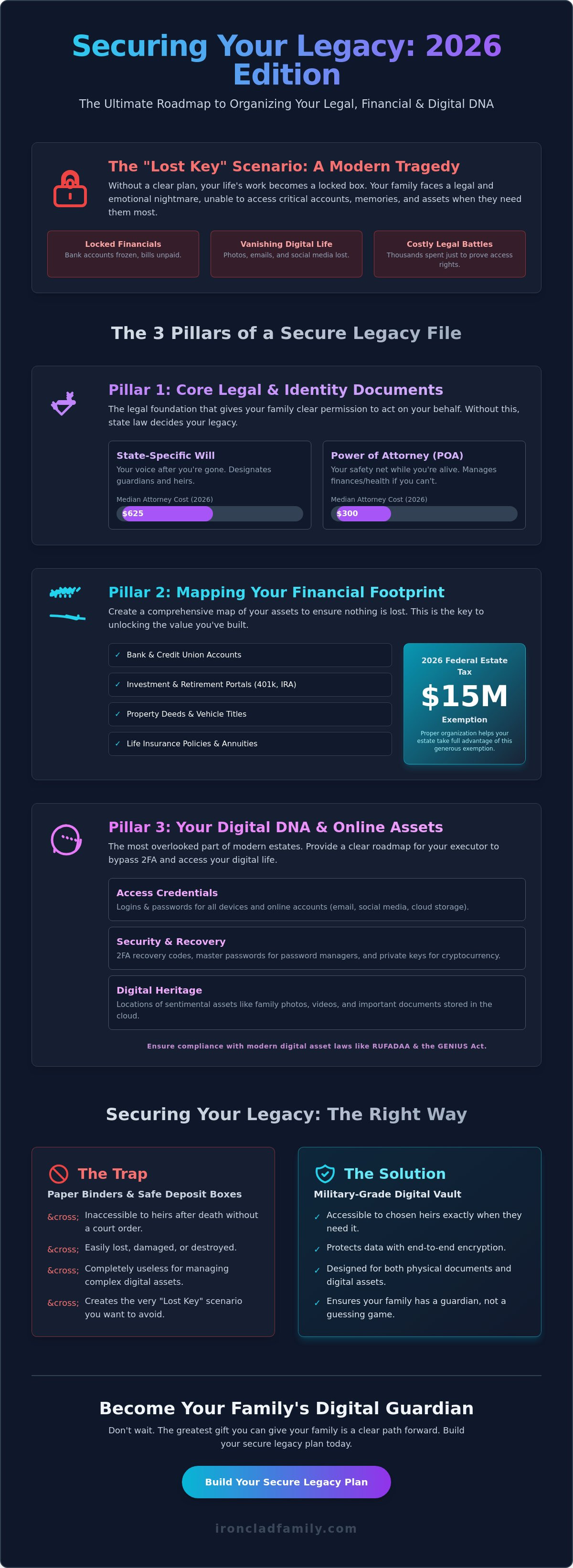
Imagine your family in their moments of deepest grief. They're exhausted, heartbroken, and trying to honor your memory. Suddenly, they realize they can't access your bank accounts to pay for immediate expenses. They're locked out of your phone, losing years of family photos. This is the "Lost Key" scenario. It's a modern tragedy where a lifetime of hard work becomes inaccessible because the keys to your life were never handed over. Effective estate planning is no longer just about a paper will; it's about building a master Legacy File that houses your legal, financial, and digital DNA.
To better understand how to gather your records, watch this helpful video:
Organization is a profound act of love. It's the final gift you give your heirs, ensuring they don't have to fight legal battles or guess your wishes while they're mourning. By identifying exactly what documents to organize before you die, you move from a state of vulnerability to a position of absolute preparedness. In 2026, where digital assets are governed by complex new regulations like the GENIUS Act, having a clear roadmap isn't optional. It's the only way to shield your heritage from being lost in a digital vacuum.
- Legal Essentials: A state-specific Will and Power of Attorney to grant clear legal permission.
- Financial Roadmap: A comprehensive asset map including bank accounts, retirement funds, and property deeds.
- Digital DNA: All login credentials and 2FA recovery codes for your digital life.
- Emergency Access: A secure, military-grade system that allows your heirs to step in exactly when needed.
The Consequences of Not Being Ready
When you don't have a plan, state intestacy laws take control. This means the government, not you, decides who gets your assets. While the federal estate tax exemption is a generous $15 million in 2026, your family could still lose thousands to court costs and legal fees just to prove they have the right to your accounts. Simple attorney-drafted wills cost a median of $625, but the price of silence is much higher. Without organized access, valuable assets like life insurance policies or cryptocurrency wallets can vanish forever. Your family deserves a guardian, not a legal nightmare.
Table of Contents
- The Real Problem: Why You Must Organize Now
- The Foundation: Core Legal and Identity Documents
- Mapping Your Wealth: Financial and Property Records
- The Modern Gap: Your Digital DNA and Online Assets
- Securing Your Legacy: From Paper Binders to a Digital Vault
The Foundation: Core Legal and Identity Documents
The bedrock of any legacy starts with legal clarity. When you consider what documents to organize before you die, the list begins with the papers that prove who you are and who you trust. Every adult, regardless of the size of their estate, needs a state-specific will. This document is your voice after you're gone; it designates guardians for your children and names heirs for your property. Without it, the state's intestacy laws take control, often leading to outcomes you never intended. While an online will plan can cost around $199, the median price for an attorney-drafted version is approximately $625. This is a small price to pay for the security of your family's future.
Beyond the will, a Power of Attorney (POA) acts as your legal safety net while you're still alive. It gives a person you trust the legal permission to manage your finances or healthcare if you become too ill to do so yourself. A median attorney-drafted POA costs about $300, which is a vital investment in your own protection. Citing a reliable Getting Your Affairs in Order Checklist from the National Institute on Aging confirms that having these records in one place is essential. When determining what documents to organize before you die, prioritize these legal pillars to prevent your family from facing expensive court battles during a crisis.
Identity and Military Records
Your loved ones will need your original Social Security card and passport to claim death benefits or close accounts. For veterans, the DD-214 military discharge form is the golden key to unlocking burial benefits and honors. These records are often difficult to replace quickly. You should also include divorce decrees and prenuptial agreements in your files. These documents significantly impact asset distribution, especially when considering the portability of the $15 million federal estate tax exemption for married couples. Having these papers ready ensures a smooth generational wealth transfer without unnecessary legal hurdles.
Medical Directives and Proxies
Medical planning requires more than just a conversation. Our Living Will guide explains how to document your specific preferences for end-of-life care. You must also include signed HIPAA waivers. Without them, doctors are legally barred from sharing your medical status with your family, leaving them in the dark during an emergency. Finalize your organ donor designations and specific end-of-life wishes to provide your heirs with total peace of mind. To ensure these vital records are instantly accessible during a medical crisis, consider securing them in the Vault, where your family can find them the moment they're needed.
Mapping Your Wealth: Financial and Property Records
In a world of paperless statements, your financial footprint can become invisible overnight. If you don't leave a clear trail, your family is left guessing where your assets are held. Creating an "Asset Map" is the most critical step in deciding what documents to organize before you die. This map isn't just a list of numbers; it's a comprehensive directory of your bank accounts, investment portals, and retirement funds. Without this roadmap, your life's work remains locked behind digital walls that your heirs cannot scale. Your legacy is more than a balance sheet. It's the fuel for your family's future security.
When you begin organizing your records, you quickly realize that physical location matters less than legal access. While you might keep real estate deeds and vehicle titles in a home safe, your family needs to know exactly how to gain legal entry to those files. You must also include life insurance policies in this master file. Billions of dollars in benefits go unclaimed every year simply because families didn't know the policies existed. To help your executor settle your final bills and navigate the 40% federal estate tax on amounts over $15 million, provide tax returns from at least the last three years. This level of detail transforms you from a planner into a Wise Protector.
The Hidden Money Trail
Many people fall into the trap of the safe deposit box. They store their most important documents in a bank vault, but forget to authorize a second person for access. If you're the only one on the signature card, the bank may seal that box upon your death, requiring a court order to open. List the location of all keys and provide pension information or employee benefit handbooks. Transparency is also vital regarding debts. Document all mortgages, car loans, and private notes so your family isn't blindsided by liabilities during an already difficult time.
Property and Business Ownership
For small business owners, a succession plan is the only way to ensure your company survives your absence. This document outlines who takes the helm and how ownership transfers. If you've moved assets into a trust to avoid the public probate process, ensure your trust documents are updated and accessible. Understanding the nuances of a Trust vs Will comparison is essential for modern estate planning. Finally, keep records of home improvements. These receipts are vital for your heirs to calculate capital gains taxes, potentially saving them thousands when they eventually sell the family heritage.
The Modern Gap: Your Digital DNA and Online Assets
Traditional estate planning often stops at the physical folder, but in 2026, your most valuable assets live in the cloud. Your Digital DNA consists of every account that requires a login, from your primary Gmail to your Coinbase wallet. When you consider what documents to organize before you die, you must account for the Two-Factor Authentication (2FA) trap. If your heirs have your password but can't access your phone code, they're effectively locked out of your life. This digital wall can prevent families from settling estates or even accessing cherished memories. Setting up Legacy Contacts on platforms like Facebook and Google today ensures your digital inheritance doesn't vanish into a void.
The regulatory landscape for digital assets is moving fast. With the California Digital Financial Assets Law (DFAL) licensing deadline of July 1, 2026, and the implementation of the GENIUS Act, the way we transfer crypto keys and NFTs is becoming more structured. You aren't just leaving behind files; you're leaving behind the keys to your life. Protecting these assets requires more than a simple list. It requires a fortress-like solution that bridges the gap between technical security and human accessibility. You must act as the Digital Guardian of your family's future by ensuring your digital inheritance is part of your master plan.
Passwords and Master Keys
A paper binder in a desk drawer is a high-security risk, not a solution. It's vulnerable to fire, theft, and prying eyes. Instead, you need a Digital Executor who is legally empowered under RUFADAA compliance to handle your online life. This person can stop auto-pays for streaming services and apps, preventing hidden debt from draining your estate after you're gone. A clear digital roadmap is the only way to ensure your executor can navigate your private keys and master passwords without triggering security lockouts.
Legacy Messages and Memories
Leaving a legacy is about more than just wealth transfer; it's about the emotional heritage you leave behind. Legacy Messages, such as video greetings or private letters, provide a profound sense of connection for your heirs. Don't let your family photos be lost because they're behind a thumbprint or face ID they can't replicate. By storing these in a secure digital vault, you ensure these keys to your life are delivered automatically and securely when the time comes. Take control of your digital story today by securing your family preparedness and document protection through a system designed for the modern world.
Securing Your Legacy: From Paper Binders to a Digital Vault
Many families believe they're prepared because they've tucked a will into a safe deposit box at their local bank. This is one of the most common mistakes in estate planning. If you're the sole person on the signature card, the bank may seal that box immediately upon your death. Your heirs could wait months for a court order just to access the very papers they need to start the probate process. When you decide what documents to organize before you die, you must ensure they're accessible exactly when they're needed. True security requires the "Wise Protector" approach. This means maintaining a physical "Just in Case" binder for immediate home needs while anchoring your heritage in a military-grade digital vault.
Ironclad Family protects your legacy through zero-knowledge encryption. This technical fortress ensures that even we cannot see your private keys or sensitive files. Your "Digital DNA" remains yours alone until the moment you choose to pass it on. Our "Ironclad Receiver" system acts as a digital guardian; it's designed to automatically deliver your instructions, legacy messages, and credentials to your chosen heirs after a verified triggering event. You aren't just storing data. You're ensuring the keys to your life are handed to the next generation without a legal battle or a technical lockout.
Why a Digital Vault is the 2026 Standard
Physical records are inherently vulnerable. Paper burns, ink fades, and binders are easily misplaced during the chaos of a move or a natural disaster. Encrypted data stays secure and legible for generations. By utilizing a system built with RUFADAA compliance, you legally empower your executor to manage your digital assets. This legal framework protects your digital rights and ensures your online life is handled with the same gravity as your physical property. To begin building your fortress, use our family emergency plan checklist to audit your current level of preparedness.
Next Steps for Your Family
Don't let the volume of paperwork paralyze you. Start small by choosing the top five legal documents we've discussed and organizing them this weekend. Once you've secured the basics, invite your family into the conversation. Sharing your plan reduces their anxiety and replaces fear with a sense of collective security. Knowing exactly what documents to organize before you die is only the first step; the final step is taking action. Peace of mind isn't a destination; it's an organized vault that stands as a testament to your love and foresight.
Take Command of Your Heritage
Your legacy is more than a list of assets; it's the living story of your life's work. By understanding exactly what documents to organize before you die, you've already taken the first step toward becoming a Wise Protector. You've learned how to bridge the gap between traditional legal pillars and the modern complexities of Digital DNA. Now, it's time to move from planning to protection. Whether it's securing your $15 million federal estate tax exemption trail or ensuring your family can bypass 2FA security, your preparation today prevents their crisis tomorrow.
True peace of mind comes from knowing your records are unshakeable. Our system is built for RUFADAA and digital inheritance compliance, utilizing military-grade zero-knowledge encryption to keep your private keys truly private. With the IronClad Receiver system, your keys to your life are automatically delivered to your loved ones exactly when they need them most. Don't leave your family's future to chance or government intestacy laws. Secure your family's heritage today with the IronClad Family Vault and rest easy knowing your story is safe.
Frequently Asked Questions
What is the single most important document to have before I die?
A state-specific Last Will and Testament is the most vital document because it dictates legal guardianship and asset distribution. Without it, the state decides your family's future based on generic laws. In 2026, only 37% of law firms provide upfront pricing for this essential record, making it the cornerstone of your Legacy File. It ensures your wishes are heard when you can no longer speak.
Where should I store my original will so my family can find it?
You should store your original will in a secure, fireproof home safe or a digital vault rather than a bank's safe deposit box. Banks often seal these boxes upon death, creating a legal hurdle for your heirs. Ensure your executor has the physical key or digital credentials to access it instantly. Keeping a secondary copy with your attorney is also a wise protective measure for redundancy.
How do I give my family access to my digital accounts without sharing my master password?
You can use a secure digital repository that features emergency access credentials to grant access without compromising your daily security. This system allows you to designate Receivers who only get the keys to your life after a verified event. It bridges the gap for 2FA security codes and private keys. This method protects your digital DNA while ensuring your family isn't locked out of sentimental memories.
Is a 'death binder' safe from identity theft?
A physical death binder is only as safe as its physical location and is highly vulnerable to theft or fire. Statistics show that identity theft cases often involve stolen physical documents, which is why a military-grade digital vault is the 2026 standard for security. Combining a binder for immediate needs with an encrypted vault ensures your sensitive information remains private. This hybrid approach acts as a fortress for your heritage.
What happens if I die without a will or any organized documents?
Dying without a plan triggers intestacy laws, where the government determines how your assets are distributed. This process often leads to family conflict and thousands in unnecessary legal fees. When you fail to determine what documents to organize before you die, your family may also lose access to digital assets like crypto or photos forever. Your estate becomes a public matter, stripped of the privacy you worked to maintain.
How often should I update my organized documents?
You should review and update your Legacy File at least once every 12 months or after major life events like marriage, birth, or divorce. Laws regarding digital assets, such as the July 1, 2026, California DFAL deadline, change frequently. Regular updates ensure your instructions remain RUFADAA compliant and reflect your current financial landscape. A yearly checkup keeps your digital roadmap accurate and your family's protection unshakeable.
Do I need a lawyer to organize my documents?
You don't necessarily need a lawyer to organize your records, but professional guidance ensures your documents meet state-specific legal standards. Online platforms now offer affordable will plans for approximately $199, providing a middle ground between DIY and full legal representation. However, for complex estates exceeding the 2026 federal exemption, consulting a specialist is a smart move. Focus on creating a system that your executor can actually navigate.
Can my executor access my social media accounts legally?
An executor can only access your social media accounts legally if you have granted explicit permission through a will or a platform's legacy settings. Laws like RUFADAA provide the legal framework for this access, but they require you to act first. Without these designations, platforms may delete your accounts or deny access to your heirs entirely. Organizing your digital DNA ensures your online heritage is preserved rather than erased.

